




PBO reader Paul Fay has struggled to find marine diesel that does not contain FAME (fatty acid methyl ester). He asks the PBO experts for help
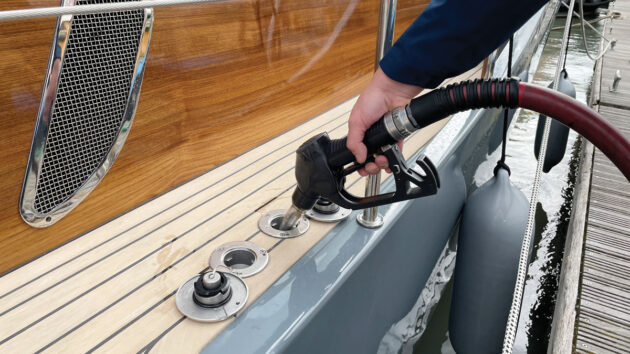
There have recently been shortages of marine diesel fuel and, since then, I have noticed that some suppliers are now stating that the diesel supplied by them can contain up to 7% bio fuel.
I’m sure you are aware of the problems (fatty acid methyl ester – or FAME) fuel can cause boat owners. I have noticed that some suppliers are saying that their fuel is marine diesel, even if it does contain up to 7% bio fuel. Is this the case?
I have checked different marinas and many claim their diesel to be FAME-free.
The definition of ‘marine diesel’ seems to mean different things to different suppliers. Can you explain what fuels are available and what we should be using?
Paul Fay
PBO’s engine guru Stu Davies replies:
What we leisure sailors call marine diesel is slightly different to road diesel, with some typically being higher in viscosity, sulphur content and having no bio content. Fuel supply blenders used to supply non-bio and lower tax (non-road use) red diesel to marinas but as the market for it is very small, suppliers are falling by the wayside.
I suspect sources of a specialised ‘marine diesel’ fuel like this are disappearing fast. B7 (7% biodiesel) is the standard for mass supplies of road diesel and the easy answer would be for suppliers to use this with the addition of chemical markers to turn it into ‘red’, but as I’ve said, the marine market is small and perhaps not worth the effort for suppliers. Not to be confused with big marine ship engines, which use ‘bunker fuel’ – a different diesel altogether – the engines in our leisure craft are mostly derived from diesel engines built for small plant applications or cars (like my Volvo motor, which is actually based on a Perkins Maestro/Montego car engine).

Sludge scraped from an engine filter. Most problems from fuel is caused by poor housekeeping. Credit: Malcolm Denham/CA
So our boat engines will run quite happily on standard road diesel, but the issue is that leaving it in a tank for a long time – especially over winter – leads us to the dreaded diesel bug problem.
For many years, the advice to combat diesel bug was to brim your tank over winter to avoid moisture from condensation in the empty space above the fuel level; the common advice now is not to do that.
In my view, it’s better to use smaller amounts of fresh diesel from a major supplier’s road pumps because of the turnover and freshness of the fuel and to use something like Marine 16 additive to protect against the bug. The price differential between road diesel from supermarkets and red diesel from marinas (where available) is now so small that I believe, nowadays, it is not worth the hassle of seeking out red diesel. I also believe that our entire fuel systems are now an item for regular maintenance.
I open my tank up every year or so and use a vacuum pump to remove condensation water and any bug remnants, and use biocide religiously to keep my engine in the best condition possible.
Peter Weide of Marine 16, which makes diesel fuel additives and biocides, comments:
It’s more than likely you’ll have FAME in your fuel which could lead to problems. Here’s how you mitigate those problems:
- Don’t take on more fuel than you can reasonably use in six months. Modern diesel degrades rapidly because of the removal of sulphur (ULSD) and addition of FAME.
- Make sure you drain the water out regularly or get a Diesel Dipper that will do the job for you.
If you can keep the water out, use Marine 16 Diesel Fuel Complete (DFC) [other brands are available – Ed]. This includes a demulsifier to help drop the water out of the body of the diesel, a detergent/dispersant and a stability improver to slow degradation. If you can’t keep water out, dose regularly with Marine 16 Diesel Bug Treatment (DBT). It will kill any bug trying to get a foothold in the water at the bottom of the tank.
When laying up for winter, try to remove as much of the fuel as possible and add DBT. When you return the boat to the water, get any accumulated water out, add DFC and fill up with fresh diesel.
The Cruising Association’s engine and fuel expert Malcolm Denham adds:
As Stu and Peter have said, it is essential to keep water out of the fuel system. Most problems are a result of poor housekeeping. My boat is in France and I have used B7 diesel for 10 years with no issue.
Like Stu, I remove the tank inspection cover and vacuum any minor debris from the tank every couple of years. Before 1 April 2022, Non-Road Mobile Machinery (NRMM) could use tax rebated red gasoil. This was withdrawn and NRMM now has to use 100% duty-paid white diesel. At the same time BS2869 was modified to remove the grades suitable for engine use.
The market demand for red gasoil suitable for engine use shrank almost overnight. There are only two specifications in Great Britain that have the parameters ‘cetane number’ and ‘lubricity wear scar’ which are essential for engine use – BS EN590 DERV (or white diesel) and BS EN 15940 for highly paraffinic fuels.
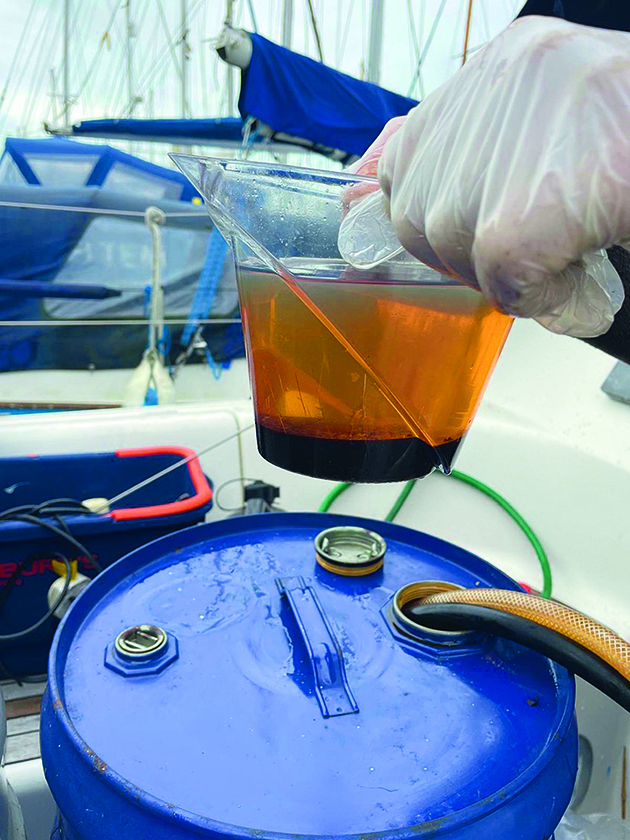
Some of the sludge removed from Malcolm Denham’s friend’s boat. This is a production boat, with a plastic fuel tank and no means of inspection (very common). As a result the tank had never been looked at for 20 years until the engine cut out in heavy seas as the sludge was stirred up.The fuel had been dosed with Marine 16 over the years so there was no live diesel bug. Credit: Malcolm Denham/CA
The only permitted use of red diesel now is for agriculture, fisheries, railroad and non-commercial generators.
In Britain there is a concession to use red gasoil for recreational craft propulsion, provided the appropriate duty is paid on the proportion used for propulsion and heating. In Northern Ireland only white diesel is permitted for propulsion.
The Renewable Transport Fuel Obligation specifically excludes coastal and tidal use of fuels from a biological origin, where Renewable Transport Fuel Certificates have been credited. It is most likely that any fuel from forecourts will have had RTFCs credited.
The Cruising Association, together with the RYA, BM and the Inland Waterways Association is campaigning for changes to the RTFO to enable the use of fuels of biological origin, such as Hydrotreated Vegetable Oil (HVO), in coastal waters.
HVO is already available to inland waterways vessels and is a high-quality paraffinic diesel fuel, with no stability issues, no FAME and is ideally suited for recreation craft. It gives up to 90% reduction in greenhouse gas emissions and is the fastest way to decarbonise recreational craft.
The bottom line is that despite any legal or regulatory issues, you should work on the principle that you could have up to 7% FAME in your diesel and act accordingly.
If you have a new yacht and you follow Stu and Peter’s advice for regular inspection and water removal, you’re unlikely to have problems. If you have an old boat and the tank has never been inspected or cleaned, expect problems – but don’t just blame the fuel.

How should I look after my fuel to beat diesel bug?
Ali Wood gets some bug-beating advice from Marine 16’s Peter Weide and learns why modern diesel requires more attention than…
Why isn’t fuel pre-treated to prevent diesel bug? Ask the experts
Glynn Jones writes: “If I have understood the issue correctly, the addition by the oil industry of biodiesel to our…

12 diesel bug treatments tested
Diesel bug can clog filters and starve your boat engine of fuel just when you need it most. Can diesel…
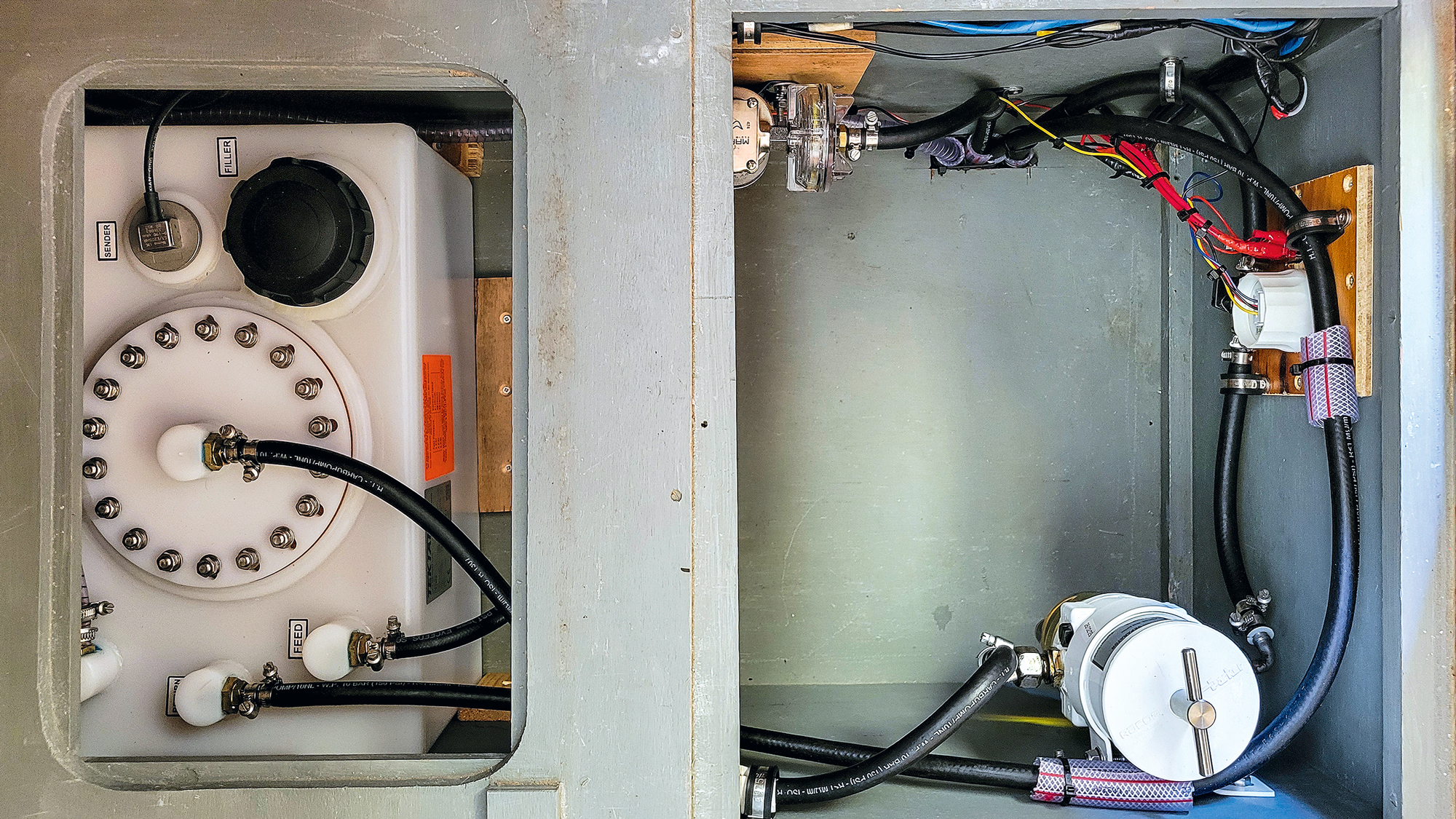
How one skipper fixed his fuel problems with a diesel day tank
The wind was dying with the light after a lively passage down the western Peloponnese, but the lumpy sea remained.…

What to read more practical articles like this?
A subscription to Practical Boat Owner magazine costs around 40% less than the cover price.
Print and digital editions are available through Magazines Direct – where you can also find the latest deals.
PBO is packed with information to help you get the most from boat ownership – whether sail or power.
-
-
-
- Take your DIY skills to the next level with trusted advice on boat maintenance and repairs
- Impartial, in-depth gear reviews
- Practical cruising tips for making the most of your time afloat
-
-
Follow us on Facebook, Instagram, TikTok and X