



One reader wonders whether the diesel heater on his boat can run on shore power. Duncan Kent offers an expert response
A PBO reader asks:
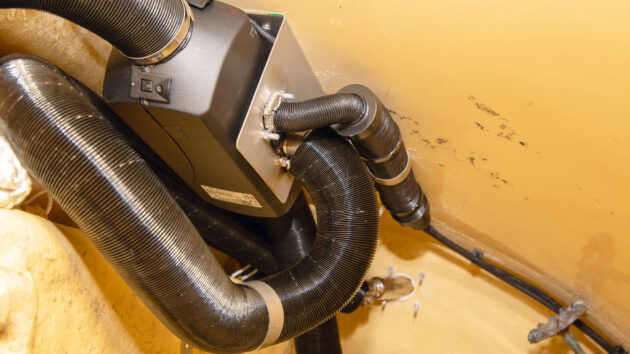
Is it possible to operate an Eberspächer diesel heater using mains power?
I have a Airtronic D1LC heater on board, which works fine when the engine is running.
Even when the 12V domestic battery (deep cycling) was new, the diesel heater would not start. It seems to need about 20A to get going.
If there was any way to disable the low voltage cut-out, this would be OK because I have a second battery to start the engine anyway.
Ideally, I’d like to be able to install a transformer so that, when we’re on a pontoon, I could plug it into the shore power (I know there may be potential problems with electrolysis).
I don’t have a 240V system on the boat, so it would just be plugged into a cable when needed.
So far, I have not found a transformer that will deliver 20A at 12V.
Richard Dyer, Falkirk
Duncan Kent’s expert answer
You don’t say how you normally charge your batteries, but I assume by what you say that you currently only have the engine alternator, which sounds like it’s not being run enough to fully charge your batteries – especially if you only have the standard alternator and regulator fitted.
However, it is also worth checking what capacity cable you have to the diesel heater.
Too small and the voltage drop will be enough to prevent it from starting.
This is something easily checked by putting a multimeter over the diesel heater’s DC input (it should be above 10.5V, preferably 11.5V+) when starting the heater up.
Check online for wire size recommendations, as it’s not only the current that matters, but also the total circuit distance.
Wiring excluded, rather than trying to find a transformer or disable the low-voltage cut-out, it would make far more sense to install a decent 20A+ marine mains battery charger that has the ability to provide power to run the heating system when connected.
That way, not only will the batteries get fully charged, but also the charger will act as a DC ‘power supply’ to the boat, absorbing the heater’s start-up load and any other electrical loads you have on board.
Although it’s the ideal, you don’t necessarily need to install a full shore power system to run your heater provided you have some form of over-current protection between the shore connection and the charger.
Connect directly to the charger only and don’t leave the shore power cable coiled up when it is in use.

How to fit a marine hot water system to your boat
Today most new yachts come with pressurised hot water, but that wasn’t the case 20 or 30 years ago. Many…

Best boat cooker: 10 alternative options for gas-free cooking
Gas cookers used to be the standard choice on almost every boat, but there are good reasons why they are…
Want to read more articles about diesel heaters?

A subscription to Practical Boat Owner magazine costs around 40% less than the cover price.
Print and digital editions are available through Magazines Direct – where you can also find the latest deals.
PBO is packed with information to help you get the most from boat ownership – whether sail or power.
-
-
-
- Take your DIY skills to the next level with trusted advice on boat maintenance and repairs
- Impartial, in-depth gear reviews
- Practical cruising tips for making the most of your time afloat
-
-
Follow us on Facebook, Instagram, TikTok and Twitter
PBO web categories