



As excitement builds for the new sailing season, minimise the risk of shakedown cruise glitches and common mistakes with this handy guide.
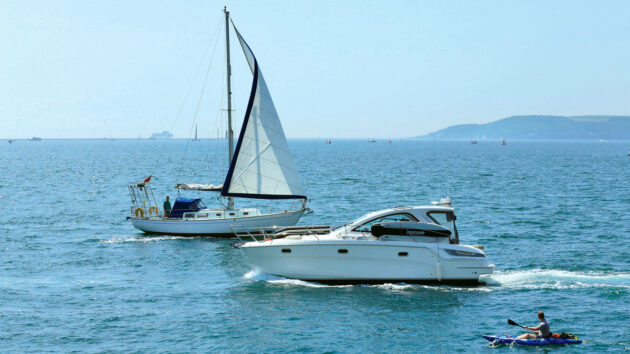
There’s no better feeling than to be out on the water again, with the sun on your face, even if the rest of you is wrapped up in layers against a chilly sea breeze.
You may be smug in the knowledge that your engine has been de-winterised, and rigging inspected, but for even greater peace of mind running through an aide-mémoire can help both new and seasoned boaters ensure that lifejackets have been recently serviced, emergency action plans updated, and crew appropriately briefed.
Safety kit is ever-evolving and best practice changes with it, which is why HM Coastguard (part of the Maritime and Coastguard Agency), the Royal National Lifeboat Institution (RNLI) and the Royal Yachting Association (RYA) have teamed up for a second year to encourage recreational boaters to ‘reduce risk and boost skills’ to minimise worries and maximise fun on the water.
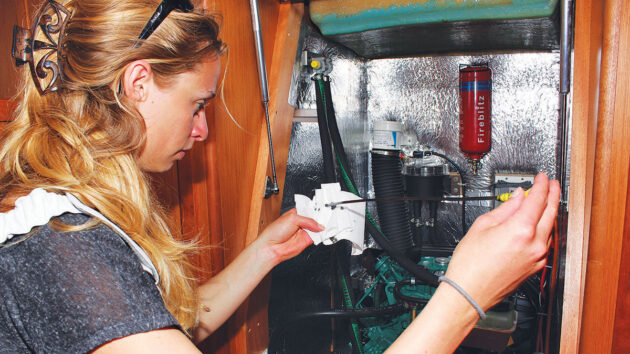
Keep your engine in tip-top shape to avoid preventable issues. Credit: Theo Stocker/Future
Free laminated guides
This national campaign means laminated safety checklists are available free of charge across the UK, including a version in the Welsh language.
The checklists – included in our guide here – are neat reminders to discuss passage plans and man overboard procedures with crew, check equipment and engine, identify a second-in-command, and to have an effective means of calling for help kept on board.
Tom Barnett, network commander for HM Coastguard, said: “As a boater myself, I recognise the importance of effective preparation and planning – it’s absolutely part of how boaters best equip themselves and others for a safe and enjoyable day out on the water.
“Created in collaboration with partners at the RNLI and RYA, our campaign provides tips, advice and a helpful set of free boating checklists, designed to help boaters carefully consider their safety, the safety of their passengers, and the safety of their vessel and its features.”
He added: “If you do get into trouble on the coast or at sea, call 999 and ask for the Coastguard.”
Sarah Pennicard, RNLI water safety delivery manager, said: “We always want people to enjoy being on the coast, but things can quickly go wrong at sea.
“It’s so important to stay prepared.”
She added: “By keeping the essential checklists on board, you’ll be reducing the risks of incidents occurring or increasing in severity.”
Richard Falk, RYA director of training, said: “There’s nothing quite like time spent out on the water.
“But whatever your level of experience, even the shortest trip benefits from a little thought and preparation.”
He added: “The start of the season is also the perfect time to refresh your knowledge with an RYA training course, either in a classroom or afloat, or through reading one of our many RYA handbooks which cover all forms of boating.”
To order your free laminated guide and emergency radio procedures sticker visit: hmcoastguard.uk/checklist
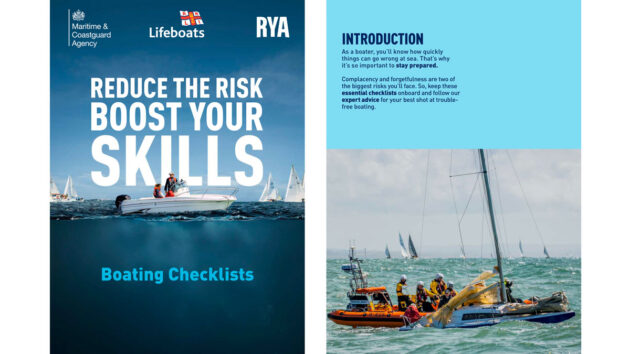
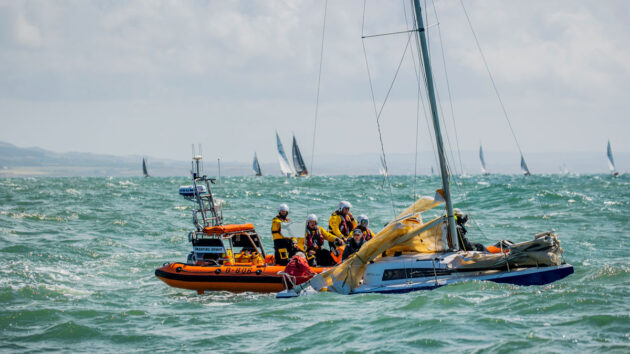
In 2025, RNLI lifeboat crews launched more than 9,000 times and saved 272 lives. The latest figures show 713 launches to sailing vessels, 951 to motorboats, 946 to people in the water and 319 to walkers and runners. Credit: RNLI
BEFORE YOU SET OUT
- Boost your skills and complete any training you might need. Find out about courses in your area at rya.org.uk or sailing.ie
- Check and service your boat and equipment (including hull, engine, rigging and steering).
- Check and service your safety equipment (including lifejackets, liferafts and flares).
- Check and service your engine, and don’t forget your fuel and filters.
Is your boat seaworthy?
It can feel daunting ticking off so many boxes but once you’ve gone through the process, it becomes easier year after year.
- Has your engine been serviced and are your tanks free of diesel bug?
- Exhaust systems are worth a look at for cracks and leaks.
- Service seacocks and check skin fittings. It’s good practice to document this with photos and videos in case later insurance claims depend on their seaworthiness.
- Are your electronics working and are batteries charging?
- If you removed any hoses over winter, check these are now reattached and double clipped, and that your seacocks are closed but accessible with safety bungs nearby.
- Check your sails, anchor and rig for wear and tear, and book in repairs if needs be.
- Is your tender intact and your outboard working? These are just a few things to pay attention to before you get back on the water.
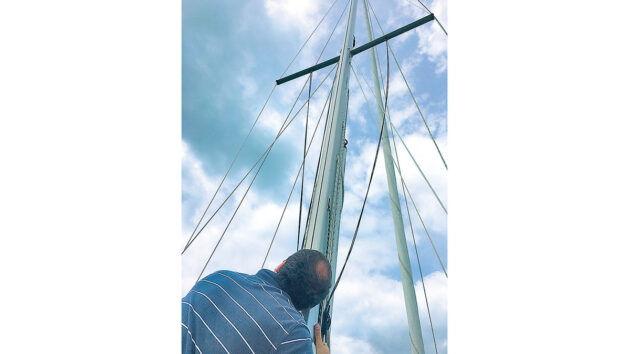
Study the spreaders regularly to check they don’t have excessive play. Credit: Future Plc
Confidence boost
If you’re feeling a little rusty, or there are gaps in your crew’s knowledge, an RYA course such as Day Skipper, Level 2 Powerboat or something shore-based such as Essential Navigation and Seamanship can boost confidence.
Or ask your local RYA centre if they run any refresher courses.
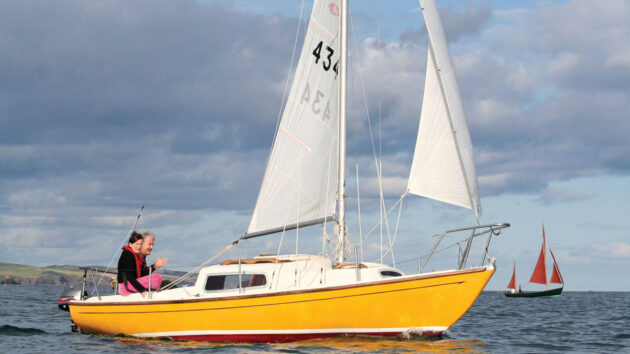
Lifejackets should be serviced annually at an approved service station. Credit: Genevieve Leaper/Alamy
Insurance
- Check your insurance is up to date.
Start getting quotes 30 days before your renewal, and shop around to get the best deal.
It’s a good idea to go through your existing insurance and note down: premium and excess; cruising area covered; any additional extras covered.
Are you planning to go further afield this year? - Check the subjectivities on any renewal quotes.
Do you need to organise an out-of-water survey, rig inspection, or complete recommendations from a previous survey prior to a new policy being valid? - Check the conditions, are there any clauses such as: daytime navigation only; named operator (ie the skipper only); private and pleasure use, and no charters; no racing or rallies.
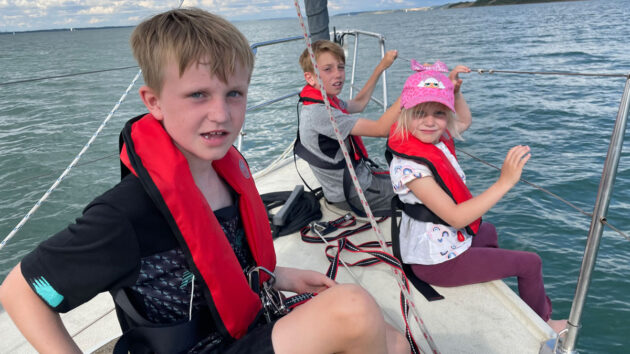
The best lifejacket is one you’ll actually wear so consider a low bulk design that is comfortable to move about in. Credit: Ali Wood
COUNTDOWN TO LAUNCH
- Check the weather forecast and tide times.
- Plan your passage, and tell someone ashore where you’re going and how long you’re likely to be gone.
- Check your lifejackets and make sure they’re fitted correctly when wearing them.
- Check onboard equipment and safety equipment.
- Check your engine, fluid levels and bilge.
- Check the kill cord is working if fitted.
- Check your engine for cooling water through the exhaust or tell tale.
- Let the engine warm up.
- Check the forward and reverse gears.
- Make sure your crew are wearing appropriate clothing for the conditions and the forecast.
Don’t forget your sunglasses and a hat! - Brief your crew (more on this below) and flag up key safety information.
Personal flotation devices
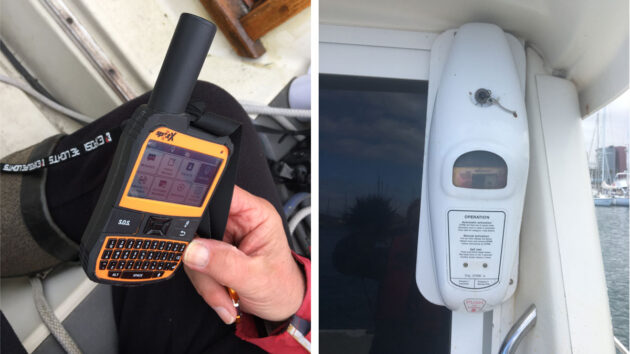
While PLBs are registered to an individual, EPIRBs are registered to a vessel. Find out more at: pbo.co.uk/satcomms
A personal flotation device (PFD) can save your life, and while all lifejackets need to meet International Organization for Standardization (ISO) standards they differ in design when it comes to crotch straps, oral inflation tube, lifting strop, sprayhood, light and carbon dioxide (CO2) bottle.
The best lifejacket is one you’ll actually wear so consider a low bulk design that is comfortable to move about in.
Try a few styles before you buy.
If sailing solo or offshore, you may want features such as ‘back-tow’ technology, where a tethered man overboard (MOB) is dragged in a seating position, or the option to fit a personal locator beacon (PLB) and/or automatic identification system (AIS) beacon.
While non-inflating, foam-based lifejackets are recommended for young children, automatic inflation lifejackets are available in all sizes for children over 15kg and adults.
Be sure to service yours annually to avoid the danger of a corroded gas bottle or fitting.
Consider a tether
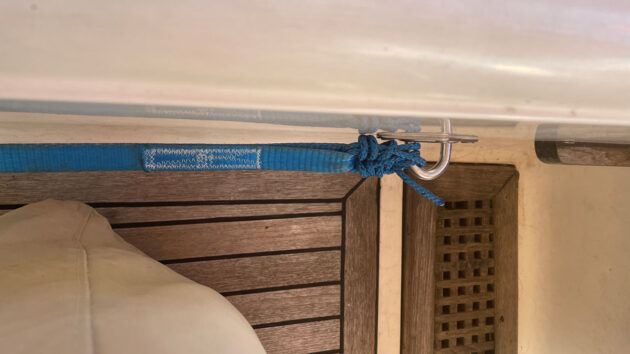
A jackstay or attachment point for a tether can be retrofitted. Credit: Future Plc
The safest option is to prevent yourself from separating from your vessel when overboard.
Some vessels come with a jackstay or attachment point.
If your lifejacket has a D-ring fitting, you can use this to harness yourself or passengers to the vessel.
If your cockpit doesn’t have these, consult a shipwright – they can always be retrofitted.
Passage plan
Always carry a fully charged mobile phone and have a passage plan.
Read up on the weather and tides before you leave the dock.
Be prepared to turn around or abort a trip, even if it will cause disruption or disappointment.
There are many navigation apps available for phones and tablets but bear in mind you may not be able to see your screen in bright sunlight and mobile reception can be patchy.
A chartplotter or multifunction display (MFD) will be daylight viewable, but what’s your backup if you lose power?
This is where your pilot books, paper charts and passage plan come in.
Hopefully, you’ll have been plotting your position throughout the trip.
CREW BRIEFING GUIDE
- Discuss the passage plan and expected weather.
- Check whether your crew have any medical conditions or welfare concerns.
- Make sure your crew are wearing appropriate clothing for the conditions and the forecast.
- Check lifejackets are fitted correctly.
- Share the location of emergency equipment (such as the liferaft, flares and fire extinguishers).
- Discuss man overboard procedures and how to call for help. Is there a visual guide?
- Identify a second in command and ensure they know how to call for help and operate the engine.
WHILE UNDER WAY
- Wear your lifejacket.
- Always keep a lookout.
- Make sure your speed is appropriate for the weather conditions and environment you’re in.
- Check the gauges and fuel levels regularly.
- Monitor VHF Ch16 and local channels/the harbour master channel.
- Regularly check in with your crew.
- Check for lines over the side, and make plans for how to clear a fouled propeller.
- Monitor the weather conditions and pay attention to the forecast and visibility.
- Have a means of calling for help; a handheld VHF or mobile phone in a waterproof pouch.
EMERGENCY ACTION PLANS
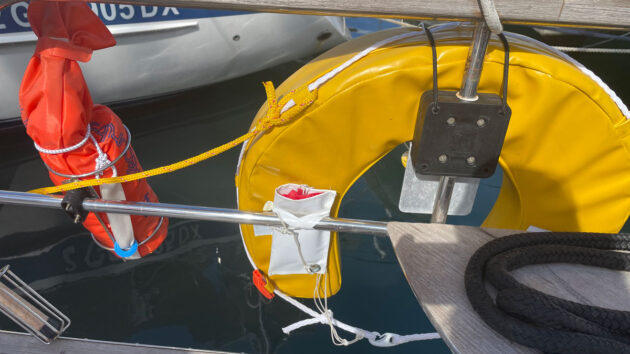
Horseshoe buoys offer a person immediate buoyancy and support in the water. Credit: Ali Wood
Man overboard
- Throw a flotation aid.
- Point to the person in the water while maintaining visual contact with them.
- Mark the position using the MOB button on the chartplotter.
- Send a distress message using the DSC distress alert and voice message.
- Recover the person from the water – consider how best to board your boat from the water.
If the skipper is incapacitated
- Nominated second in command to take control.
- Call for help.
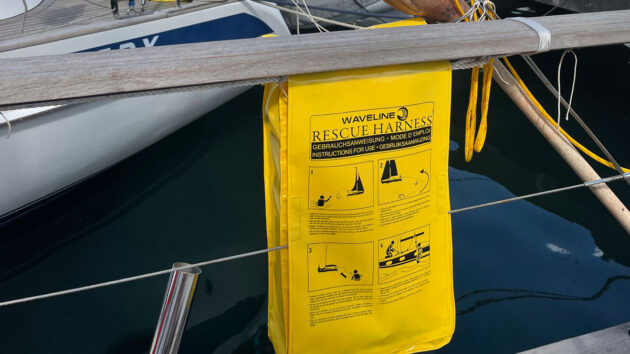
What’s your MOB recovery aid? This harness has a lifting loop. Credit: Ali Wood
MOB recovery aids
Falling overboard is every sailor’s worst nightmare, but there are many items on the market to assist with recovery.
Sea dye, light-emitting diode (LED) strobe lights, horseshoe buoys and danbuoys help mark your position in the water while throwlines, emergency ladders and recovery systems will help you get back on board (see Marine Guidance Note (MGN) sections 5 and 6 for nonmandatory Guidance for Recovery Equipment on Non-SOLAS Vessels).
You can buy Bluetooth or wireless tags to attach to people, pets and objects such as overboard flotation devices, which trigger an alarm on the boat or people’s phones when this virtual tether is separated.
A more expensive but robust option is a PLB.
Distress beacons
PLBs are registered to an individual, emergency position-indicating radio beacons (EPIRBs) are registered to a vessel.
Within a 2-4 mile range a personal AIS MOB beacon enables your vessel’s crew and nearby craft to pinpoint your location, while a 406MHz PLB will alert the Coastguard of your location to within 100m.
There are now products that combine both 406MHz and AIS into one single device.
Importantly, 406MHz beacons need to be registered with the UK Beacon Registry and kept up to date.
If a beacon is sold or passed on, it must be re-registered to the new owner. An EPIRB can be mounted on a bulkhead. Activated by water (for example, if the vessel sinks), or manually by the ‘on’ switch, this sends a continuous maritime distress signal to a search and rescue centre for 48 hours or longer.
For offshore passages, where you’re likely to be out of radio contact with other vessels, many sailors carry a satellite phone or tracking/ texting device, which requires a monthly subscription.
For more on satellite communication see pbo.co.uk/satcomms
The Coastguard also advises that carrying a suitable flare on board remains an important safety measure, helping to improve visibility and alert others to your location in an emergency.
Electronic visual distress flares (EVDs) are popular with some sailors as an alternative to handheld pyrotechnics, which must be disposed of at certified disposal service providers.
Prices for these multi-use, rechargeable LED flares start at less than £100. Please note, however, that EVDs are not listed as a distress alerting device in the international code of signals for preventing collisions at sea (COLREGs).
Time for ‘boat rules’
When you’re happy that your boat and crew are safely equipped, it’s time to look at boat rules and emergency drills.
Your crew or family might roll their eyes but remind them you’re all responsible for one another’s safety.
If you’re on a motorboat with an outboard engine, reiterate the importance of the kill cord.
Ensure they know the MOB drill, how to call for help, where the first aid kit is, what to do in case of a fire, and other ‘boat rules’, which might include switching the gas off at the bottle, clipping on outside of the cockpit or using a preventer downwind.
Nothing is trivial.
Write them down, or share them with crew before a voyage.
You could even ask them to contribute.
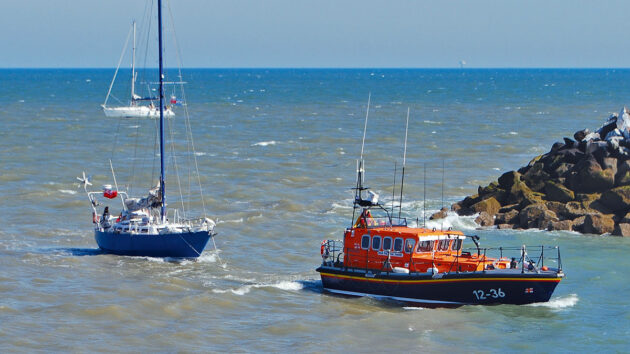
The Coastguard will decide the best way to get help to you. Credit: RNLI
Practical emergency tips
In an emergency, every second counts.
A clearly visible script by the vessel’s VHF radio gives anyone on board simple step-by-step instructions for a Mayday call to the Coastguard – ideally laminated.
It’s crucial to be able to raise the alert from your vessel.
Cruising boats will most likely have a fixed VHF radio, but dayboats are also advised to carry a handheld VHF with spare batteries.
Like the police, fire and ambulance, HM Coastguard is an emergency service with the same 999 number.
While your mobile might work at sea, the benefit of using the DSC button on your radio is that it will automatically give your distress position.
The Coastguard will decide the best way to get help to you, whether that’s tasking assets which could include RNLI or independent lifeboats, Coastguard rescue teams or search and rescue helicopters.
For non-dangerous situations, contact organisations such as Sea Start to fix your engine at sea or tow you to safety.
Shore contact
Don’t forget to leave details of your passage with family or friends.
If you’re late returning, they can call 999 and ask for the Coastguard.
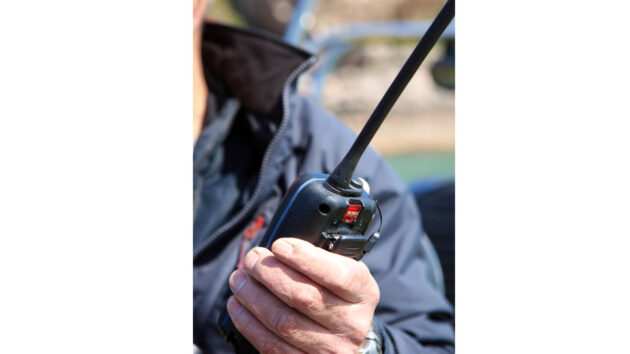
A VHF radio is built for the marine environment and is more dependable than a mobile phone. Credit: Lynne Sutherland/Alamy
EMERGENCY VHF RADIO CALLING PROCEDURE
If your radio is equipped with Digital Selective Calling (DSC) press and hold the Distress Alert button(s) until the transmission sends.
Set the VHF radio to Ch16, High Power.
Hold the Press to Talk (PTT) button and say:
MAYDAY, MAYDAY, MAYDAY
THIS IS… [Your name 3 times, Callsign, MMSI]
MAYDAY, [Your name, Callsign, MMSI]
MY POSITION IS…[Describe position and give GPS location if possible]
WE ARE…[Nature of distress eg sinking, fi re etc]
REQUIRE IMMEDIATE ASSISTANCE THERE ARE ___ PERSONS ONBOARD [Give information or intentions]
OVER
Release the PTT button and await a response.
What to read more practical articles?
A subscription to Practical Boat Owner magazine costs around 40% less than the cover price.
Print and digital editions are available through Magazines Direct – where you can also find the latest deals.
PBO is packed with information to help you get the most from boat ownership – whether sail or power.
-
-
-
- Take your DIY skills to the next level with trusted advice on boat maintenance and repairs
- Impartial, in-depth gear reviews
- Practical cruising tips for making the most of your time afloat
-
-
Follow us on Facebook, Instagram, TikTok and X