



Marina Guedes sails the Beagle Channel with Jérôme Poncet aboard Damien 2
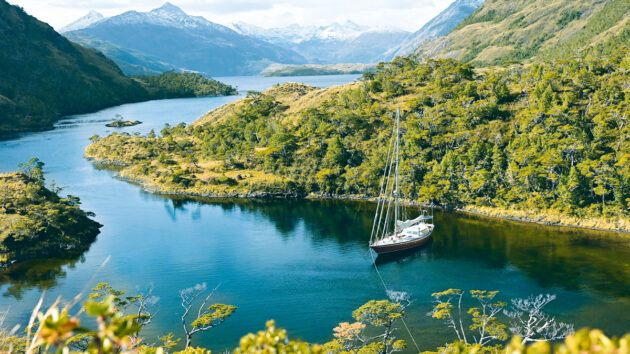
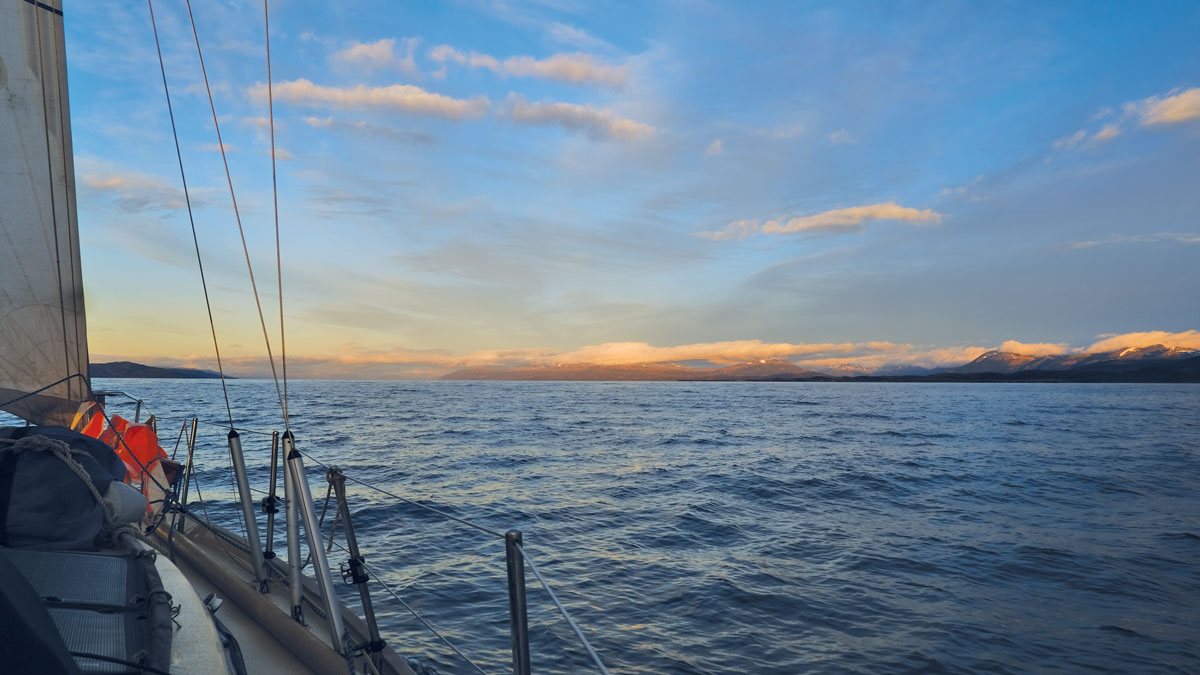
Reflected against the hull of the boat was a violet hue, the colour of a soft orchid. And when I looked up I saw the entire sky was painted in the same shade, extending above the mountain chain with the raw beauty of the landscape shimmering on the motionless sea. The Yendegaia National Park in the Beagle Channel is known for its glaciers, mountains and forests, but no one had mentioned the sunrises; could the Land of Fire be any more beautiful, I wondered?
It had always been a dream to visit the remote Tierra del Fuego, and I didn’t hesitate to accept the invitation from French yachtsman Jérôme Poncet to sail this remote outpost of South America. The two-month voyage began in the Falkland Islands, Jérôme’s home for the last 40 years, following his round-the-world voyage aboard the 32ft Damian.
Our ultimate goal was to reach the Beagle Channel, known for its breathtaking wild scenery of deep fjords and glaciers. Altogether we covered around 2,000 miles, including a circumnavigation of Gordon Island and our return to Stanley, capital of the British overseas territory, in mid-April 2025.
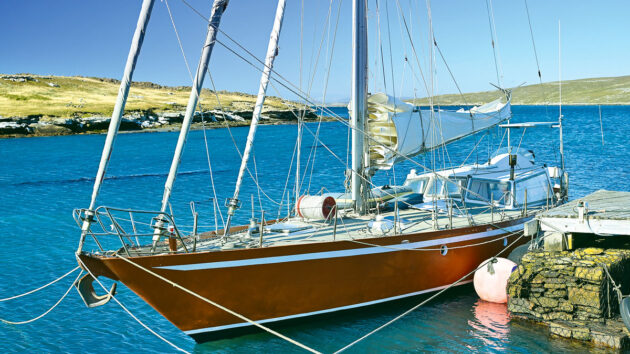
Jérôme Poncet spent five years refitting Damien 2 at his farm on Beaver Island in the Falkland Islands. Credit: Marina Guedes
Unlike my last voyage with Jérôme two years ago, when we sailed the 65ft/20m motorsailer Golden Fleece to the subantarctic island of South Georgia and the west coast of the Antarctic Peninsula, the chosen yacht for this journey was his 50ft/15m steel-hulled, lifting keel schooner Damien 2.
Designed by Michel Joubert and built in 1974, Jérôme, his wife, Sally, and their children lived aboard the yacht for 12 years, and the boat had been regularly making trips into Antarctica over 25 years; one of its key design features was a Plexiglas bubble with a 360° view for indoor piloting. Damien 2 has since undergone significant modifications, including a new deckhouse with a 360° view.
As Jérôme recalls, the refit was a family affair. “The surprising aspect is that I really enjoyed it. Being on my island (Beaver, the westernmost of the Falklands), coming nearly every day on the boat with an idea to execute. If not satisfied, I’d re-do it. There was something to be sorted out every day”. “The first of my sons (Dion, who was born on the saloon table of Damien 2 in winter on South Georgia) is very good at drawing. He designed the new deckhouse, cockpit and other things. Leiv, my second, did a perfect job welding the steel parts. I took care of the finishing, painting, cover and insulation.”
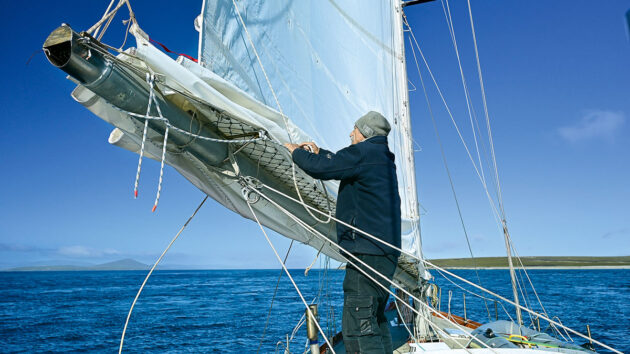
Poncet has been sailing the waters of Antarctica and South America for five decades. Credit: Marina Guedes
The refit was carried out on one of the jetties at Poncet’s farm, and took approximately five years. When I arrived in February 2025, there were just the usual pre-voyage tasks left to do, such as stocking and organising all the food for the upcoming eight weeks. Carrying mutton and fresh vegetables produced on the Poncet farm is an important tradition when it comes to sailing with Jérôme.
Once we were down in Chilean waters, at Puerto Williams, the port of entry for Tierra del Fuego, there would also be time for any more provisioning, if needed.
Towards the Beagle Channel
Separated from South America by the Le Maire Strait, Staten Island was our first stop. It took less than two days from Beaver to shelter at Hoppner Bay, surrounded by high mountains and dramatic waterfalls, a clear sign of the almost daily precipitation; it was reminiscent of the New Zealand film locations for The Lord of the Rings trilogy.
At the entrance to the larger bay we were greeted by hundreds of cormorants gathered on the main rock, their nesting site; there was no other vessel around. Apart from birds, the local fauna, as we soon found out, included delicious king crabs, an upgrade to our nightly appetiser.
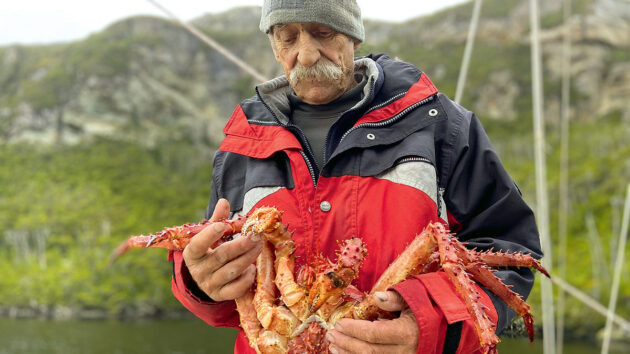
Poncet with a king crab, which makes a very good appetiser! Credit: Marina Guedes
To reach the protected inner bay, you must sail through a narrow entrance which is hidden from view until the very last minute. Jérôme was a dab hand, having navigated these waters numerous times before. For a beginner like me, it was impressive to see how skilfully Jérôme steered Damien 2 on that overcast March morning!
The anchor was dropped shortly after, with the addition of two shore lines from both the stern and bow in case of a change in the weather or the arrival of the typical local gust called a ‘williwaw’. It didn’t take long before it arrived, gusting more than 35 knots, and we tied an extra shore line from the stern. Damien 2 has a lifting keel, giving her a draught of between 1-3m/3ft 2in-9ft 9in; Jérôme decided to lower it a bit more, which gave us all peace of mind.
Gateway to the end of the world
Any tourist who travels to Antarctica usually boards a vessel in the Argentine port of Ushuaia or at its Chilean neighbour, Puerto Williams. For decades, there has been a dispute as to which deserves the title of the southernmost port in the world. Puerto Williams, on the northern side of Navarino Island, was our port of entry.
After days on board we climbed the relatively easy Flag Hill track (Cerro Bandero) and took in the views of this small Chilean town. On a clear day, it’s possible to see beyond Ushuaia, nearly 30 miles west and the Beagle Channel.
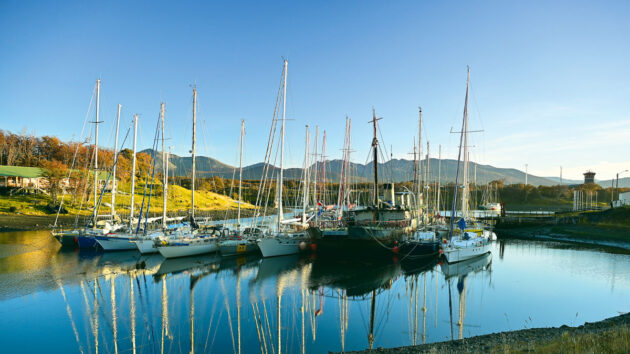
Puerto Williams is the port of entry
for sailing to Antarctica. Credit: Marina Guedes
Having climbed 3,108ft, I reached the summit; two horses greeted me, standing next to the country´s flag. Outdoor enthusiasts from all over the world come to Navarino for a much tougher hike, the 25-mile-long Teeth Circuit. This is a five-day walk that requires the appropriate gear and training, as the weather can suddenly change and temperatures can drop below zero, often accompanied by fierce winds.
Navigating the Beagle Channel
Domesticated horses wander freely around Puerto Williams, and the local population is friendly; there will always be somebody ready to help with a genuine smile, even if you are not fluent in Spanish. Many can speak English very well. Many days felt like summer, not autumn, with warm temperatures and clear skies.
Once the last of Damien 2’s crew had arrived by plane, it was time to leave the world’s southernmost yacht club, the Micalvi, and head west– but not before a quick fight against the kelp that decided to give our anchor a ‘hug’. The battle was won with the help of the boat hook, which we kept on deck. Off we went!
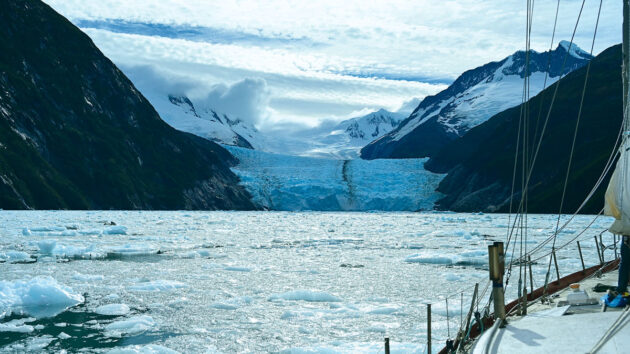
The Garibaldi Glacier in the Beagle Channel is a tidewater glacier which means large icebergs are common where the ice meets saltwater. Credit: Marina Guedes
Olla Cove sits at the entrance of the Northwest Arm, where the channel splits in two around Gordon Island; after 60 miles of sailing, we were getting close to our first glacier. The area is part of the Ventisquero Circuit, with spectacular snow-capped mountains. Under light wind, we then sailed 24 miles to the next fjord, Pia, where two stunning glaciers lie to the west and east.
As we did not have a water maker aboard Damien 2, whenever we spotted a waterfall we went ashore with jerry cans. And with so much ice drifting around we also fished out a few chunks for our evening cocktails. Another 10 miles and we reached Five-Star Cove; if there was ever a Michelin Guide for sailing, then this anchorage could easily score one of the highest marks due to the diversity of hikes in the area and the well-sheltered inlet which inspired us to remain for a few days.
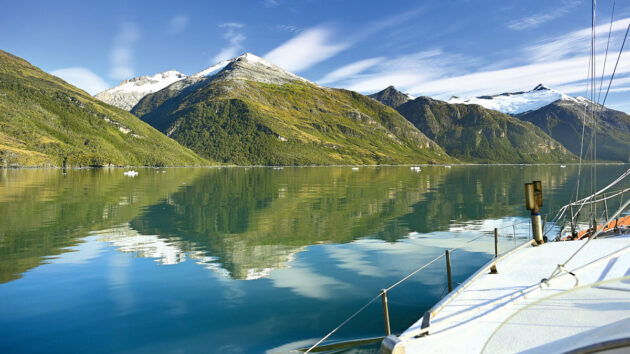
Damien 2 in Garibaldi Fjord in the Beagle Channel. Credit: Marina Guedes
When solo navigating the Strait of Magellan aboard his sloop Spray, Joshua Slocum faced threats to his life from the locals. Two centuries on, we faced no such challenge; in fact, the complete opposite with friendly exchanges with other sailors exploring this area, including the crew of the French yacht, Tánana who invited us aboard for lunch in the middle of the stunning Garibaldi fjord.
Although we could not reach the base of the 11-mile-long fjord, it was amazing to see its glacier on a sunny morning; a photographer’s dream, with endless mirrored water reflections nearly all the way. I vividly remember steering Damien 2 between the drifting ice and listening to Jérôme’s wise advice: “Don’t hesitate to change our course if you want.”
Four seasons in one day
Eventually, we rounded Gordon Island and reached the channel’s Southwest Arm and Coloane Bay. As is common in these latitudes, the weather changed so quickly that we experienced four seasons in one day. When the wind dropped, snow started to fall, creating a nostalgic Christmas vibe.
Beavers are a non-native species in the Fire Land. Although we did not see one, it was easy to spot their impact on the environment. At Coloane Bay we saw two dams built from an enormous quantity of wood, a proof of their sophisticated building skills.
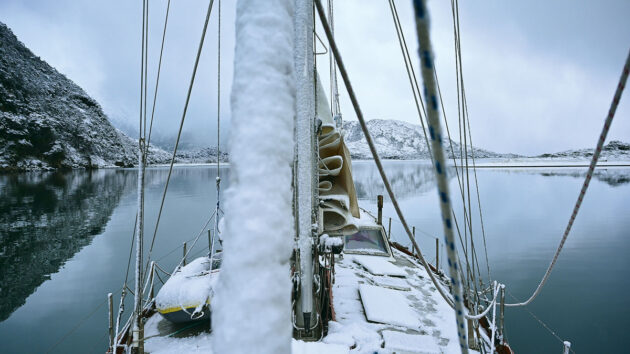
The weather can change quickly, going from freezing snow showers to warmer conditions. Credit: Marina Guedes
While exploring the nearby forest, I could not stop thinking about the first description of the region which I’d read, comparing the ground of Tierra del Fuego to a soaked mattress; it feels quite comfortable to step on such soft terrain.
A few days later, we headed back to Olla Cove and then towards the wide bay of Yendegaia. Our last days included a brief stop back in Puerto Williams to catch up with more friends and wait for boat clearance; it was then a five-day crossing to Stanley.
Seeing Damien 2 safely tied to the city dock, I concluded that it would be appropriate to change the old saying ‘be careful what you wish for’ to ‘be thankful to the friends you make at sea’. Merci, dear Jérôme and Damien 2!
Exploring Patagonia, Tierra del Fuego and the Beagle Channel
Italian sailors Giorgio Ardrizzi and Mariolina Rolfo are the authors of the Patagonia & Tierra del Fuego Nautical Guide, our reference while on Damien 2. They spent 16 years sailing through Tierra del Fuego, the Chilean canals and the Argentine Patagonia.
The book was first published in 2004 and then updated in 2007 and 2016; the latest edition has over 400 anchorages listed.
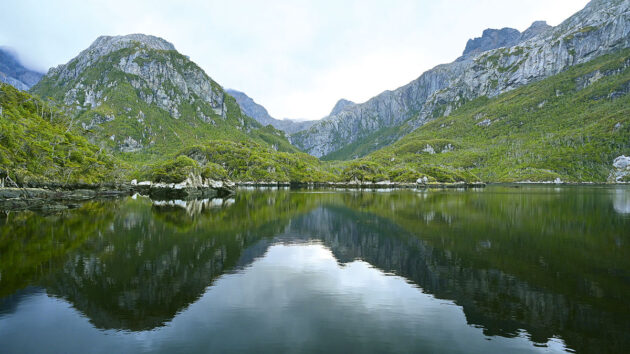
The region’s dramatic landscape is one of the big draws for visitors. Credit: Marina Guedes
When they first arrived in Buenos Aires in 1995, they realised there were no suitable cruising guides for the entire Argentine and Chilean coasts which inspired them to write and publish their own. “We also dedicated 150 pages to preparing the boat to go there, the history of Argentina and Chile, flora and fauna, ancient inhabitants and meteorology. Completing the first edition took eight years of exploration, countless hours drawing the maps, and a year of other intense work like printing, translation, proofreading and design”, remembers Giorgio.
Q: What advice would you give to a sailor about the Land of Fire?
GA: The same applies to anyone embarking on a return voyage from the Caribbean to Europe. A solid, well-prepared and equipped boat. Good meteorological knowledge, ability to cope with any eventuality, a lot of patience, determination and curiosity to discover landscapes off the beaten track.
Q: What’s so special about this area?
GA: Undoubtedly, the wild majesty of the high latitude landscapes and the extremes of weather, where nice days offer a stunning palette of colours, while harsh ones turn everything grey and black. A land of extremes. Another interesting aspect is the enormous number of excellent anchorages that won’t let you lose a single night’s sleep, even in severe weather.
Q: What’s the biggest challenge of sailing there?
GA: To have a lot of patience and perseverance. Patience, as the weather often prevents us from sticking to our sailing plans. It’s not uncommon to have several days of bad weather, struggling to make just a few miles. Patience should be a sailor’s first quality. Without perseverance you get nowhere, and it’s the quality that helps us endure in difficult times. The other great challenge is the solitude of those waters, where boats are rarely encountered, and the concept of independence reaches its maximum value. The vessel must be in perfect order. One must have the capacity and resources to deal with any kind of breakdown.
Q: Do you have plans to return to those southern waters?
GA: I´d return tomorrow morning, if I could. I love those distant, breathtaking landscapes, welcoming and supportive people. Unfortunately, the years have passed too quickly, and I still would like to see new places before ‘hanging up my boat’ for good! Maybe I’ll return as a tourist to reconnect with dear friends that I left behind. If there was a spot on another boat sailing the channels, it could be a wonderful opportunity to update our guide and revisit the unique atmosphere of those waters.
The Patagonia & Tierra Del Fuego Nautical Guide by Mariolina Rolfo & Giorgio Ardrizzi is available from www.nutrimenti.net/libro/mare/tecnica/patagonia-tierra-del-fuego
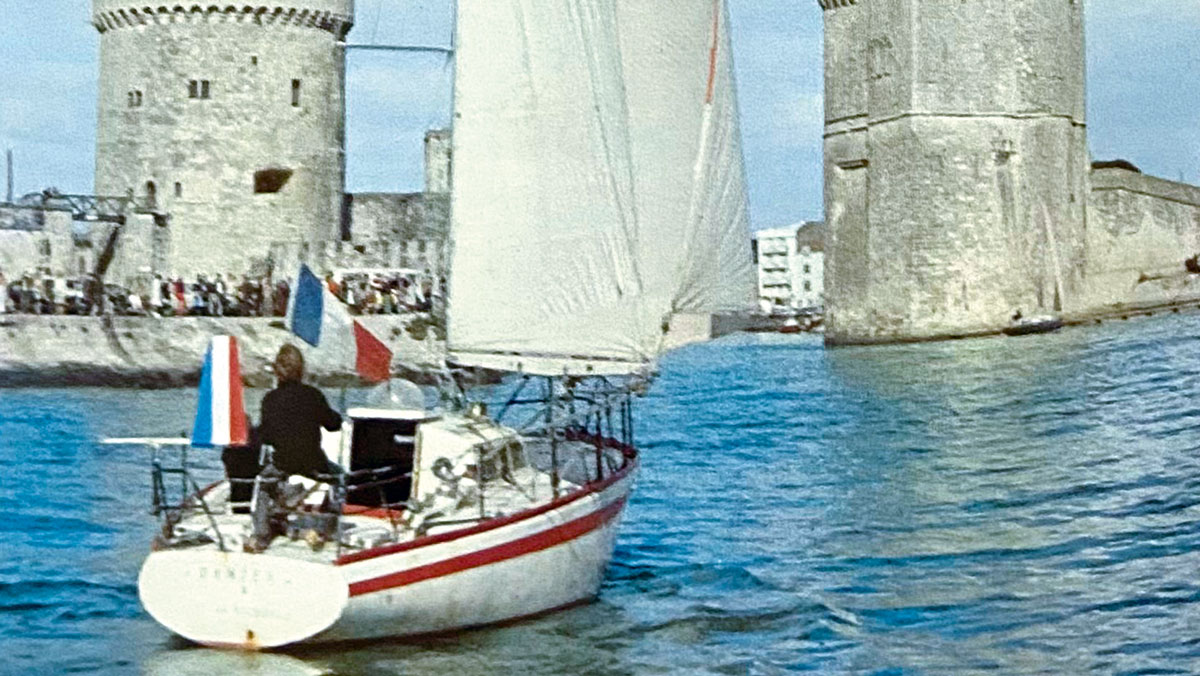
Sailing the legendary 32ft cruiser, Damien from the Arctic Circle to Antarctica
Between 1969 and 1973, Jérôme Poncet and Gérard Janichon sailed their 32ft cutter Damien from Spitsbergen to Antarctica via the…
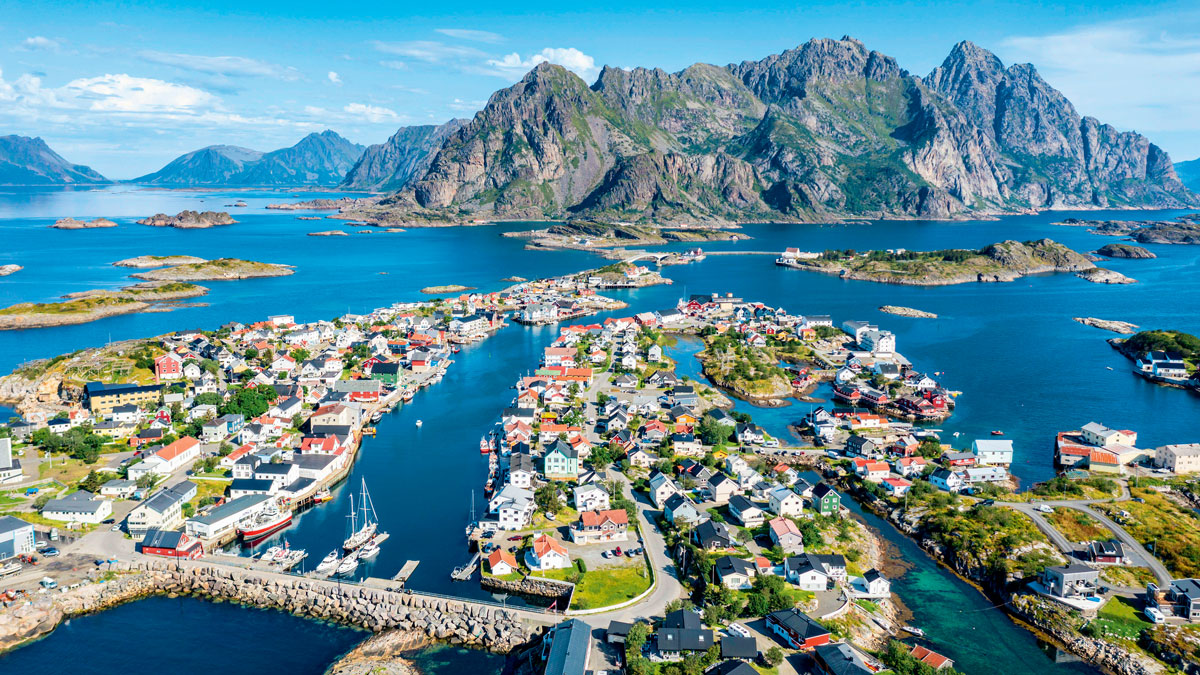
Sailing Norway: paradise found
Marina Guedes sails into the Arctic Circle and discovers the timeless beauty of Norway's west coast and Lofoten Islands
Cape Horn to port – gaining confidence as a new skipper
Eugénie Nottebohm sails her Contessa 32 solo to the Azores and across the Atlantic, then with crew around Cape Horn
Practical ideas from the Ocean Globe Race yacht Galiana WithSecure
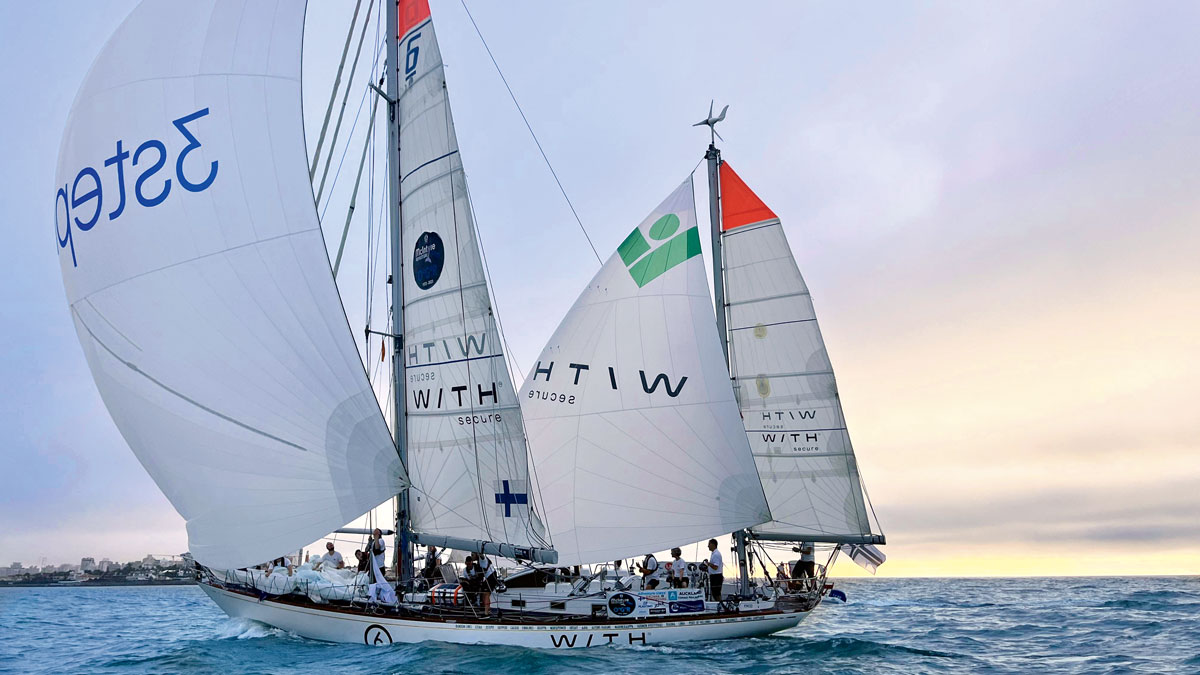
Katy Stickland finds clever design features which can be adapted for cruising yachts while sailing the Swan 55, Galiana WithSecure
What to read more cruising articles like Glaciers, williwaw gusts & dodging drifting ice: Cruising the Beagle Channel with a French legend?
A subscription to Practical Boat Owner magazine costs around 40% less than the cover price.
Print and digital editions are available through Magazines Direct – where you can also find the latest deals.
PBO is packed with information to help you get the most from boat ownership – whether sail or power.
-
-
-
- Take your DIY skills to the next level with trusted advice on boat maintenance and repairs
- Impartial, in-depth gear reviews
- Practical cruising tips for making the most of your time afloat
-
-
Follow us on Facebook, Instagram, TikTok and X