



Had enough of sailing cruiser ownership but not yet ready to give up sailing itself? Jake Frith delves into the merits and options of trading down to a much smaller sailing craft
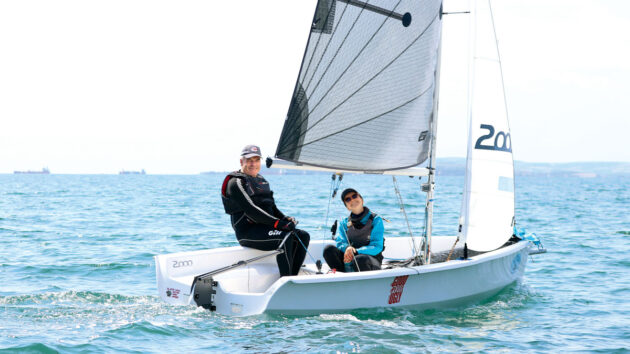
One of the great positives about sailing is that its core pleasures are achievable in just about any boat. Some may like the satisfaction of using their DIY skills to make a vessel their own or challenging themselves with a demanding voyage, or just hearing the wavelets bubbling under the weather chine as the boat leans her shoulder into a summer’s evening zephyr.
As I’ve grown older I’ve come to realise that these pleasures are available irrespective of the size or value of the boat. Indeed, with suitably altered aims and expectations, a cruising dinghy with their lower storage and maintenance costs can bring all the pleasure, and sometimes more, than a yacht can, but with only a fraction of the guilt.
‘Guilt’ may seem to some an odd choice of word here, but it’s one I hear a lot when talking to my sailing cruiser-owning friends. The guilt of the time they spent neglecting family relationships to scrape barnacles. The guilt they felt when their boat deteriorated while lying unused in the yard. The guilt they felt when the harbour dues bill came in and they realised they’d only got the sails up once during the season.
Speed up or slow down: a cruising dinghy offers choice!
A cruising dinghy presents many choices when it comes to the level of adrenaline on offer. I know a mid-life couple who have recently downsized from a Hunter Sonata (6.5 knots on a good day) to a twin trapeze planing skiff with a huge spread of downwind asymmetric spinnaker capable of 25 knots plus. They are still racing, still taking it seriously, but getting around the course faster with wider grins and their annual boat storage fees have reduced from the low thousands per year to the low hundreds.
On the flip side, I spoke to a somewhat older couple at the RYA Dinghy and Watersports Show (late February or early March every year at Farnborough and well worth a look if you want to learn more about dinghy options). This pair had finally come to the realization that their Westerly Griffon 2 (a spacious 26ft bilge keel cruiser) was capable of much more than they now were.
The Westerly which had taken them across the Channel and back a dozen times in the last 20 years was being prepared to go up for sale in the spring and they had their eye on a 12ft Tideway class dinghy. The slow and secure, but easy to tow and launch Tideway, they reasoned, would allow them to indulge in decades of hotel and self-catering cottage-based day cruising.
What’s in a cruising dinghy?
There are a number of definitions we could go by when it comes to sailing dinghies. For the purposes of this article, we’re going to say that anything that has a permanent cuddy or cabin that can be slept in or is heavy enough to require a braked trailer is a trailer-sailer, not a cruising dinghy. Here in the UK, the maximum weight of boat and trailer that can be towed without trailer brakes is 750kg providing the tow car is over 1,500kg.
There are hundreds of dinghy designs available on the new and second-hand market, all of which have their pros and cons. I’m avoiding anything that hydrofoils or has a trapeze here, as these are high performance boats requiring high skill and fitness levels and their potential buyers likely already know what they’re looking for:
Six cruising dinghy options for downsizers
Devon Yawl
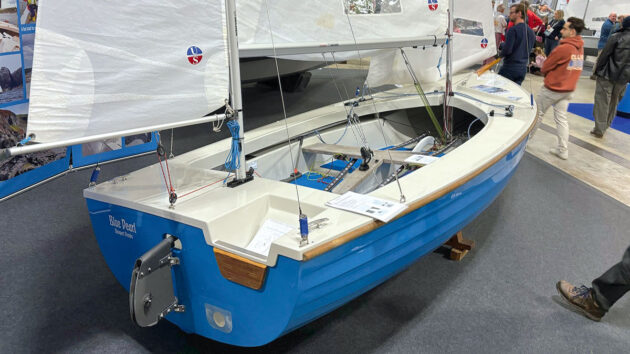
A New Devon Yawl at the 2026 RYA Dinghy and Watersports Show. Credit: Jake Frith
■ Cost: Used from £3,000, new from £23,000
■ Pros: Easily balanced sail plan; Surprisingly capable ballast ratio (33-40%); Spacious cockpit
■ Cons: Too heavy to trolley launch; Not super cheap
In 1968, at the birth of GRP boatbuilding some enterprising souls took a mould of a Salcombe Yawl, a wooden inshore fishing boat evolved over centuries for speed and seakeeping, adapted it a bit with modern luxuries such as aluminium spars and the Devon Yawl was born. There’s a version with a short cuddy cabin, called the Devon Dayboat, but that’s not as popular as you might think and according to the Devon Yawl Association the Dayboats aren’t actually worth any more than the standard Yawl.
The Dayboat’s cabin is great for stowing equipment or sheltering from the rain, but I’m told by those in the know that it’s not long enough for adults to sleep in comfortably and gets in the way a bit for attending to jobs at the bow. The boat offers a ballasted, lifting centreplate and lead ballast in the hull for relatively ambitious trips offshore and the massive cockpit offers space for 2-6 sailors of all ages to cruise in comfort.
Laser 2000/RS 2000
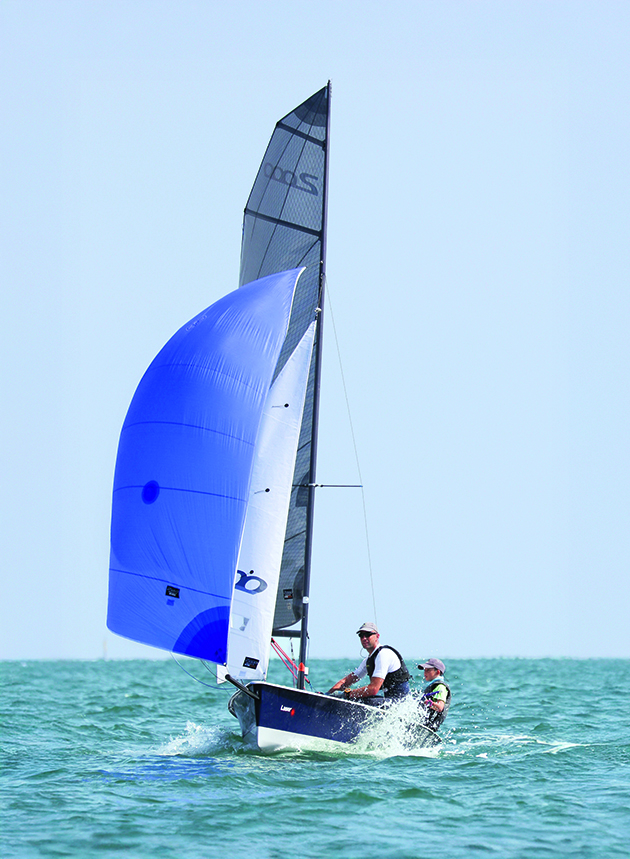
Like many RS boats, the 2000 delivers lively class racing. Credit: RS Sailing
■ Cost: Used from £1,500, new from £14,700
■ Pros: Offers competitive racing; Easy to find and buy; Comfortable and easy to sail for the level of performance available
■ Cons: Beware older, heavily raced examples needing sails, rigging and hardware
First launched back in 1997 this gennaker-equipped skiffy-looking double-hander was Laser’s fairly successful attempt at a boat that would be as at home as a competitive racer for a young couple as it was as a family beach explorer.
I know a lot of people who go through dinghies with a new class every couple of years, but the people I know with Laser 2000s have usually kept them a decade or more through various life changes. These boats really can do almost everything.
Testament to the success of this one design is that RS Sailing, the world’s largest sailing dinghy manufacturer, took on the rights to manufacture it in 2013 despite its advancing age at the time.
It’s a planing dinghy, so definitely not a cruiser, but you can race it every weekend in competitive, large fleets, then take the kids out in it in the summer holidays, taking advantage of its secure feeling high topsides, spacious cockpit and predictable handling. It is popular as a training boat too, with outfits such as the UK Ministry of Defence as it can be used to teach complete beginner stuff up to more advanced modern racing techniques.
Wanderer
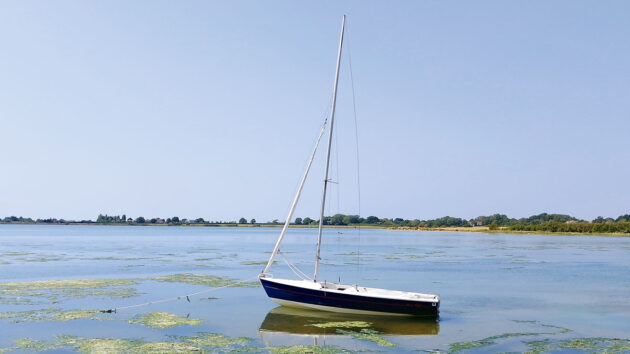
Jake’s brother bought this tidy Wanderer for £750 from Facebook Martketplace. Credit: Jake Frith
■ Cost: Used from £500, new from £11,995
■ Pros: Lots of knowledge out there on customising for cruising; Easy to find; Great sea boat
■ Cons: Slow; Some very old and well-worn examples on the market
This Ian Proctor design dating from the heyday of dinghy sailing is still very much alive and well with the rights to manufacture currently held by Hartley Boats (which has just launched the Wayfarer Weekender) – the design’s fourth manufacturer. It’s only 14ft (4.3m) long but a beamy, spacious and surprisingly stable design that’s very popular for dinghy cruising.
The Wanderer was made famous by the intrepid cruising couple Frank and Margaret Dye. They’d started with the Wanderer’s big sister, the Wayfarer.
They sailed their Wayfarer, confusingly called Wanderer, all over northern Europe, recording their adventures in a series of deadpan and slightly frightening books, but later downsized to a Wanderer after they came to the surprising conclusion that at 16ft (4.9m) a Wayfarer was more boat than they needed.
If you want to cruise a Wanderer, find one that’s already set up for cruising with roller jib and two or three slab reefing points in the main. It might even come with added beneficial cruising equipment such as a weighted centreboard, sleeping boards or boom tent. This kit is expensive to source and there are plenty of boats on the market that already have it. You might not get to Iceland like Frank but a Wanderer and tent could provide idyllic cruising on the Norfolk Broads.
Topper Cruz
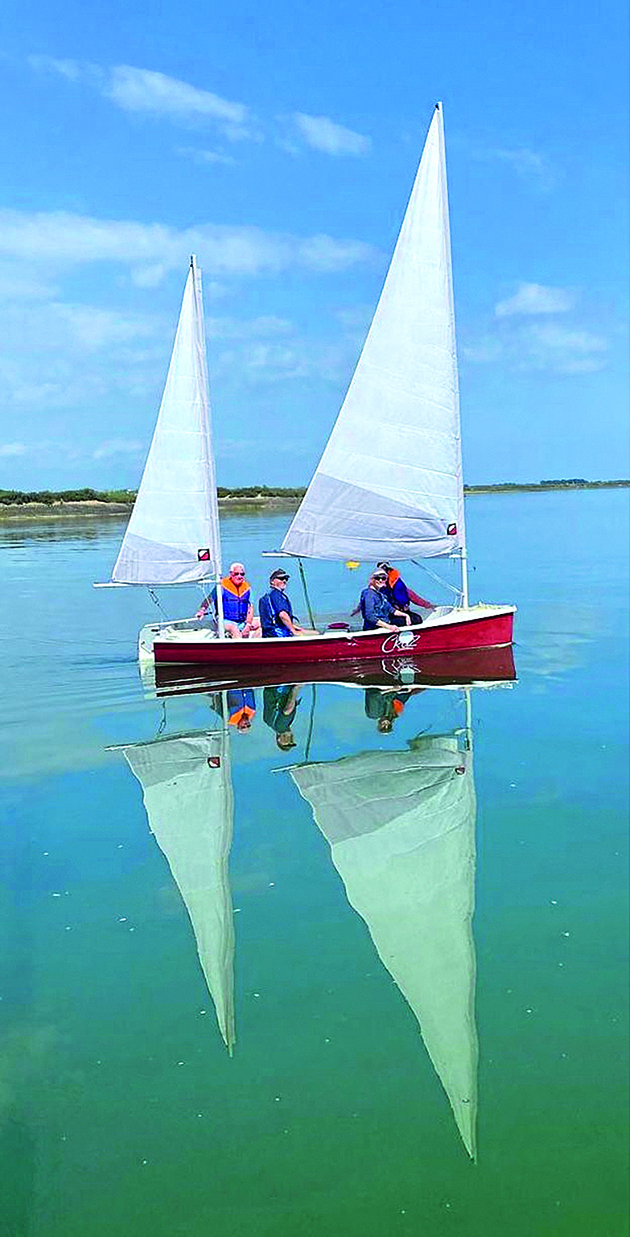
Stephen Murray’s Topper Cruz well loaded on the Blackwater last summer. Credit: Stephen Murray
■ Cost: Used from £800
■ Pros: Spacious and comfortable
■ Cons: Not much to keep crew busy (no jib); Low performance; Heavy to launch
A 1990s 14ft (4.3m) GRP ‘cruising’ dinghy with an aluminium plate centreboard and often seen sporting a jaunty folding cuddy tent up front, rather similar to a sailing cruiser’s sprayhood. One of the first modern dinghies from a mainstream manufacturer intended to always be cruised and never be raced, the Cruz was ahead of its time.
Every large dinghy manufacturer now has at least one cruising dinghy in its range. The Cruz is a ketch which can be sailed with or without its mizzen mast which also makes it quite flexible when it comes to reducing sail in a blow. Both rigs reef like the more common ‘baby’ Topper; by rotating the sleeved sails around their unstayed masts. The rigs have high booms and there is masses of usable space in the middle of the boat, just where you want it on a long day out.
This fairly unusual configuration led them to not be a roaring commercial success but now as a used option they are well priced and an interesting choice if racing isn’t on your radar.
Tideway 12
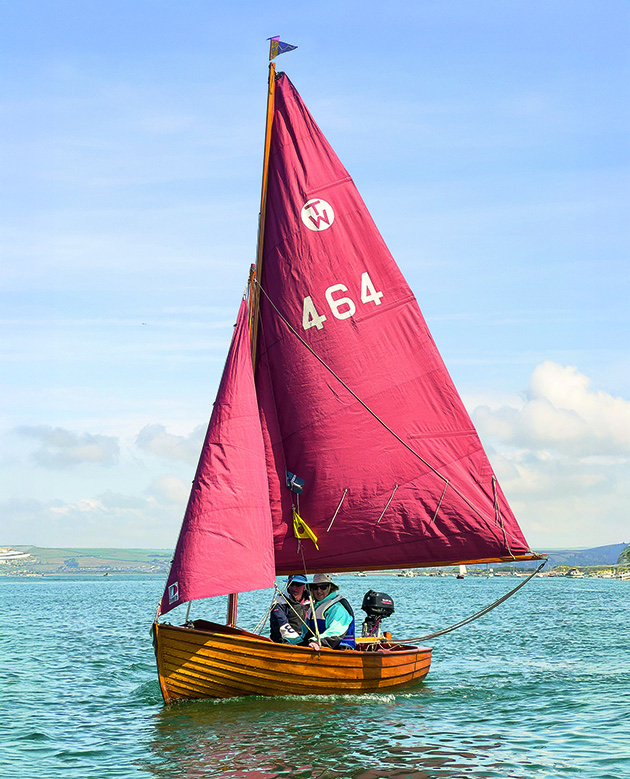
Whether GRP or wooden, most Tideway 12s have a steel centreplate. Credit: Tideway Owners’ Association
■ Cost: Used from £1,000, new £POA
■ Pros: There are few more beautiful sights than a recently varnished mahogany Tideway; There is an active owners association, and they are enthusiastically raced
■ Cons: Lots of the wooden ones out there are too far gone with rot to bring back
The original 12ft (3.65m) Tideway dinghies were a glorious clinker-built symphony of mahogany planking on oak ribs, designed and first built in the mid-1950s, but visibly not much different from small sailing dinghies from a century before. The then builder, Lew Walker of Leigh-on-Sea in Essex, had something of a production line which output a surprising number of these (considering the hours involved in traditional boatbuilding). There were said to be over 500 wooden 12ft LH Walker Tideways produced up until 1979, and a fair few of them survive to this day.
If you’re in the market for a classic wooden boat and you know the hours of labour involved in keeping one from deteriorating, then there are definitely bargains to be had.
Fortunately for the rest of us, from the 1980s onwards moulds were taken of wooden Tideways by a succession of builders of GRP boats. The current official builder of the GRP boats is Tideway Dinghies of Maldon, Essex, not far from the boat’s spiritual birthplace. Good Wood Boat Company in Cumbria will still build you a glorious new wooden clinker Tideway 12 although the cost of hardwoods and the rarity of the considerable skills involved to breathe such life into it make this a niche product for the well-heeled.
Whether GRP or wooden, young or old, most boats have a steel centreplate, and a few have a Bermudan rig.
A 1960s/1970s plywood or GRP dinghy
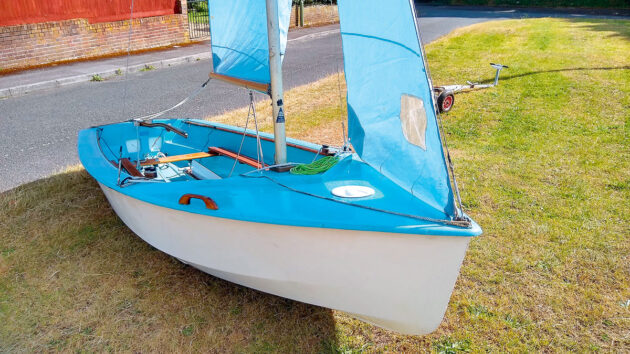
Jake’s GRP Enterprise at £150 in 2023 with two worn sails but a good launch trolley shows how affordable the joys of sailing can be. Credit: Jake Frith
■ Cost: Used from £100
■ Pros: Get on the water for the price of a pub meal for four
■ Cons: These are old boats now; watch for rotten hulls and worn out sails or hardware
These are the many (usually hard-chined) dinghies that anyone over the age of 45 who sailed in their youth will remember.
Of course there’s the ubiquitous Mirror, but they are a bit small for most adult or family purposes and many were home-built to a poor standard. I’d go for one of the slightly larger and more traditionally boat-shaped alternatives such as the Enterprise, the GP14, Wayfarer or even a Fireball if you want something hairier.
I’ve put an arbitrary starting value of £100 on these, but often such boats are ‘free to a good home’, especially if plywood, in winter or if they require a minor repair or two. Condition is everything, so check the lower boards for softness (rain water causes all the problems here so pay particular attention to the lowest point of the hull where water may have sat). Paint can hide a multitude of sins so be prepared to dig through it in places to inspect the wood (with the seller’s permission of course).
Most of these popular designs were carried on into GRP versions in the 1970s and 80s, which usually carry a higher price tag reflecting their usually better condition and lower upkeep.
I bought a complete, ready-to-sail GRP Enterprise a couple of years ago with a trolley, two sets of fairly worn sails and a recent cover, for £150. It had been on sale for a couple of weeks, on a popular platform so it wasn’t as if it was ludicrously underpriced in error.
Such ‘unfashionable’ designs must be the cheapest route into sailing right now. Get a nice plywood one and it’s often lighter and faster than a later GRP one. Indeed some older wooden boats if sold with a decent/recent racing record and mirror-varnished foredecks can be worth thousands. At lower price points always check it is complete by rigging it on its trailer. It’s not so cheap if you later need to buy a boom or rudder!
Dinghy Cruising: the dream and the reality
There’s a reason this article is not entirely filled with the traditionally recommended cruising dinghies and that reason is that I’ve tried dinghy cruising and can vouch for the fact that it is not for everyone.
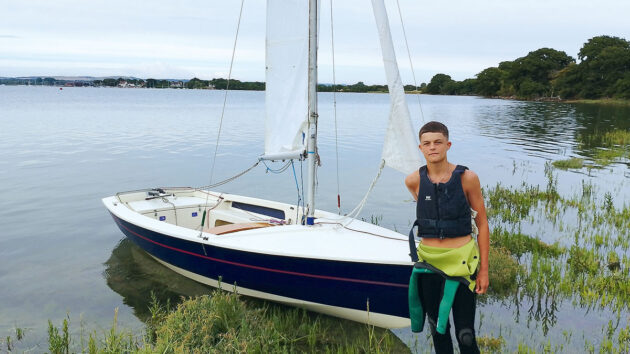
A character-building camping cruise to Newport’s hinterland for Jake’s nephew. Credit: Tom Frith
About a dozen years ago I bought a GRP Wayfarer. An old Porter boat that had a decent mast and sails, a good anchor and chain and was only £350 with a decent galvanised road trailer (which was the bit I actually wanted). I had an old cruiser boom tent, a reliable small outboard, dry bags and camping gear. The boat already had a furling jib, steel centreplate and two reef points in the main, so it was cruising-ready and just needed a few bits of plywood cutting and varnishing to make sleeping boards, packing with the gear and off we went.
The issue with drying aboard
My then girlfriend and I headed west through the Solent bound for the far end of Poole Harbour and all went well for the first day. Passage planning speed was 3.5 knots in the light breeze we had, and I must confess that even for me, a small-boat sailor, it was a long day. The poor morale aboard was further tested by a severe, unforecast rain shower as we reached our anchorage.
This is what the dinghy cruising crowd don’t tell you. Something as minor as a poorly timed rain shower early in a trip can ruin everything. Sure, we had good waterproofs, but where could we hang them to dry overnight? Even in light winds and with the gas stove deep in the boat, the flame kept blowing out as we tried to cook our beans. Fortunately there was a pub, but the next morning’s activity of sliding into cold, wet waterproofs set the dial to ‘frosty’.
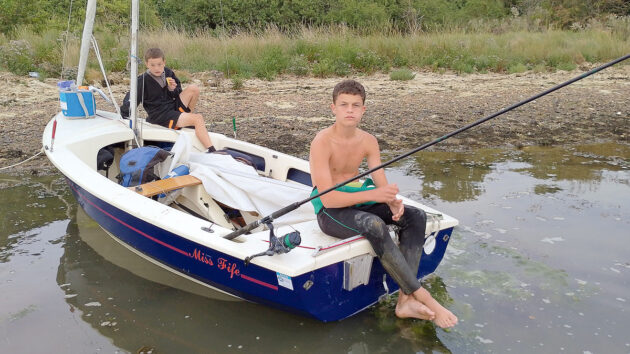
Enjoying the full Swallows and Amazons experience. Credit: Tom Frith
Most people with dinghies don’t cruise in them. Those that do are cut from different cloth. I guess the analogy is that if cruising yachts are like camping in a caravan or motorhome then cruising in a dinghy is like mountain camping in a tiny two-man tent at 2,500ft. The rewards are presumably immense, but you have to work for them. If you’ve just been demobbed from the Marines or similar and only feel truly alive when cold, wet and frightened then I wish you all the best and cast you off with the following points about dinghy cruising:
Choose a renowned model
Opt for a boat others have cruised in. Wayfarers and their little sisters, Wanderers, are a popular choice, but they are heavy and others get on fine with smaller boats like GP 14s if cruising solo. Smaller boats are obviously much easier to pull up beaches and the like.
Learn from others
The Dinghy Cruising Association is a font of knowledge, but there are also numerous Facebook groups for people who cruise in specific dinghy classes. This is where you can learn from those who’ve gone before what adaptations are needed to be safe and comfortable.
Your sailing, navigation and pilotage skills need to be good. Cruising dinghies are SLOW, so matters such as tidal planning can make or break a trip. Make plenty of day trips in the boat before you try anything ambitious (like I didn’t). Will the boat heave to? Can you navigate under way on passage? Can you safely get your motor on and off the transom and in and out of its stowed position in 2ft waves?
Safety first
Dinghy cruising can be a quite risky pastime, and risky pastimes are, contrary to popular belief, not for risk-takers. Reef early. Practice capsize recovery with the boat fully loaded with all the gear and crew you will be carrying. Practice man overboard. If you’ll be sailing solo, what would you do if you went over the side?
Consider sleeping on dry land
Many dinghy cruisers seem obsessed with sleeping on the boat with sleeping boards, boom tent etc. Sometimes this is unavoidable such as waiting for the tide with the boat in the mud, far from dry land (Thames Estuary, I’m looking at you), but a cheap supermarket tent can be miles more comfortable than some kind of custom bespoke boom tent.
Baby steps
Consider short trips with pub stops for meals and toilets when you are new to it. Plan your trip with alternative dates so your first forays are in perfect, cherry- picked weather that won’t require reefing or bellowing through the tempest.
Cruise in company for moral and actual support and to provide someone to talk to in the evenings who isn’t the same poor soul you have been droning on to in the boat all day.

Dinghy cruising: 30 ways to experience the ultimate small-boat adventure
Ben Lowings shares his tips for dinghy cruising around the UK and further afield
Your complete guide to what to wear dinghy sailing
From base layers to life jackets to your hands and feet, this helpful guide from PBO's Ali Wood explains what…
Mirror Dinghy: the versatile first boat for thousands of sailors
The ‘car top dinghy’ that can be launched and sailed in most coastal and inshore waters, with more than 70,000…
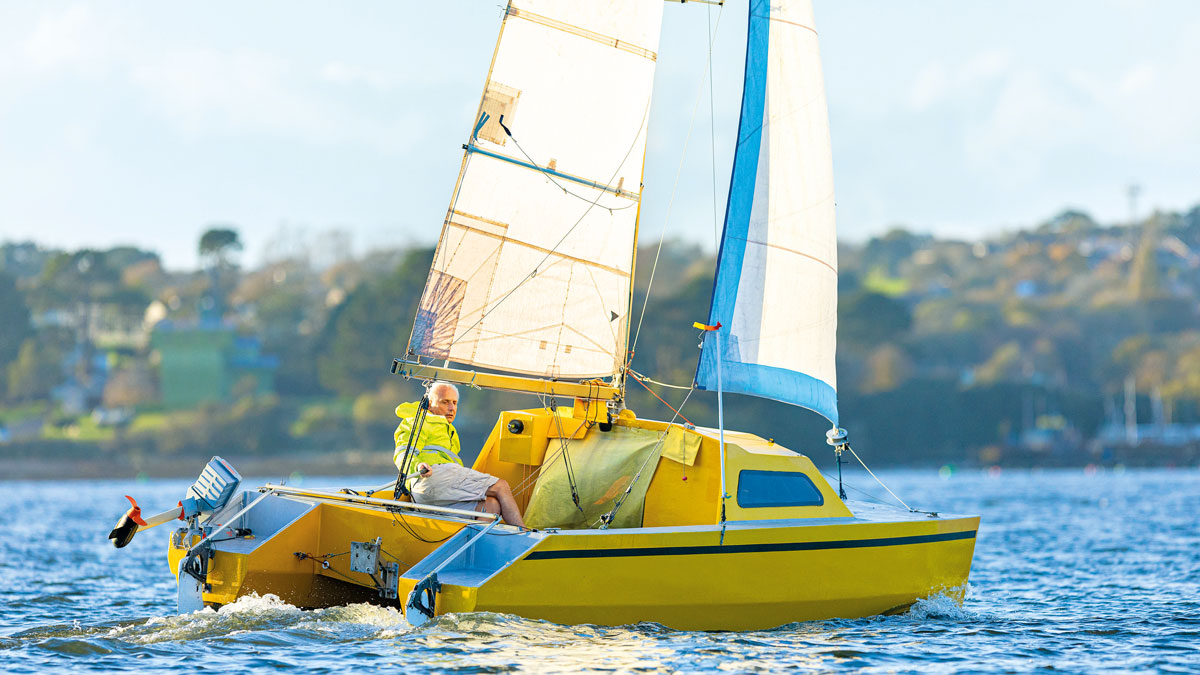
Chat 18: the economical camper cruising cat that can be launched in 15 minutes
Designed for simple home-building in plywood, the Chat 18 is a versatile and economical daysailer-cum-camper cruising cat. David Harding gets…
Want to read more articles like 6 best cruising dinghy options for downsizers?
A subscription to Practical Boat Owner magazine costs around 40% less than the cover price.
Print and digital editions are available through Magazines Direct – where you can also find the latest deals.
PBO is packed with information to help you get the most from boat ownership – whether sail or power.
-
-
-
- Take your DIY skills to the next level with trusted advice on boat maintenance and repairs
- Impartial, in-depth gear reviews
- Practical cruising tips for making the most of your time afloat
-
-
Follow us on Facebook, Instagram, TikTok and X