




Old clinker-built open boats are being given new life as competitive sailing vessels on the East Coast
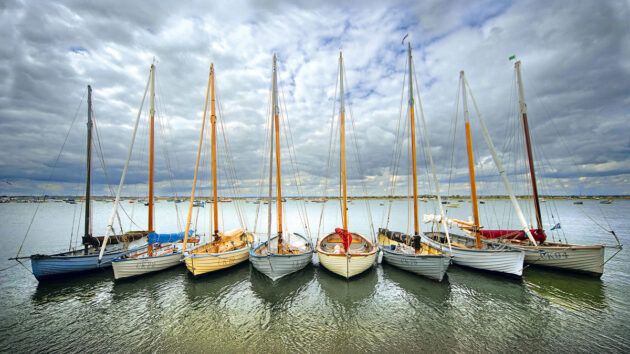
The smacks and barges of the East Coast are mostly familiar names in maritime history, celebrated for their size, speed, and the vital role they played in fishing and trade. These were the workhorses of the estuaries, carrying cargo, hauling nets, and ferrying oysters along the Thames Estuary and beyond.
In yachting history, they provide a direct link to the Royal‑endorsed racing fleets of past summer seasons. Essex sailor men, accustomed to handling these large and sometimes unwieldy vessels, learned lessons in sail trim, balance, and tactics that would later translate to racing, applying their daily working knowledge to push the craft to the limit, creating spectacles under canvas.
Yet while the smacks and Thames sailing barges are fairly well documented, there exists a less heralded tradition: the open working boats of the Blackwater and Colne estuaries.
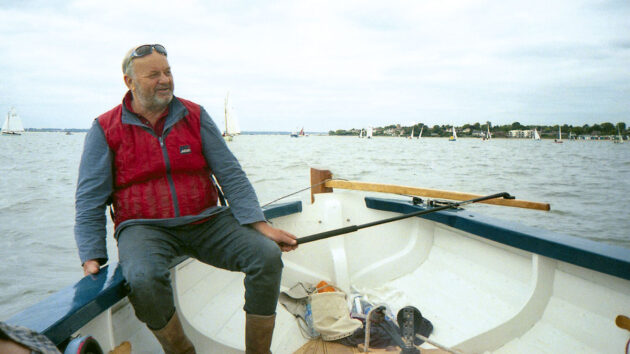
Gerard Swift’s work is as much about preserving tradition as it is about building boats. Credit: Gerard Swift
Vessels that fishermen sailed without engines, relying entirely on wind, skill and their own hands. These engineless craft demanded constant attention and an intimate understanding of the water and weather. Every tack, adjustment of the sail, and moment spent balancing the boat became a practical lesson in seamanship.
In the Blackwater Estuary, the Mersea Fisherman’s Open Boats are smaller, simpler, and less well known than the smacks and barges, yet they were the original proving ground for Essex sailors. Most fishing smack owners kept an open boat for working their oyster layings, winkling, or for times when the wind was too little or too much for the larger vessels.
All the fisheries kept small craft for working their layings and the people of the island used foot boats for their comings and goings. From these practical beginnings, an odd assortment of boats began to appear on the island.
Bumpkin clarification
Confusingly, yet in the tradition of nautical vocabulary tomfoolery, the fishermen of Mersea Island call rigged open working boats the bumpkin. Those familiar with a bumpkin may think of the strut sticking out of the back of a craft for mizzen sheets and backstays; the Drascombe lugger springs to mind. This is in complete contrast to Mersea vessels where the term is used to mostly describe the short metal iron bowsprit that sits around the stem supporting the forestay and boasting a roller in a snatch for the running of the dredge line and anchoring.
The term bumpkin is, of course, even more complicated on the island as it tends to also refer to any open fishing boat ranging from 15ft to 22ft, and has several different spellings with John Leather using the term bumkins. The earliest mention of such craft I can find is bomkin in 1874.
Island tradition
By the 1970s as traditional working craft began to fall into disrepair, surplus one‑ design dinghies were adopted for racing, and by the time GRP dinghies were fully embraced, clinker‑built working vessels were a rare sight or suffering from hard lives afloat. The islanders still raced.
It was this eclectic collection of ex-working bumpkins, one‑design dinghies, homebuilt craft, and imports from other parts of the coast that eventually formed the Mersea Fisherman’s Open Boats (MFOB) fleet in 1997 – a varied assortment of vessels that still race under handicapped rules prohibiting engines, self-bailers, or plywood planking making for exciting racing and heated debate.
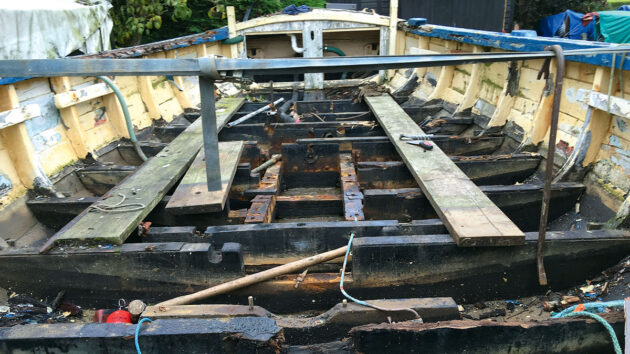
The 1948 Essex workboat, Silver Spray, before restoration. Credit: Gerard Swift
For the waterfront community of Mersea, Maldon’s Gerard Swift requires little introduction. He started sailing as a young boy aboard his father’s charter barge, and it wasn’t long before he was taking his own ex-working boat from Maldon to the island to race. Winnie, a Kidby-built winklebrig, which was replanked in 1978 by Cecil Wright, cemented a lifelong love for these working open craft.
Since his early days on the Blackwater Estuary, Swift has made his living from traditional craft, but he has rarely been without a bumpkin in his own fleet. Swift spends his days surrounded by timber, tools, and the smell of his woodburner, and what he does is as much about preserving tradition as it is about building boats. Based in Tolleshunt D’Arcy, just a stone’s throw from the island, he works on wooden boats, from traditional sprat skiffs and oyster boats to smacks and Thames barges. He is responsible for rebuilding, saving, and maintaining a large proportion of the current MFOB fleet, and he has also rescued, rebuilt and restored the fleet’s big bumpkins.
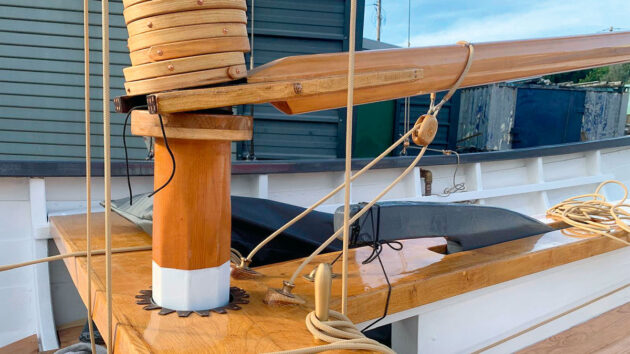
The hallmarks of a Swift revamp; hollow spars, braided rope modern sail technology, foiled centreboard and rudder blade. Credit: Lyndon March
What sets Swift’s work apart is its meticulous, hands-on practicality. These aren’t just vessels to sail; they are pieces of history that need careful handling. Every plank, fastener, and joint has a story, and Swift aims to ensure that story continues on the water.
Importantly, the boats have to remain practical. To work they have to perform, and they have to look right. Swift understands how to fit a bumpkin out, retaining its original mast position, bumpkin length, hull shape but pushing the rest of the rig and sail technology to get the very best performance out of an old clinker barrel.
When a boat comes into his workshop, it is often weathered, dried out and rusted with flaking paint. Swift starts by examining everything, measuring it, and planning how it will come apart and go back together. To the untrained eye, pushing these saggy old bones back into shape can look brutal–straps, shores, chopping and cropping–but it’s done with the utmost care and a deep understanding of how these vessels should look. Then comes the dismantling: old planks removed, fastenings chopped, decayed timber replaced. Everything is crafted by hand, cutting and shaping oak to fit perfectly, because sloppy work here would ruin decades of tradition.
Big bumpkin
It is not every day that you witness an entire boat sitting on stilts, bottom planking missing, with the keel being pulled out by a Land Rover, but for Swift, this is just another day at the workshop. This, combined with carefully cutting scarfs of planks apart to find the newspaper from 1900 recreates vessels that are as authentic as they are fast.
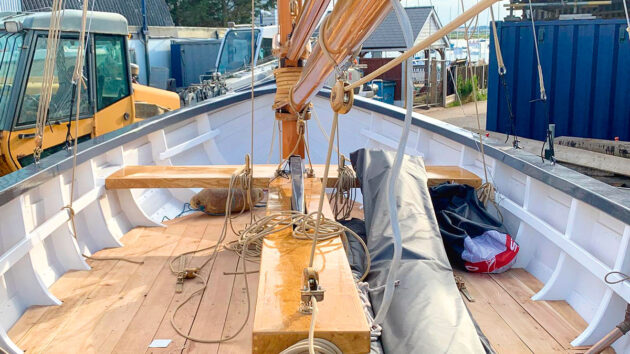
The motor vessel Silver Spray’s hull is near identical to her sailing sister Gipsy with propshaft and related gubbins removed. Credit: Lyndon March
There have been numerous vessels through refit, rebuild and complete restoration through Swift’s sheds, all unique in their own right. Arguably the most impressive of these vessels are the big bumpkins. As the name suggests, these vessels are the biggest clinker craft built to work the local waters ranging from 18ft to 22ft. It is down to his and wife Helen’s hard work they have been saved.
Currently out of the 12 still sailing Swift has saved and rebuilt nine, with a further three tucked up safely in the yard waiting to have their stories told. The stories of the vessels are wrapped up in the names carved in the transoms and the names of the folk who worked them, something the Swifts are equally as passionate about researching.
Early impetus
The big bumpkins project started when the widow of oysterman Douglas Musset sold his old workboat. Marie was originally a sprat skiff, unique vessels that had been rowed and sculled in and out of Brightlingsesa full of sprat barrels. When the sprats were done, the skiffs made their way to the oystering beds of Mersea.
Motorised, they worked the laying, but with the addition of a hog, centreboard and rigging make very good sailing craft and share lots of DNA with their big oystering bumpkin cousins which, at a similar size but more planks per side, were built to work the oyster fishery.
Swift ended up with Marie, unceremoniously delivered for £25 in the middle of his driveway while he was away at sea. And so it began. Marie was dubbed ‘the dinosaur’ by the other MFOB sailors when she took to the water in 1995. They felt she was old fashioned and wouldn’t sail.
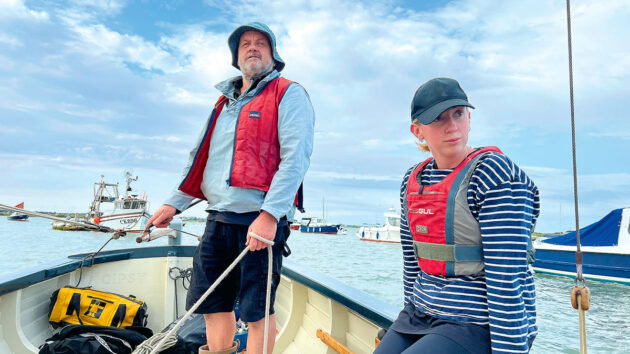
Gerard at the helm of his own bumpkin Gipsy, which he restored and races. Credit: Lyndon March
After a large rebuild by Swift she took the water with a toy dinosaur lashed under her bowsprit. The ‘old dinosaur’ had a telescopic bowsprit for downwind work, lightweight sole boards and the latest in sailing technology for rigging and sails. She went on to prove she was fast.
There are three sprat skiffs racing in the fleet rebuilt by Swift; Lillian and Mystery being two of the most recent full rebuilds. Each is unique but share the wonderful hallmarks of Kidby-built boats and the large-planked sides of Sprat Skiffs updated to be competitive and fun sailing vessels by Swift Boats.
Alongside these sprat boats converted to sail are Gipsy and Florrie May, two bumpkins built to sail. Gipsy was rebuilt in 2008 for a then-private owner; she is now owned and sailed by Swift. Originally designed to work the oyster beds of the Banks brothers, she was also built wider at the stern to give her more carrying capacity to help her cargo oysters down from Maldon. She and Boy George are the last original oyster-working bumpkins afloat originally built by Aldous of Brightlingsea.
Florrie May was rescued from a bonfire when a yard owner realised this 20ft local boat had a centreboard slot; after some research the Swifts realised she may be an incredibly rare survivor in more than one way. Possibly built by Frost and Drakes of Tollesbury as a yacht tender to ferry people to large yachts at anchor in the Blackwater, this finely planked clinker hull then went on to work the waters of the Roach and from Leigh-on-Sea as a fishing boat before being brought back to sailing for the MFOB fleet.
Plastic-free rebuild
The latest vessel out of the shed is Silver Spray. Built in 1948 as a motor vessel to work the oyster laying around the island, she has the distinction of being built not only on the island by Jack Emery but now being rebuilt using a fallen oak tree from the island. Don’t be fooled though, motor boat doesn’t mean this isn’t a sailing boat.
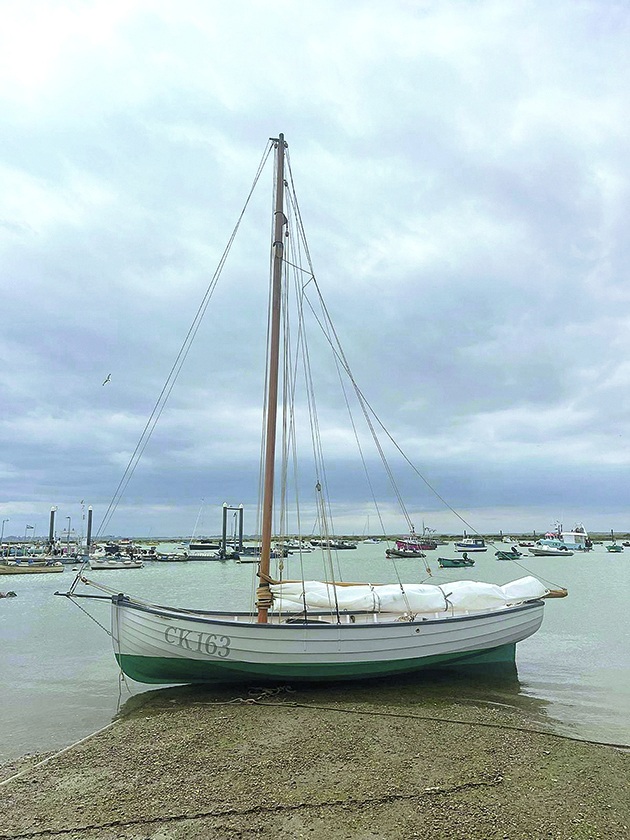
The fully restored Silver Spray, CK163. Credit: Hugh Barker
Silver Spray is seriously quick. Her hull is near identical to her sailing sister Gipsy, especially now her prop shaft and related gubbins have been removed. She also has all the hallmarks of a Swift Boat reimagining – hollow spars, braided rope, modern sail technology, foiled centreboard and rudder blade.
You find the mainsail set on hoops, beautiful wooden blocks with bronze sheaves and authentic proportioned stainless steel chainplates but painted to look no different from the galvanised ones of yesteryear.
Silver Spray goes much further than previous rebuilds; where possible she is completely plastic free, even her bilge pumps are metal-bodied, hidden below the gorgeous golden wooden larch sole boards. Oddtimes, Alice and the Jolly Boat are the last of these original big bumpkins still to be saved; Odd and Alice built as sprat boats and the Jolly as a motorised skiff for Stanley Hills which later fished. They have deep and proper East Coast stories just waiting to be unlocked.
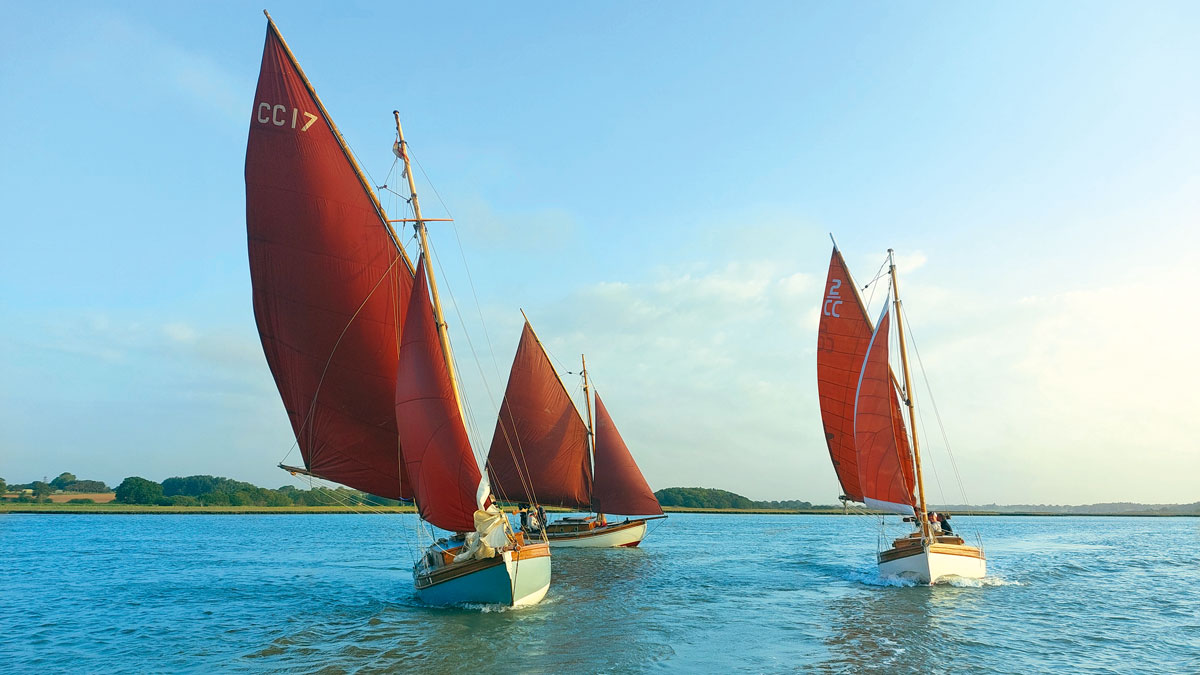
100 years of the Deben Cherub
It is a century since the first Deben Cherub was launched. Julia Jones looks back at the history of this…

Clinker-built boat repair: step-by-step
Richard Johnstone-Bryden explains the basic principles of clinker construction and the method of replacing damaged hull planking
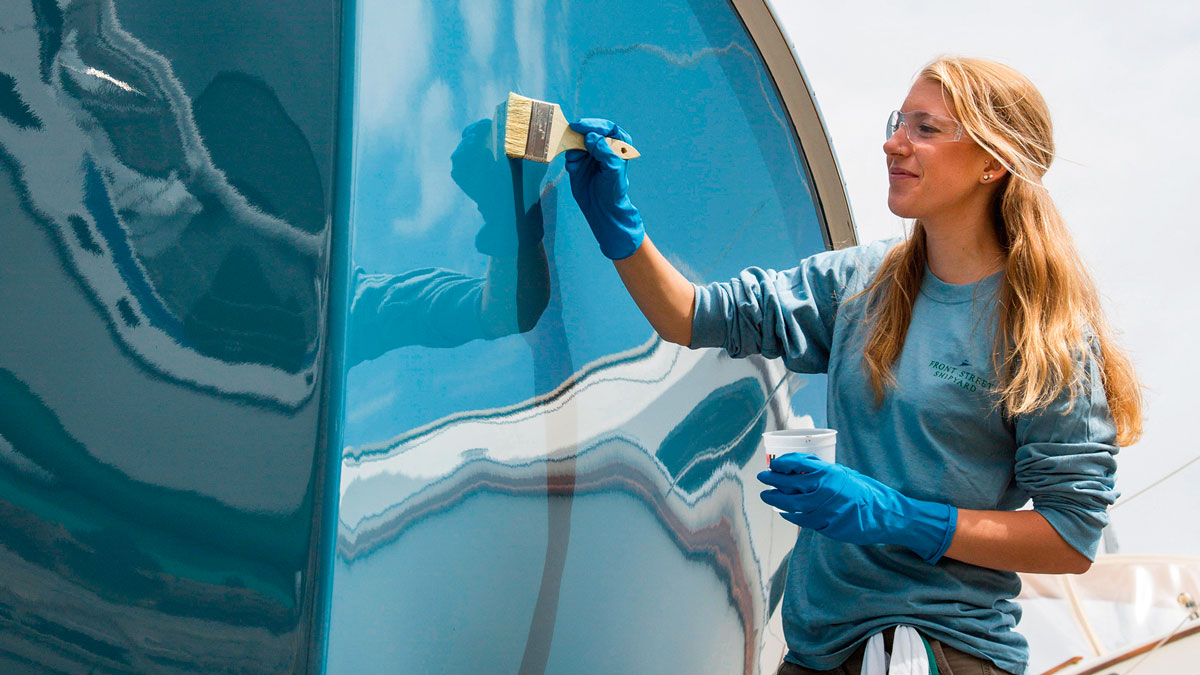
How to get a mirror finish on you boat
Lyndon March explains how to get the perfect mirror finish on your wooden or GRP hull

Boat wood: a complete guide for yacht owners
Boatbuilder and finisher Lyndon March explains which types of wood work best for different repairs and modifications on board
Want to read more articles like Giving the bumpkin a new lease of life?
A subscription to Practical Boat Owner magazine costs around 40% less than the cover price.
Print and digital editions are available through Magazines Direct – where you can also find the latest deals.
PBO is packed with information to help you get the most from boat ownership – whether sail or power.
-
-
-
- Take your DIY skills to the next level with trusted advice on boat maintenance and repairs
- Impartial, in-depth gear reviews
- Practical cruising tips for making the most of your time afloat
-
-
Follow us on Facebook, Instagram, TikTok and X