



Rupert Holmes looks at what lies under the surface of different types of boat construction and addresses common misconceptions
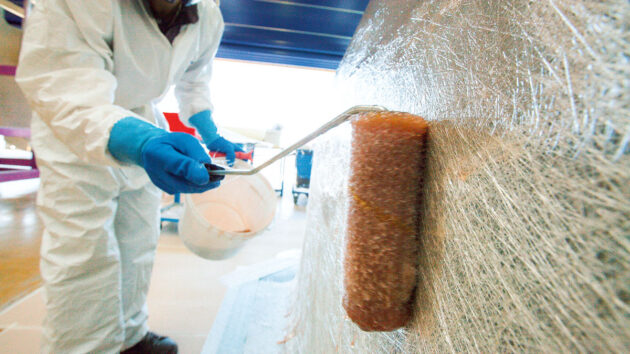
For around 60 years glassfibre construction has been almost ubiquitous in boats, aside from the most exotic racers, some mass-produced dinghies and a handful of custom one-off designs. Initially, economy was the key attraction when it came to boat construction and the first glassfibre boats in the early 1950s copied the shape of existing wooden designs.
However, several naval architects, including EG Van de Stadt, soon discovered they could produce more novel shapes. The material also proved generally robust – though not problem-free – and surprisingly easy to repair. The material consists of two elements – a resin that undergoes a chemical reaction and sets hard when mixed with a catalyst, plus a matrix of glass fibre strands in the form of a cloth or mat.
The resin ‘wets’ this out, combining the two elements into a single, solid structure when it cures. Polyester resins are the cheapest and most commonly used, but vinylesters have several advantages, including increased strength and water resistance. Epoxies are more expensive still, but have superior structural properties and water resistance. They also have a different chemistry and must be mixed in exact quantities.
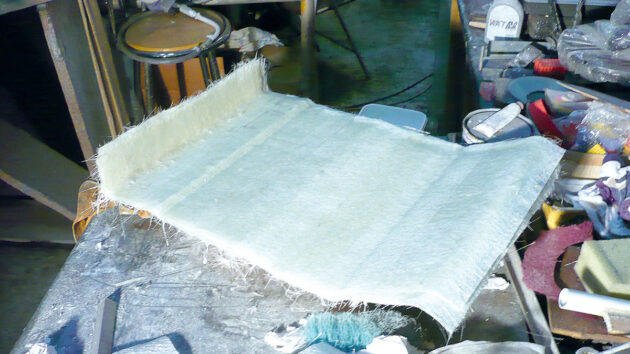
Boat construction: Chopped strand mat needs many layers for strength so boats made this way are heavier. Credit: Tony Davies
Chopped strand mat was used almost exclusively as the reinforcement in the early days of glassfibre boatbuilding. This collection of relatively short, loosely intertwined, randomly oriented fibres is cheap, but a substantial thickness is needed to achieve strength, so boats made this way tend to be heavy.
However weight high up in the structure would reduce stability so sandwich construction was quickly adopted for decks and coachroofs. This creates a thicker but lighter structure that’s stiffer, with improved resistance to bending. End-grain balsa and closed-cell foam are by far the most popular core materials, though lightweight honeycomb structures have been used for high-end raceboats.
On the downside, delamination of the sandwich is a fairly common problem, though fortunately one that can often be rectified fairly easily. Sandwich construction may also be used for the hulls of lighter craft, though solid monolithic layups are usually retained to give better impact resistance below the waterline and in high load areas such as around the rudder stock.
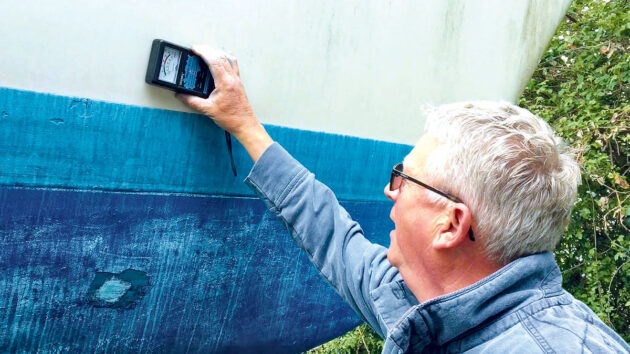
Many moisture meters are calibrated for use on softwood, which is much more absorbent than glassfibre, so take that into account when testing. Credit: Ben Sutcliffe-Davies
More sophisticated fabrics than chopped strand mat are created from long fibres aligned in one or more uniform directions, coinciding with the dynamic loadings to which the structure will be subjected. Unidirectional fabrics are just that – all fibres are aligned in one direction, with the strands stitched together. Bi-axial fabrics are often woven, with the fibres running at 45° or 90° to each other. These produce a structure with a considerably improved strength-to-weight ratio.
Additional reinforcement in key areas can be achieved with local use of more exotic fibres, including aramids such as Kevlar and Twaron, or carbon fibre. In the 1980s, for instance, several Jeanneaus such as the Sunshine 38 benefited from Kevlar reinforcement in the slam area forward. Strengthening is also achieved by using foam ribs and stringers. Here the foam is only used for its shape – it’s glassed over to create a long box section. Bulkheads and furniture such as bunk fronts can also be incorporated into the structure to add strength and stiffness by bonding them into the boat hull and/or deck.
Understanding boat construction: Troubleshooting glassfibre
It’s often thought older glassfibre boats were overbuilt and therefore largely immune from problems. The evidence, however, suggests otherwise, even if many problems have been solved by now and most owners have good experiences.
At the end of the 1970s and early 1980s, for instance, plywood was used for the formers for the glassfibre stiffening that spreads the loads from the keel for many Westerlys, including GK29s, early Konsorts and some Fulmars. This arrangement proved fragile and susceptible to cracking, so the plywood was replaced with a more conventional foam, creating a more square and robust shape. Existing boats were modified similarly. Equally, bilge keel craft with keels splayed out from the vertical can encounter issues if kept on a drying mud mooring.
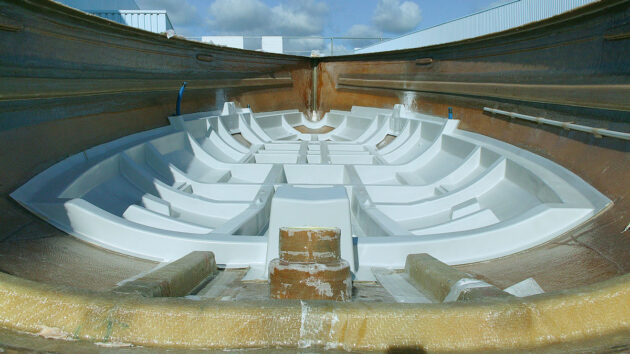
Hull thickness is no guarantee of build quality. Credit: Graham Snook/Future PLC
A tangible number of Westerly Pageants, Centaurs and Griffons, among others, have developed keel root problems. This wasn’t unique to Westerly by any means, but it built more of this style of boat than other yards. The thickness of a hull moulding is often cited as a good proxy for how well a boat is built. It’s an attractive idea and can be easily measured when installing or replacing skin fittings or depth/speed transducers. However, it doesn’t really tell us much. The hull thickness of early GRP boats made of hand-laid chopped strand mat may appear reassuring, but this is an inferior product and the amount of resin used was rarely monitored.
As a result a hull might have dry fibres in some areas and too much resin (which also reduces strength) in others, as well as several voids. This helps explain why so many boats of the 1960s and 1970s – and some later models – suffered varying degrees of osmosis. Resins used for the outer layers of hulls improved considerably in the late 1980s and 1990s, but a key reason why later vessels tend to be far less prone to osmotic blistering is that they had many fewer flaws in their mouldings. What’s hidden inside the laminate – and the precise mix of chopped strand mat, woven rovings and core material – can be as important as layup quality.
Minestrone, my Extension 24 Quarter Tonner refitted 15 years ago, has a much thinner hull moulding than other 1970s boats. But this reflected a higher standard of construction, with extensive use of biaxial woven rovings, which tend to resist osmosis better than chopped strand. In addition, foam core was used above the waterline and the bunk fronts were bonded to the hull to improve longitudinal stiffening.
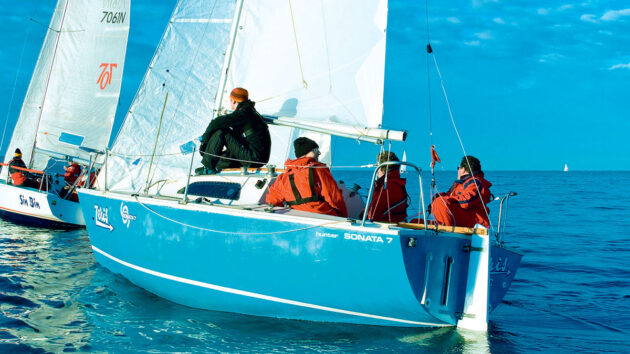
The Hunter Sonata includes biaxial woven rovings and unidirectional fibres, making it strong, stiff and lightweight. Credit: Damien Taylor/Alamy
The result was a strong, stiff, lightweight structure that stood the test of time. The same is true of other notable boats of the period, including the 22ft Hunter Sonata, and the later twin keel Duette cruising version, which still offered excellent sailing qualities. These boats made extensive use of biaxial woven rovings and unidirectional fibres a decade or two before their widespread use. A common misconception is that weight doesn’t matter in a cruising boat.
But reality is much more complex. If a boat is too heavy it will be underpowered, especially in light airs, so you’ll spend unnecessary time under engine, unless an oversized – and therefore difficult to handle – rig is specified. However, if the structure’s weight can be reduced, it can be added to the keel, thus improving ballast ratio. The boat then becomes safer, since stability is improved, and more comfortable thanks to lower heel angles. It will also be easier to handle as it won’t need to be reefed as often.
By the mid 1990s techniques that had previously been the preserve of the high-end of the racing scene had been adopted more widely. Resin-to-fibre ratios were also controlled more carefully, using vacuum bagging or resin infusion on top-quality mouldings. This is a more skilled and time-consuming process, but produces a far superior result, even if the laminate is lighter and thinner.
Boat construction: Tackling delamination
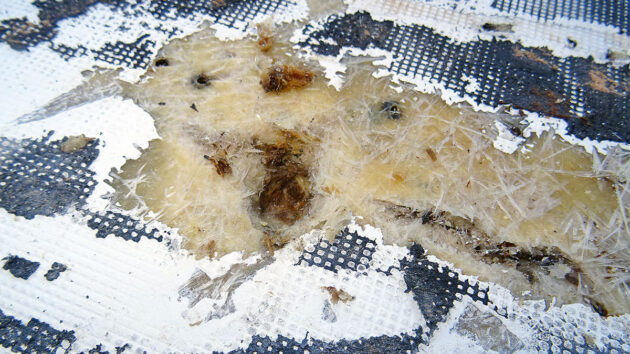
Delamination can be a problem with sandwich construction. Credit: Ben Sutcliffe-Davies
Glassfibre construction is normally robust, but problems can arise. If water penetrates the core material due to a leaky deck fitting, for example, adhesion of the glassfibre layers on each side of the sandwich may be lost, resulting in a severe loss of strength and rigidity. Balsa core decks are particularly prone to this, but foam cores are not immune. The solution is to remove one skin, along with the core, and replace the damaged material, ensuring it’s well bonded in place.
With decks this is usually done by removing the laminate and core from the inside, preserving the moulding’s outer shape and cosmetic finish. A few older boats with balsa core hulls have also experienced catastrophic delamination that’s beyond economic repair, even on a DIY basis. Improvements in resins, quality control and manufacturing, however, mean later balsa core models tend to fare much better. Water absorption into the laminate itself can result in osmosis causing the gelcoat to blister.
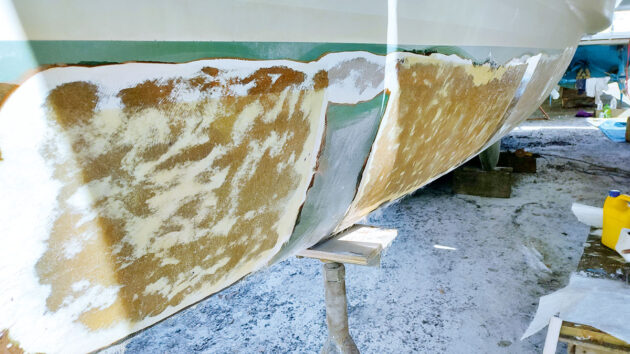
Boat construction: Osmosis can be treated by removing the gelcoat and grinding out deep blisters. The hull can then dry before coats of epoxy are applied. Credit: Andy Pag
If left unchecked this can spread progressively deeper into the laminate. There’s a common misunderstanding about the amount of water a glassfibre hull can absorb. Most moisture meters are calibrated for use in softwood, which is far more absorbent than glassfibre. A meter reading of 20% may equate to only 2-3% moisture content in glassfibre. For this reason, surveyors usually state comparative moisture readings, comparing underwater areas with the topsides, for instance. There are a few potential approaches to treating osmotic blisters. One school of thought says the boat should be peeled of its entire gelcoat, any deeper blisters ground out, and the hull dried to an acceptable moisture content. The underwater sections are then filled and faired, before several coats of epoxy are applied to create a new barrier that’s impermeable to moisture and replaces the original gelcoat.
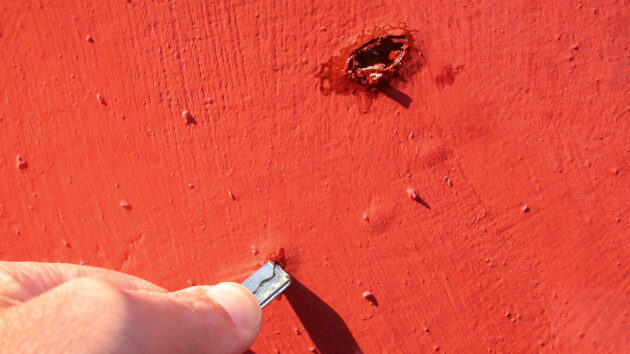
Most blisters on boats are water blisters; the tell-tale vinegar smell of the liquid inside indicates possible osmosis, which could impact the boat construction. Credit: Motor Boats Monthly
Alternatively, if the problem is minor it may be possible to treat each blister in isolation. Simply grind it out, allow it to dry, and fill the area with epoxy filler. Flaws in the moulding are often where osmosis starts – so areas that have been repaired once are less likely to be problematic in the future and beyond a certain age a large number of new blisters are unlikely to form.
For many boats this will be all the treatment required; even if a couple more blisters form a few years later, they can be treated similarly. This is exactly the approach I’ve taken with one of my boats over the past 25 years. Over time only a handful of new blisters have appeared, even though the boat is ashore once every five years. Most boats built since the early 1990s used isopthalic resins for the outer layers of the structure, which are considerably more resistant to osmosis. This, along with improved lay-up techniques, helps explain why osmosis is now a smaller problem.
Water ingress
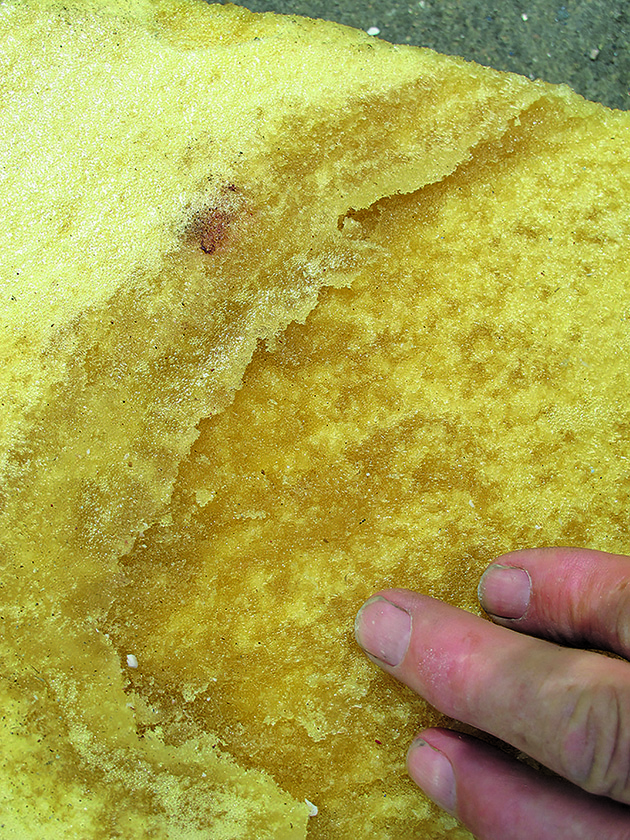
Boat construction: Water ingress into the laminate or foam core is common with spade rudders. Credit: Future
Spade rudders often have problems with water ingress into the laminate or the foam core as it’s almost impossible to maintain a perfect seal between the metal and the laminate. It’s therefore not unusual to find a rudder with moderate or even severe osmosis on a boat with an otherwise sound hull.
Skeg-hung rudders are often considered a better option as they support the rudder at a lower point. But they’re not problem-free; I’ve seen some that flex alarmingly where they meet the hull when the tip of the rudder is moved from side to side – a problem encountered by Translated 9 in the last Ocean Globe Race – and by other Swan 65s.
Running aground and its impact on boat construction
What’s often overlooked is that the most important factor, whatever the rudder arrangement, is robust structural engineering. At the same time, skegs with a small contact area on the hull can present a big challenge, particularly on boats designed before today’s powerful computer-based tools for analysing load paths were available.
A heavy grounding can result in the back of the keel trying to push up through the hull, dislodging frames or the floor web and, in extreme cases, causing hull delamination. This applies to designs from the 1970s and 80s in which stiffening is laminated directly to the inside of the hull and to more modern vessels that depend on a separate moulding that’s glued into the bilge to take the keel loads.
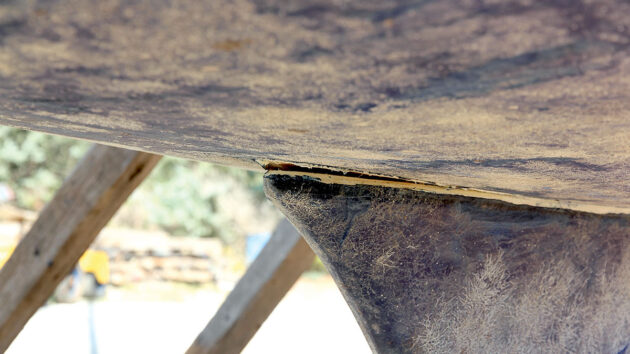
Boat construction problems: A big gap had opened up on this boat between the front of the keel and the hull after a hard grounding. Credit: Rupert Holmes
In both cases, this web must be securely re-attached and any cracks ground out and made good. Often the keel must be removed and a fair bit of the interior dismantled before such damage can be repaired, making it an expensive operation.
Encapsulated keels are often promoted as being very resistant to grounding damage, but is this always true? They can certainly help, but they aren’t automatically better. Damage to the glassfibre moulding will need attention sooner rather than later. Done promptly, this is likely to be a smaller task than rebuilding the bilge matrix of a conventional modern design. And there’s less risk of catastrophic failure. Nevertheless, it’s important not to be complacent.
Unfortunately, boats are often left afloat without the damage being inspected, allowing water ingress to spread. This might not be critical for the relatively small number of these designs with lead keels, such as Rustlers and Contessa 32s, but it can be bad news for those with cast iron encapsulated keels.
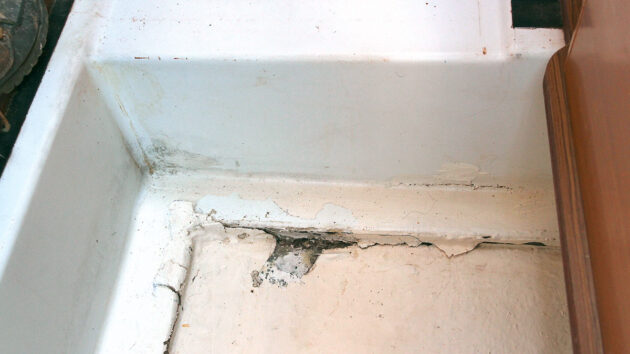
Damage to a keel matrix after a hard grounding on rock. Credit: Rupert Holmes
When iron rusts it expands and severe cases can crack the laminate that forms the outer structural skin of an encapsulated keel. To keep costs down some encapsulated keels were filled with mild steel punchings (the inner section of washers) or lead shot. If that’s the case, a grounding that sees the laminate abraded right through into a hole, however small, risks punchings or lead shot ballast ‘leaking’ out into the sea. It’s not only small lower-cost boats that are susceptible; a decade ago a superyacht deposited 30 tonnes of lead shot on the seabed after running aground on a Caribbean reef.
Sacrificial keel guards or shoes have been fabricated by some owners of boats with encapsulated keels to create a further layer of structural protection in the event of a severe grounding.
Repairing damaged glassfibre
The nature of glassfibre makes it relatively easy to repair even fairly severe damage; I’ve seen it done on holes you can climb through. However, a skilled eye is needed to minimise the amount of fairing, ensure the shape is exactly right and to be sure of retaining structural integrity. There’s a strong argument for using epoxy resin for repairs, as it shrinks less than polyester during the curing process and has better adhesion.
Less serious damage that results in only crazing or cracking can be repaired by opening out the crack with a sharp chisel or Dremel until solid laminate is reached. If the cracks are solely within the gelcoat, then it only needs to be filled. Deeper cracks will need structural filler, while those that extend well into the laminate need additional reinforcement.
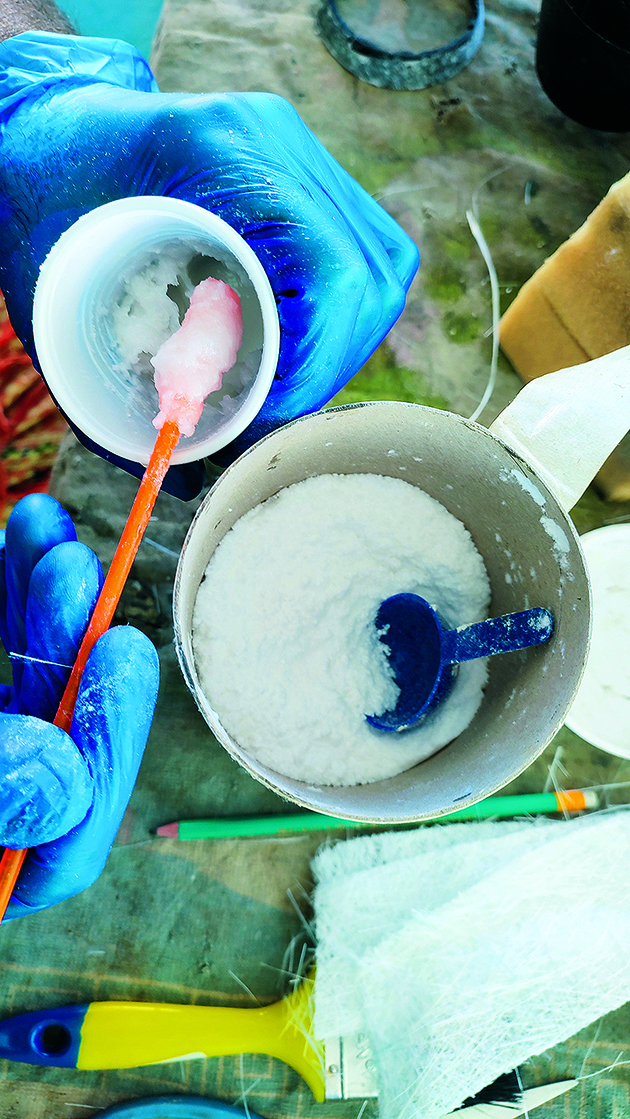
Microfibres bulk out resins; it needs to be the consistency of peanut butter. Credit: Andy Pag
Colloidal silica, microballoons, glass bubbles and microfibres are used to bulk out resins, including epoxy, to create fillers or gap-filling adhesives. Generally the mix should have the consistency of a meringue or even peanut butter – it needs to stand in peaks. Small areas of cosmetic damage can be filled with silica/gelcoat mix, then coated with gelcoat to get a perfect finish and faired by sanding with progressively finer grades of abrasive paper.
Arguably fairing and colour matching are the most skilled elements of these tasks. As with car body repairs, the latter can be challenging. Owners of recent boats are likely to be able to get colour-matched gel from the manufacturer, but those with older craft may find some pigments must be blended in the correct quantities to create a good match. A small amount (1-2%) of wax needs to be added for the gelcoat to harden in the presence of air.
Adding silica to resin creates a structural adhesive with excellent gap-filling properties. Often referred to as ‘bog’, this is used, for example, to stick the floor web moulding to the inside of the hull. Use of a 50/50 mix of silica and microfibres creates a filler with even better structural properties. These reinforced adhesives all need to be used sparingly – enough to add strength, but never so much that it requires sanding back before applying gelcoat, as it’s virtually impossible to sand. Microballoons and glass bubbles are used for fairing above and below the waterline respectively and are much easier to sand.
Timber boat construction
It might seem as though there’s no longer a place for wooden boats in a world of rapidly increasing technology. But that’s far from the case and certain types of wooden construction are still successfully used for one-off custom projects, often at surprisingly reasonable costs.
Historically, most UK-built wooden sailing and motorboats were of carvel construction, with planks abutting each other and riveted to a framework of transverse ribs and longitudinal stringers. The gap between the planks is waterproofed using caulking – a fibre of cotton or hemp tapped into the V-shaped seam.
When the boat is launched, the timber swells, closing up any gaps. Aside from regular maintenance, a big drawback of carvel construction is that the structure can flex and twist. Nevertheless, some racing classes, notably XODs, have overcome this by using modern epoxy systems instead of caulking to lock the boat’s structure into a rigid entity. I’ve also seen this done successfully on larger vessels in the Mediterranean.
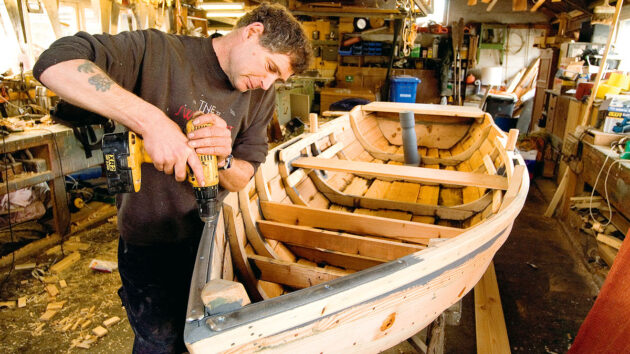
Clinker boat construction is strong and stiff, and is a popular method for building dinghies and dayboats. Credit: Jim Gibson/Alamy
Clinker boat construction differs in that each plank overlaps those above and below. As well as being attached to the frames, each plank is riveted to both its neighbours, creating a strong and stiff structure that’s lighter than carvel. Clinker was often used for dinghies and dayboats, where reduced weight was an important factor for handling ashore. In the UK it was often seen as lower quality, with the result that few larger clinker sailboats were built. However, it enjoyed greater popularity in Scandinavia, where thousands of 25ft Folkboats were built in this manner.
The advent of plywood for boatbuilding in the post-war years changed the face of the boating world, opening it up to thousands of ordinary people for the first time. As well as cheaper materials, the very high level of skill required to build carvel and clinker boats is not necessary with plywood construction, allowing enthusiastic amateurs to build their own boats at a fraction of the cost.
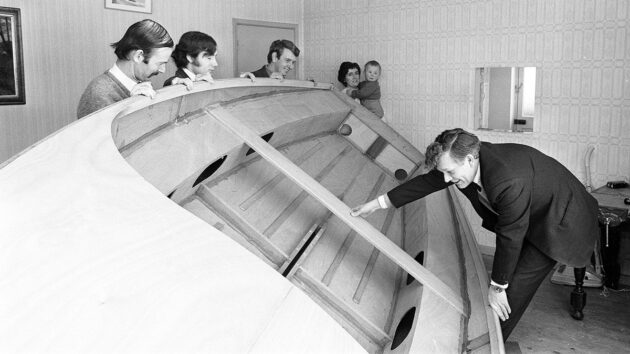
Plywood meant enthusiastic DIY-ers could build boats at home in their own living room! Credit: Birmingham Post and Mail Archive/Mirrorpix/Getty
Today plywood is still widely used, including for structural bulkheads and hulls of low-volume production yachts such as the French RM range. In cold-moulded construction, many very thin layers of wood are glued together, with each layer at an angle (often 90°) to its predecessor. When the glue cures, you have a hull that is essentially like a curved piece of plywood.
This is a strong and potentially very light method of construction, and compound curves are easily formed. This was a popular construction method for performance yachts in the 1960s and 70s, and enjoyed a revival after epoxy resins became common in the 1980s. This allowed the structure to be sheathed in epoxy and cloth, before fairing to a perfect finish. It produces an exceptionally strong and stiff structure, with good resistance to water penetration and an impressive standard of finish.
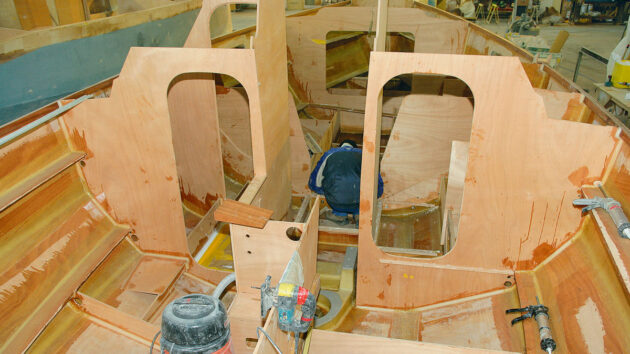
Plywood is still widely used in boat construction, including by boatbuilders RM Yachts. Credit: Graham Snook/Future
Cedar strip construction is a more recent alternative that’s faster than producing a cold-moulded hull, yet can give a superior result. This is especially true where two double diagonal layers of timber like Douglas fir are glued over the cedar. This uses the grain of the wood to create a very stiff and strong triaxial structure. A recent example is Elida, a 48ft cruiser-racer designed by Thomas Tison, who also incorporated elements of carbon fibre into the boat’s internal structure.
All wooden boats need watchful maintenance, but those built using epoxy coatings benefit from a far superior level of protection. However, any damage to the epoxy coating needs to be dealt with immediately Salt water is a mild preservative, so it’s the decks of conventionally-built wooden boats that tend to suffer from rot first if the vessel is kept afloat.
On the other hand, laying up ashore may be counterproductive if fresh water collects in the bilge.
Metal boats
Steel and aluminium vessels are often thought of as almost indestructible, but reality can be different. Granted, a new aluminium hull will provide better protection than a glassfibre one against small floating objects, but it would take a brave skipper to expect a steel or aluminium hull to survive impact with the corner of a shipping container without the plating being punctured. Both materials also require regular monitoring and maintenance to ensure the metal isn’t literally being dissolved by the sea. This means fitting plenty of anodes, checking them regularly for depletion and electrical continuity, and replacing them in good time.

Steel boats depend on the effectiveness of their paint systems to keep rust at bay. Credit: Rupert Holmes
This is particularly true for aluminium yachts, as it’s a more reactive metal than steel. Then again an alloy yacht benefits from not needing a paint system on the hull’s topsides and the deck to prevent rust. Nevertheless, today’s epoxy-based paint systems can be excellent, so recent steel yachts are generally not bad in this respect, though older boats can be problematic.
In both cases the thickness of the plating needs to be surveyed at regular intervals. There are numerous examples of both aluminium and steel boats that develop pinprick holes below the waterline. This can always be repaired; over-plating sections of a metal hull is a routine operation. But the best – and most cost-effective – approach is regular maintenance and inspection that avoids the problem in the first place.
Rotomoulded boat construction
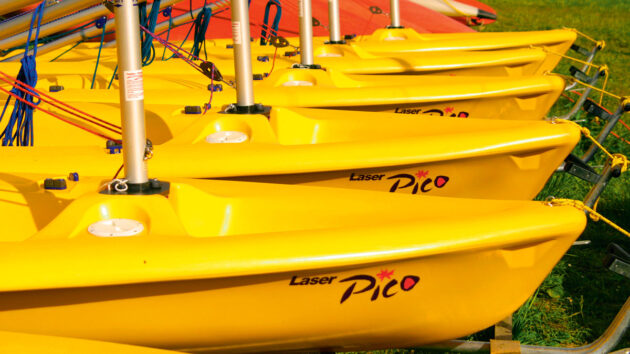
Boat construction: The Pico is typically made from rotomoulder thermoplastic which makes the hull exceptionally strong, stiff and impact-resistant. Credit: Brenton West/Alamy
This mass-production boat construction method for small boats is ideal for those seeking strong and almost maintenance-free craft with high resistance to scratching and impact damage. Manufacture involves placing a precisely measured amount of powdered or granulated plastic (usually polyethylene) into a hollow mould. The mould is then heated to melt the plastic granules and is slowly rotated around two axes so the molten plastic flows evenly over the mould’s internal surfaces.
Early rotomoulded boats were built of a single layer of plastic, which simplifies production, but results in heavy, yet not very stiff, products. For this reason, it was some time before rotomoulding was adopted for sailing dinghies – unlike kayaks and small motorboats their structures are subject to high point loadings due to chainplates and so on.
However, Laser developed a system for the Pico dinghy that solved this issue using a three-stage moulding process to produce a hull with a foam core, giving the same benefits as using foam sandwich in glassfibre construction. These are still around 15% heavier than an equivalent glassfibre boat, but much lighter than earlier rotomoulded structures.
Metal inserts can be moulded into the hull structure in specific locations to create strong attachment points for fittings such as chainplates and rudder pintles.
Damage to rotationally-moulded boats is easily repaired by skilled professionals using a tool similar to a hot knife and a hot glue gun to fuse new material into damaged areas and refinish the surface. DIY repairs are not so easy – if insufficient heat is applied the repair will be weak; too much heat has the risk of melting a larger hole.

Boat wood: a complete guide for yacht owners
Boatbuilder and finisher Lyndon March explains which types of wood work best for different repairs and modifications on board
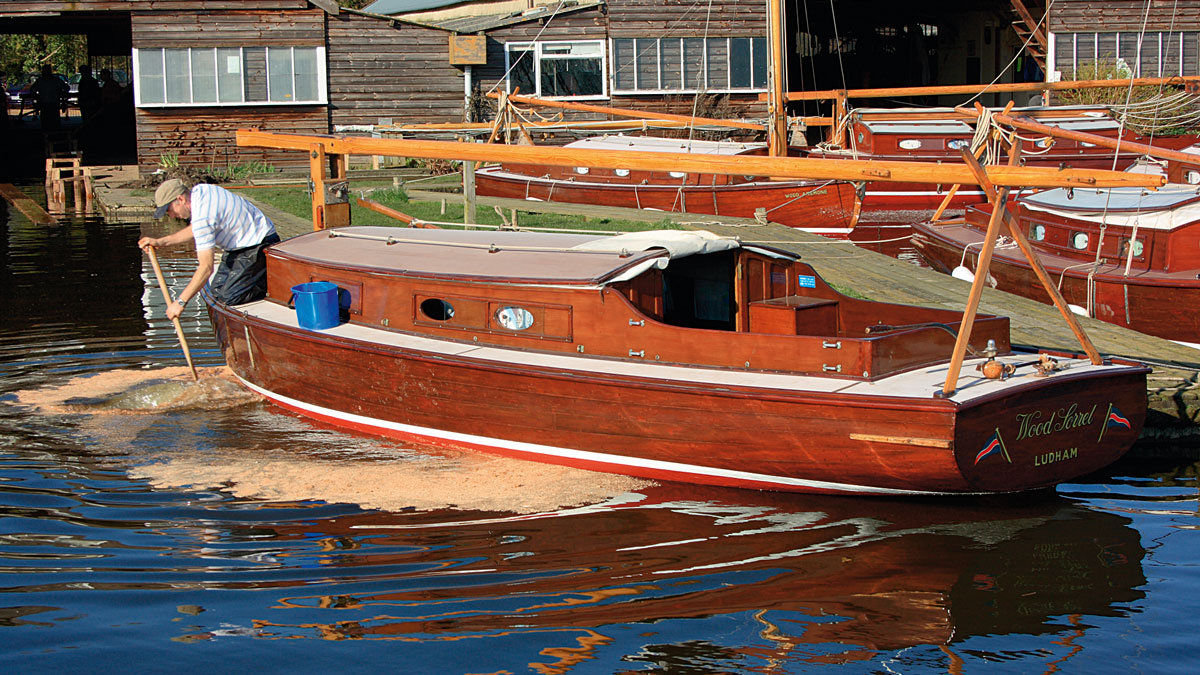
Using sawdust to plug leaks on wooden boats
Sawdust can be used to stem leaks between the wooden planks of a boat that’s been out of the water…

Why plywood boats are making a comeback
A wonder material in the 1950s and 1960s, plywood is making a comeback. Rupert Holmes analyses what lies behind a…
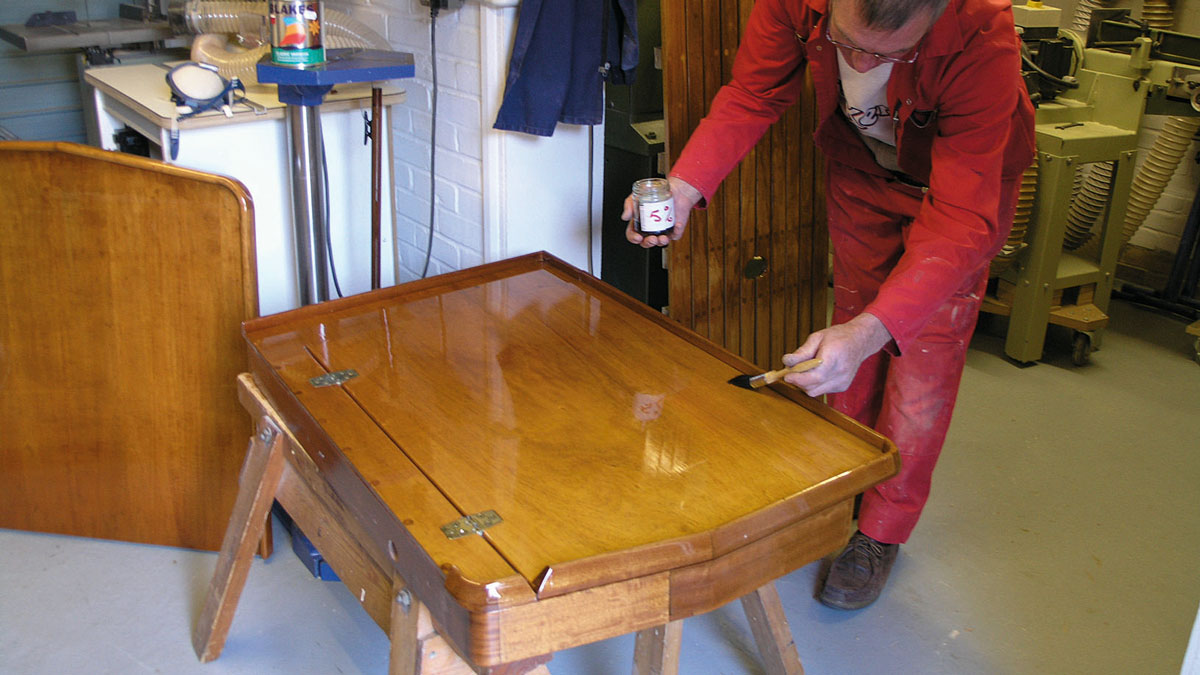
Marine varnishing: an expert guide to making your woodwork shine
Few things look better on a boat than beautifully varnished woodwork. The best results are all down to the preparation…
Want to read more articles like Essential Boat Construction Guide: GRP, Wood, and Metal?

A subscription to Practical Boat Owner magazine costs around 40% less than the cover price.
Print and digital editions are available through Magazines Direct – where you can also find the latest deals.
PBO is packed with information to help you get the most from boat ownership – whether sail or power.
-
-
-
- Take your DIY skills to the next level with trusted advice on boat maintenance and repairs
- Impartial, in-depth gear reviews
- Practical cruising tips for making the most of your time afloat
-
-
Follow us on Facebook, Instagram, TikTok and X