




Mark Prior makes a step using £10-worth of material (which could be salvaged free)
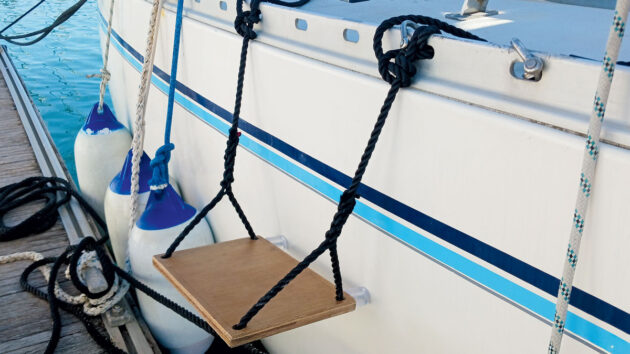
Even the leggiest of us can struggle getting on deck from a low pontoon or a dinghy when at anchor. The solution is often an expensive, commercially-made boat step or steps, which can break after very little use, exposure to sun and exposure to people living with largeness.
Here is a one-step DIY method that costs anything from:
- Nothing, if you are a marina bin surfer.
- Around £10 to buy new wood and rope. It should not take more than a morning to make, or all day if your splicing skills are as dodgy as mine.
Extensive and detailed research was carried out to ensure suitable thicknesses of wood and rope, which involved checking that the step didn’t flex much when I stood on it.
You may need to adjust the size of wood and rope depending on the weight of you and crew, and must ensure it is well maintained to prevent accidental breakages.
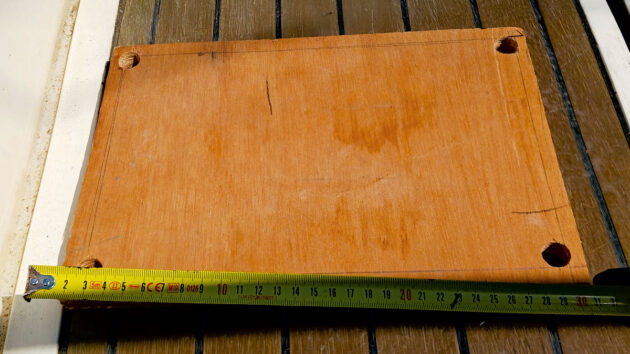
There was a spare piece of 17mm ply in the cockpit locker, so that was the step. Rather than estimate the step size, I stood on the ply with both feet well planted and drew around them, then allowed space for rope holes.
The result was more platform than step at 31cm x 20cm.
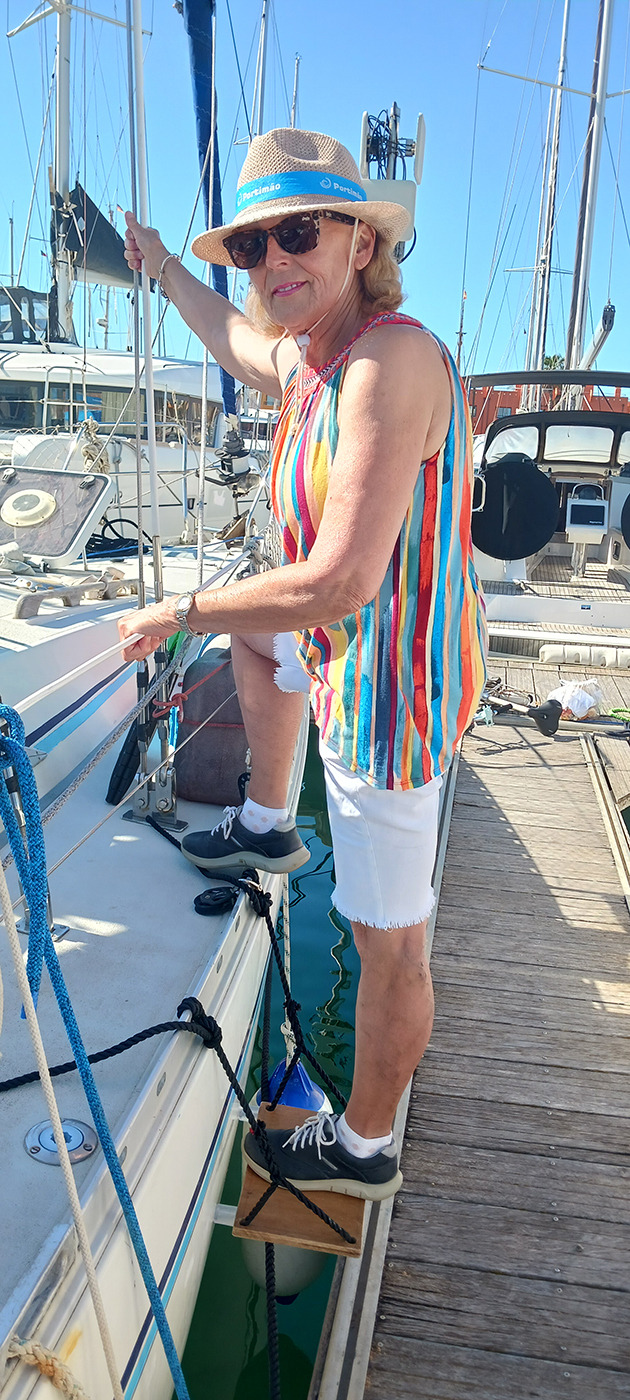
Crew Louise Taylor tests the finished DIY boat step. Credit: Mark Prior
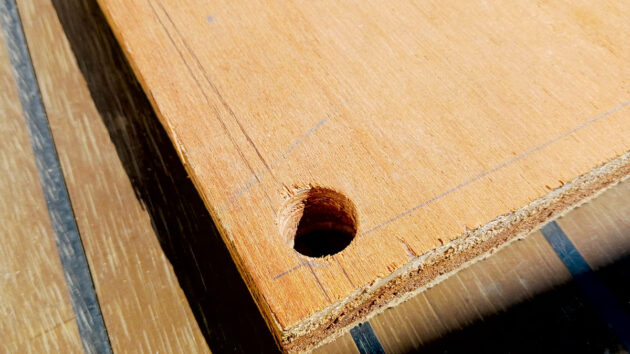
The spare rope hanging around the boat was 12mm. Holes 15mm wide are drilled on the four corners, allowing about 15mm clearance from the edges.
You need two pieces of rope. Mine are each 2m in length to allow plenty of spare for tying on to the boat. Important to note is that you should thread the two lengths diagonally across the bottom of the step and back up through the opposite hole. This distributes weight more evenly and if the wood should break, there is still support.
I carefully measured and marked the lengths between the step hole and the point where the splice will start. Both should be the same length. Then I spliced the ends, with five tucks.
After this, I seized the rope ends and, after sanding the ply, I coated it with floor varnish.
One refinement I made was to screw two plastic chair feet to one side as spacers to prevent damage to the hull. I’m delighted with the finished piece.
This step may be more of a platform, but it’s firm and comfortable and makes life easier, as well as making getting aboard a little more graceful.
How to make a DIY platform-style boat step
Credit: Mark Prior
1. To get the ideal size for his step, Mark found a piece of 17mm plywood, drew around his feet, and allowed a little extra space for holes to attach rope.
Credit: Mark Prior
2. Holes of 15mm wide are drilled on the four corners, allowing about 15mm clearance from the edges.
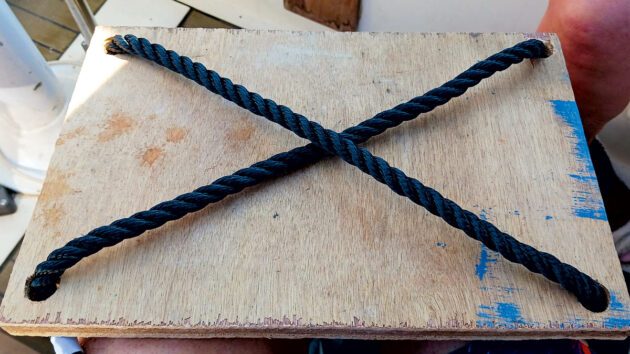
Credit: Mark Prior
3. When rigging the step, run the ropes underneath diagonally across each other for safety and stability.
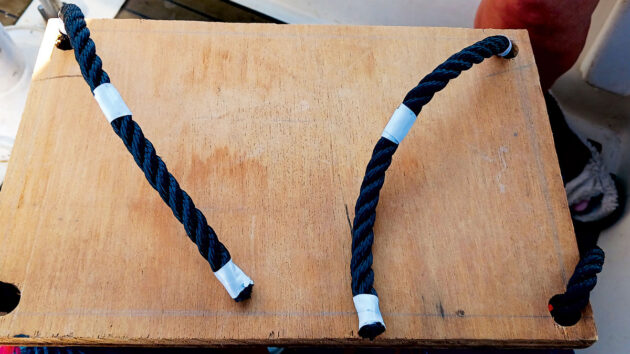
Credit: Mark Prior
4. Measure the rope ends carefully so both sides are the same, and make the strands long enough for five tucks when splicing.
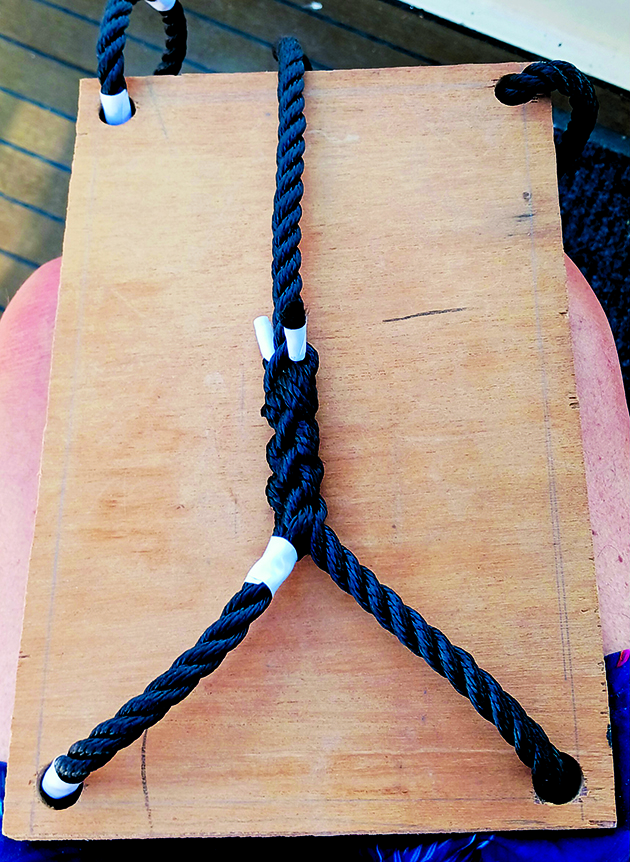
Credit: Mark Prior
5. Splicing completed on one side of the step.
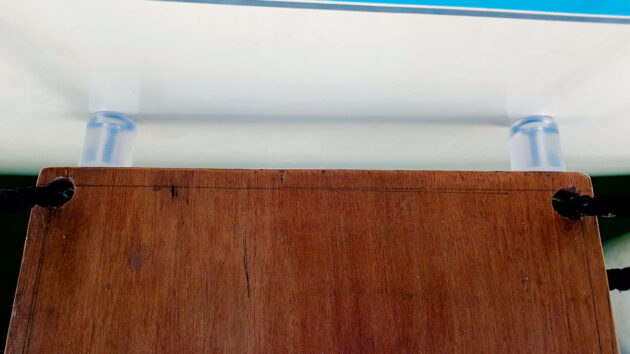
Credit: Mark Prior
6. Plastic chair feet screwed on the back edge prevent damage to the hull.
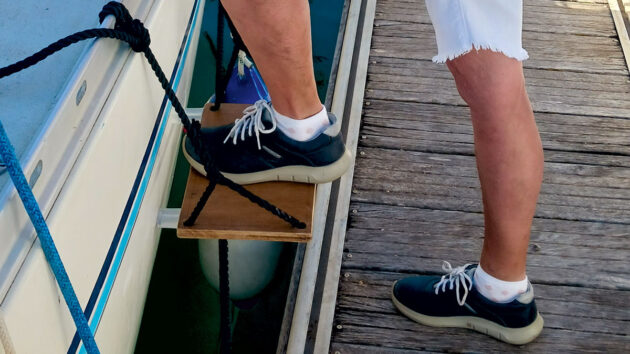
Credit: Mark Prior
7. The completed boat step lashed on and being tested.
Reparing plywood decks: stripping, filling and fairing
Rupert Holmes shows how to strip, fill and fair GRP-covered plywood decks
Using sawdust to plug leaks on wooden boats
Sawdust can be used to stem leaks between the wooden planks of a boat that’s been out of the water…

Moving from varnish to wood oil
Don’t be a slave to varnish. Louise Ras explains how she transitioned to wood oil instead

Boat wood: a complete guide for yacht owners
Boatbuilder and finisher Lyndon March explains which types of wood work best for different repairs and modifications on board
What to read more practical articles like Make a boat step from salvaged wood and ropes?
A subscription to Practical Boat Owner magazine costs around 40% less than the cover price.
Print and digital editions are available through Magazines Direct – where you can also find the latest deals.
PBO is packed with information to help you get the most from boat ownership – whether sail or power.
-
-
-
- Take your DIY skills to the next level with trusted advice on boat maintenance and repairs
- Impartial, in-depth gear reviews
- Practical cruising tips for making the most of your time afloat
-
-
Follow us on Facebook, Instagram, TikTok and X