



Red sails in the sunset? PBO columnist Sam Llewellyn is in favour of any sail colour as long as it's not black. Or tan. Or white.

Sails, now. Handy things. Convenient, low carbon, and once you have paid for them, free.
Beautiful soft parabolas swooping towards the masthead, accelerating the breeze across curved surfaces, creating low pressure on one side and high pressure the other, moving you along in the required direction.
Something like that, anyway.
(Actually you may search me and most other people as to how they actually work. I mean sailing downwind you are being blown along, fair enough. But when we are hard on the wind we are not being blown but sucked along? Weird is not a strong enough word, shipmates).
Never mind the physics. One of the joys of sails is that they look nice. Or once did.
Lately, though, variety has crept in, often disguised as efficiency.
Take those sails that any boat owner with racing in their blood now has to adopt, woven from carbon fibre and laminated with some kind of petroleum-derived goo.
Their colour, if you can call it a colour, is black.
Well I mean really.
Cast your mind back to a cliff outside Athens some thousands of years ago, where King Aegeus stood waiting for his fleet.
For some years the flower of Athens’ youth had been sent annually to Crete as tribute to horrid King Minos.
On arrival they were bamboozled in a Labyrinth and crunched up by the Minotaur, half bull, half human and 100% not nice at all.
On this particular year Aegeus’s son, Theseus, had accompanied the youth squad.
The deal was that this exceptionally muscular lad would attempt to terminate the beast.
If successful, he would set white sails for the return journey to Athens. If not, they would be black.
Theseus got his result, but in the elation of victory he forgot about the sail change, and his father, disappointed, took a fatal dive off the cliff, lending his name to the sea into which he plummeted.
The sadness of this returns with every sight of a black sail.
If racers were civilised humans they might perhaps reconsider their fabric choices.
Then again, they are racers, so perhaps not.
The will to win is not the only determinant of sail colour.
Decorativeness also features, which is why tan is popular in the traditional boat world.
Originally, canvas sails were macerated in a hell-brew featuring red lead and cod oil, a jollop which seeped, stank, faded and fouled hands and decks.
This did not bother the hardy sons of Britain on fishing boats and barges, but was less popular on yachts.
Ancient recipes for leisure vessel sails suggest boiling them in the above mixture with added cutch, an expensive form of gum, as a fixative.
A new trend in sail colour
Unsurprisingly, home sail tanning has gone out of fashion – modern synthetic sails do not take kindly to red lead, even if you can find any.
This has not stopped traditional or near-traditional boat owners from wanting to waft across the oggin under towers of tawny fabric.
Purists reject this tendency, claiming that tan sails are the seagoing equivalent of stockbroker Tudor, in which planks painted black are slapped on to finishing coats of render to give a faintly Shakespearean effect.
Still, chacun a son goo, as we used to say as we swilled wine around the tanning cauldrons of Brittany shipyards.
There are those who maintain that winning and decoration are both silly, and that the correct colour for sails is white.
The upside of this is that white sails are usually cheaper than other colours.
But there are many whites, and up close most of them do not half show the dirt.
Furthermore, those who sail in areas where the odd gleam of sun pierces the overcast may lurch off the dock scorched scarlet by sunlight reflected from the main and crosseyed from the glare of the areas surrounding the headsail telltales.
There is, however, a compromise.
We were watching the Fife regatta on the Clyde this year, and the rigs of those beauties with their charming overhangs and their close-seamed mains and topsails and jibs and genoas were symphonies in cream.
Cream is frankly the colour.
No mourning. No fakeness. No glare.
Just that beautiful soothing parabola swooping up to the burgee at the masthead; the cream de la cream…
Ready about!
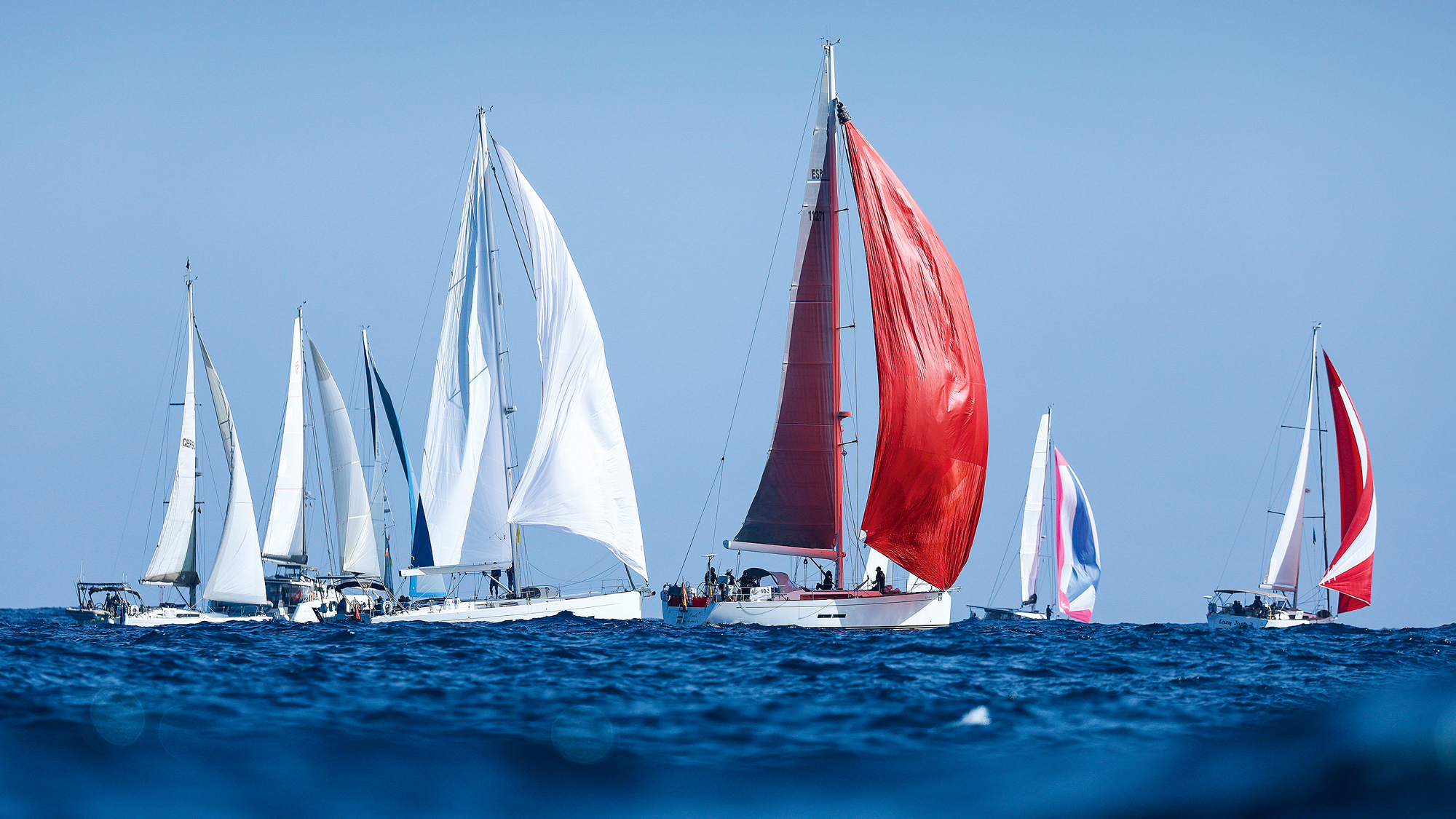
The expert advice on picking the right sails and keeping them healthy
The new season’s approaching, and your sails are in tip-top condition, right? You’ve had them laundered and the UV strips…
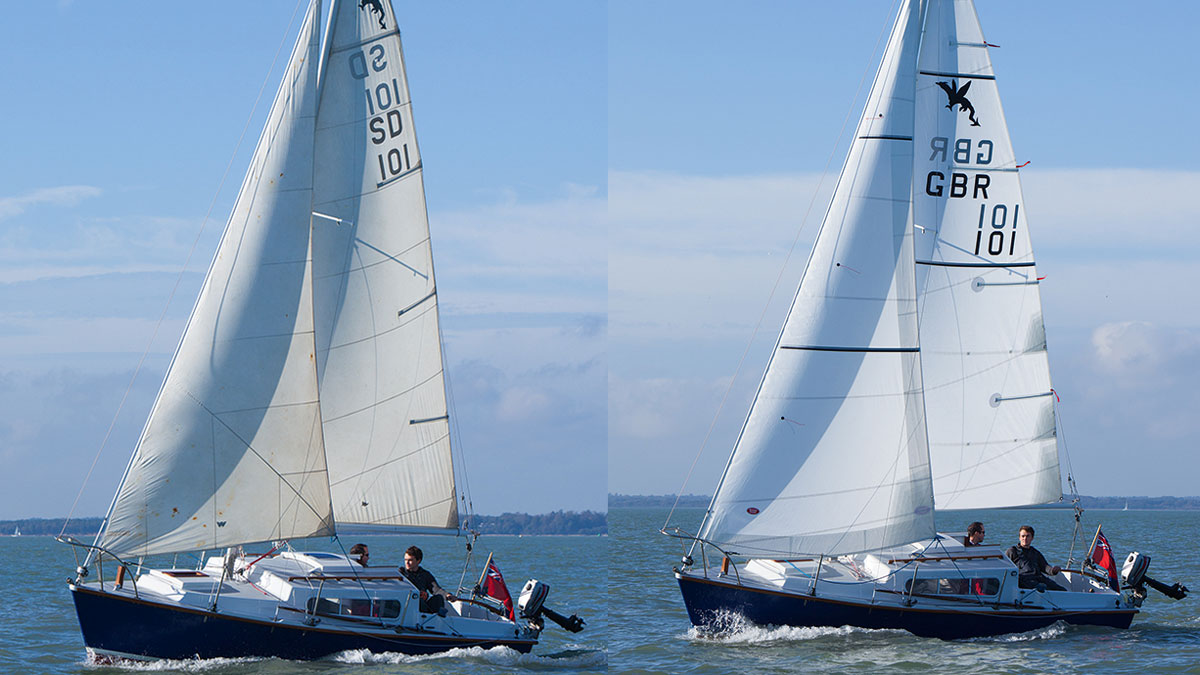
What difference do new sails make?
New sails are a big investment – but are they worth it? The PBO team compared the old with the…
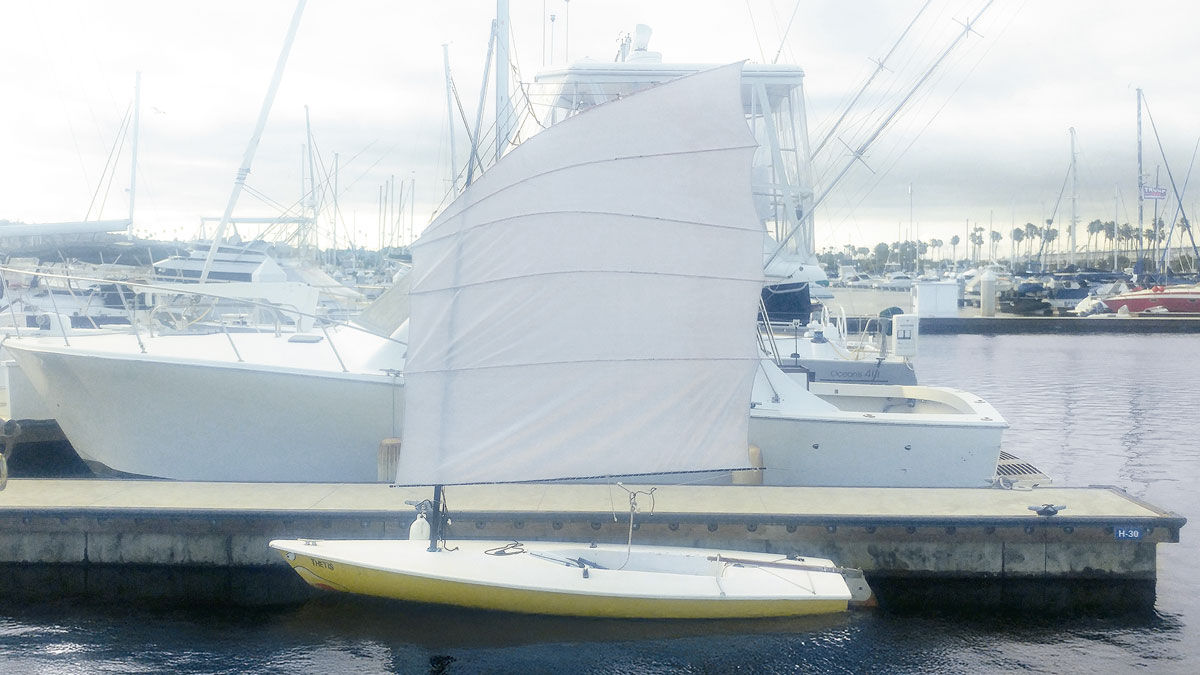
How I made DIY sails for a Laser
Colin Clayton explains how he experimented with dinghy junk rigs and made his own DIY sails

What to read more features like Sam Llewellyn: Does sail colour matter?
A subscription to Practical Boat Owner magazine costs around 40% less than the cover price.
Print and digital editions are available through Magazines Direct – where you can also find the latest deals.
PBO is packed with information to help you get the most from boat ownership – whether sail or power.
-
-
-
- Take your DIY skills to the next level with trusted advice on boat maintenance and repairs
- Impartial, in-depth gear reviews
- Practical cruising tips for making the most of your time afloat
-
-
Follow us on Facebook, Instagram, TikTok and X