


Numerous steps can be taken to reduce the likelihood of your moored boat sustaining – or causing – serious damage in winter storms. Harbour masters share their expert advice
70mph winds are unusual in the UK but not unprecedented over the winter months, yet many boat owner simply leave their boat just as they would on a midsummer weekend, rather than implementing safe mooring practices to secure it for winter weather.
Here is a harbour master’s checklist to make sure your boat is as prepared as possible should the weather turn.
Remove loose covers and spray dodgers
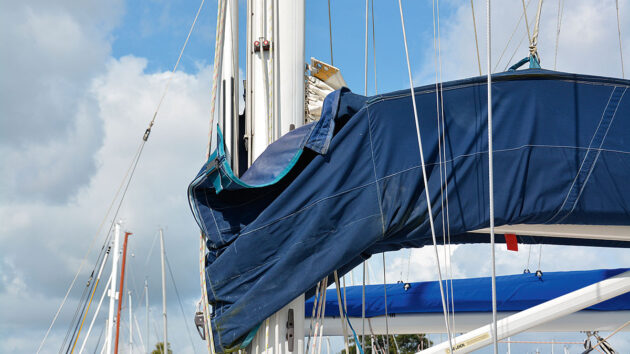
This loose sail cover is vulnerable to tearing in strong wind
Covers and dodgers are vulnerable to tearing if the wind catches a loose corner. If you can’t take off your sprayhood, cockpit covers and other fabric items, make sure they’re very well secured. Frap your covers, ie pass ropes over them and tie them down on each side.
Secure your genoa
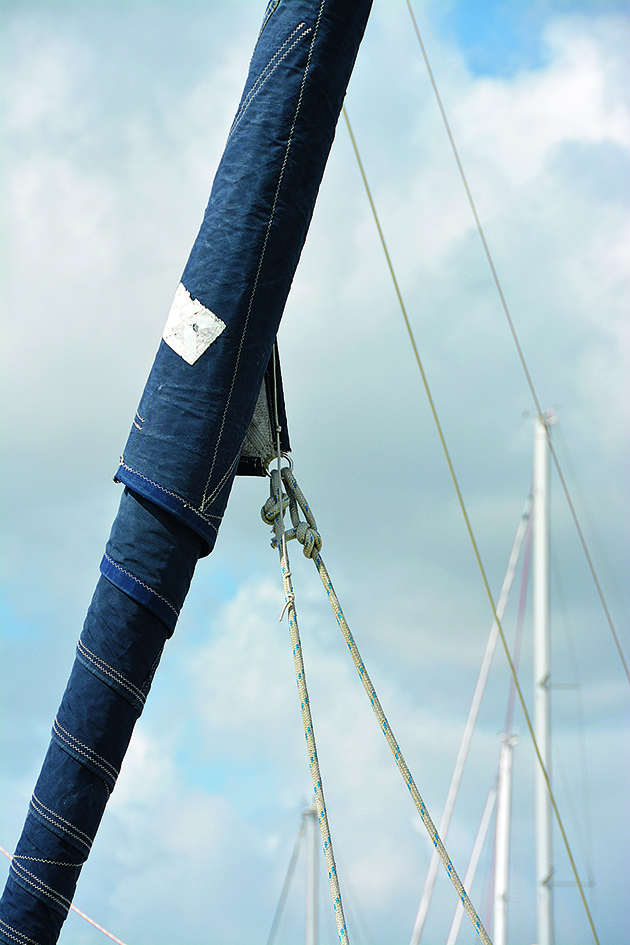
A loosely-furled headsail is vulnerable to wind ripping it to shreds
By far the most easily avoidable damage is to genoas. If a furling genoa isn’t tied securely the wind is likely to unfurl it for you and thrash it to shreds. Even during a normal winter, expensive headsails are ruined.
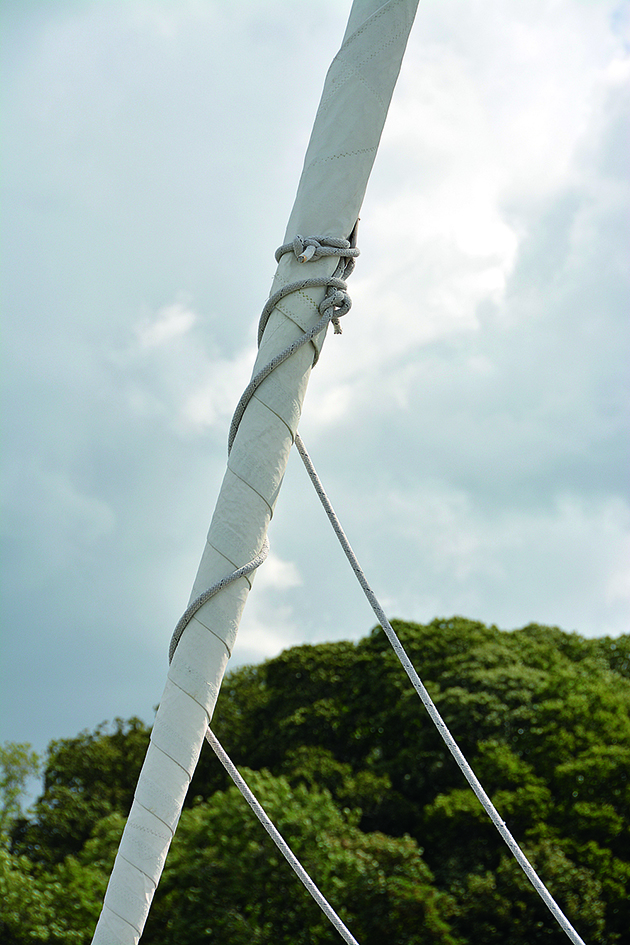
Safe mooring practices: Take a few turns of your sheets around the genoa to wrap it tight
Ideally you should remove the genoa for the winter, but if you leave it on make sure you don’t rely on the furling line: if it breaks, the sail can unfurl. You need to check the furling line is in good condition and securely cleated, then furl the headsail tightly – the wind has a knack of getting in at the top of a loosely-furled sail – and take a few turns of your genoa sheets around the sail, tying them off securely.
Avoid spreader clashes
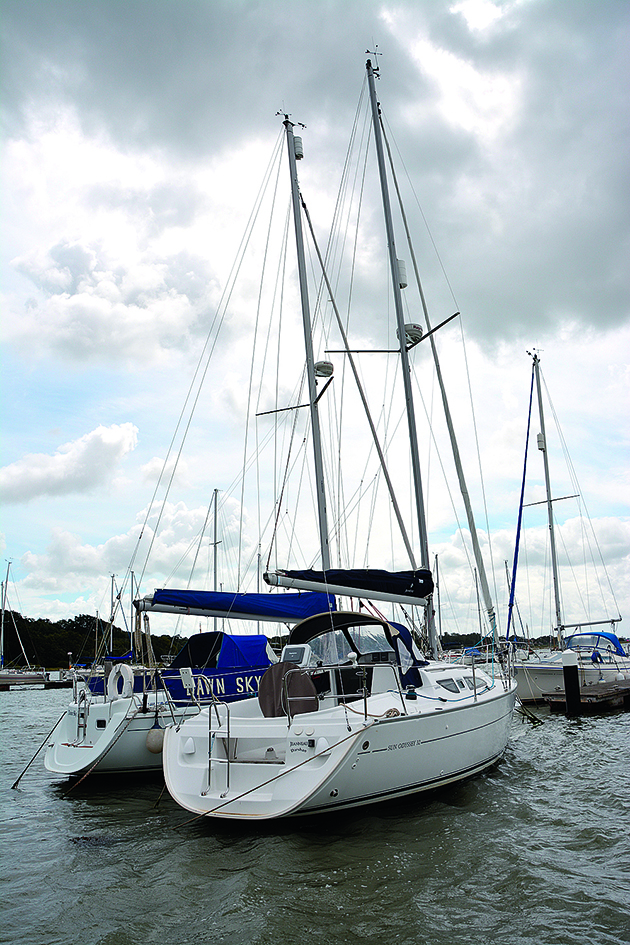
Safe mooring practices: Make sure your boat is not too close
If you share a mooring without a pontoon between, check to make sure that spreaders and other rigging can’t clash. It doesn’t take much movement for adjacent spreaders to get entangled – resulting in some serious damage.
Use heavier mooring lines
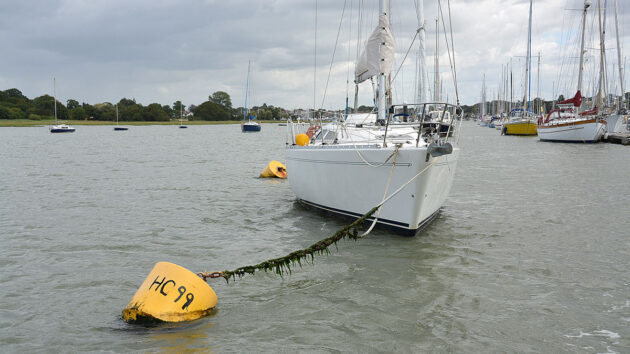
Using two separate mooring lines is prudent
Investing in winter warps could save your boat from breaking free
- Lines should be either braided or multi-strand nylon or polyester so they can stretch to absorb snatching loads.
- Don’t just use any old rope to save money: old sheets and halyards don’t have sufficient stretch to make decent mooring lines. If you must use old rope, then use it for springs rather than for your head or stern ropes. The Admiralty Manual of Seamanship advises that warships use non-stretch wires for springs, which reduces the chances of a ship surging up and down the jetty while there’s enough give in the head and stern ropes to stop them snatching.
- Mooring lines should be of a size suitable for your boat and may need to be considerably larger than those you use during the sailing season.
- Consider using rubber or metal spring-type snubbers to take some of the shock loading. Double up your lines.
- Use two separate ropes to a buoy mooring, attached to two separate cleats in case one rope (or one cleat) breaks.
- Pontoon moorings need double ropes too. All berthing lines (ie breasts and springs) should be doubled up, preferably with separate lengths of rope.
- On pile-and-pontoon moorings there should be at least four berthing lines, each one doubled up, plus two pile lines securing your vessel on a pile mooring.
Pile lines
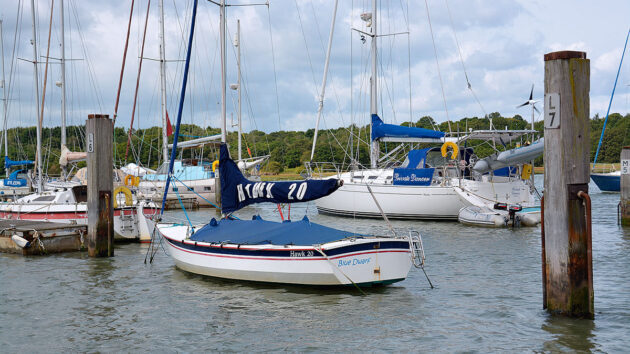
When moored to piles, ensure you have two lines both forward and aft attached to the pile rings
All boats on pile moorings must have lines attached fore-and aft to the pile rings – ideally two forward and two aft. If there is more than one vessel moored to the piles, make sure that at least one set of lines on each boat is led to cleats on the outboard side, with plastic tubing to prevent chafe from sharp edges.
Beef up your fendering
If your boat is on a pontoon mooring, spare some time to sort out your fendering
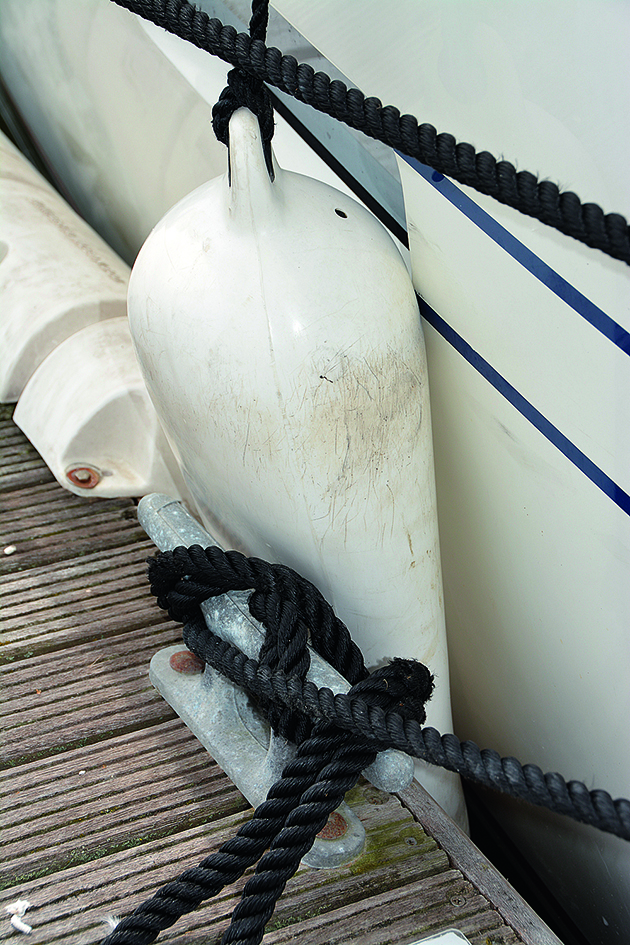
Do not let your fenders deflate to this extent
- You pump up your car tyres every month, so why do we see so many flat fenders? Keep a pump onboard and check your fenders regularly.
- Use lots of fenders. Drag out all those lurking in the garage or the bottom of a locker: the more the better.
- Height is crucial. If the boat heels away from the pontoon in a strong wind, fenders that are too high will pop out and drop onto the pontoon. If they’re too low and the boat is blown onto the pontoon, they’ll get caught underneath it.
- Ideally, fenders should be concentrated at the boat’s widest point, with others spaced evenly along the rest of the topsides.
- Fenders should be attached in such a way that they can’t move along the boat. Secure them with tight clove hitches with extra half-hitches, or use special clips.
- If your boat has a rubbing strake along the topside which can prevent fenders rising up, choose fenders of a size that are the correct position against the pontoon and rig them with their shoulders just below the strake.
- If it’s your own pontoon, attaching fixed fenders to the pontoon edges is a good idea. They can still break, however, so check them regularly.
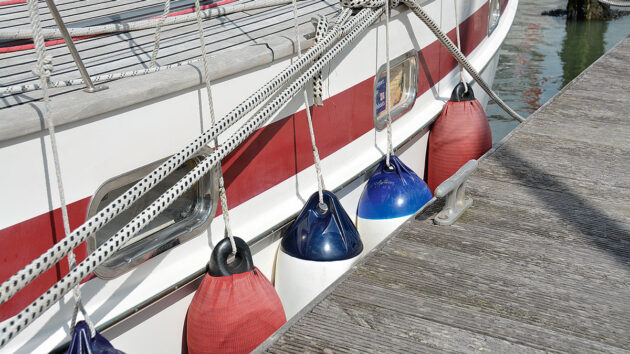
Rubbing strake on hull holds fenders down in position
Eliminate chafe on your ropes
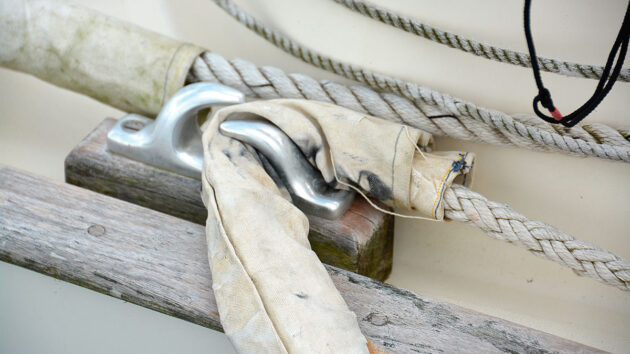
Fabric rope covers can help prevent chafe
It is amazing how quickly a rope can be destroyed by a sharp edge on a fairlead or cleat. Look out also for edges on aluminium toerails or deck-edge fastenings.
Use plastic tubing or fabric covers over the rope to protect it, or replace fittings with smoother-shaped ones. Anchor rollers can also have sharp edges, so if you run a mooring line through yours, make sure it is safe.
Routine checks
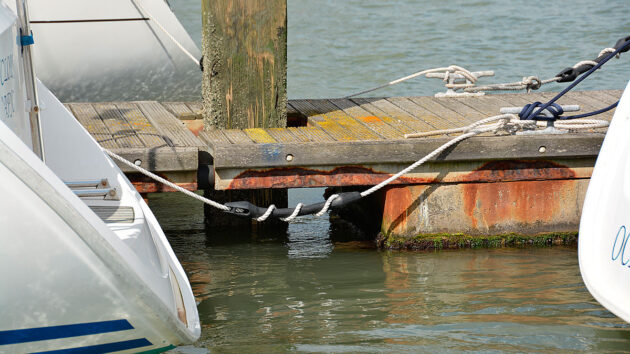
Snubbers help counteract snatching loads on lines
- Check your boat regularly, especially if high winds are forecast. Mooring holders should check once a fortnight throughout the winter. Remember your boat is your responsibility.
- Check your mooring’s chains and shackles regularly. Many harbour authorities require mooring holders to certify that they have checked their mooring chains and shackles annually.
Moor bow-to the prevailing wind
Depending on where you moor your boat, the prevailing wind can build up a wave large enough to surge into a boat’s cockpit, even if moored on a river.
Some owners choose to moor facing into the strongest tide, but most boats will suffer less damage if moored bow-to the wind.
Damage prevention
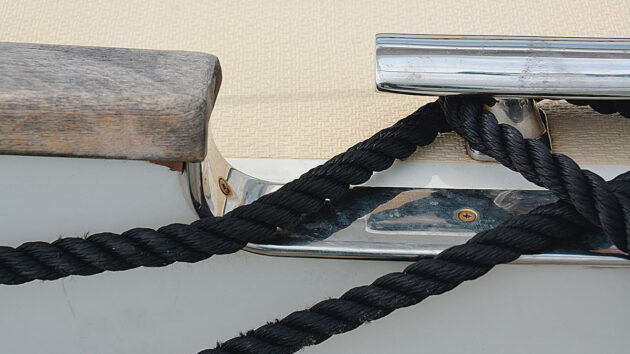
This rope will chafe on the sharp edge of the topsides
Use plenty of the correct type and size of rope, ensure it’s not damaged by sharp-edged fittings, and secure it properly to your buoy(s), pile rings or pontoon. Make sure you’re well fendered and that all fabric parts of the boat aren’t vulnerable to being torn – simple advice which could save your boat from damage this winter.
Check your insurance
It’s easy to let your insurance lapse. Check the limitations in the small print.
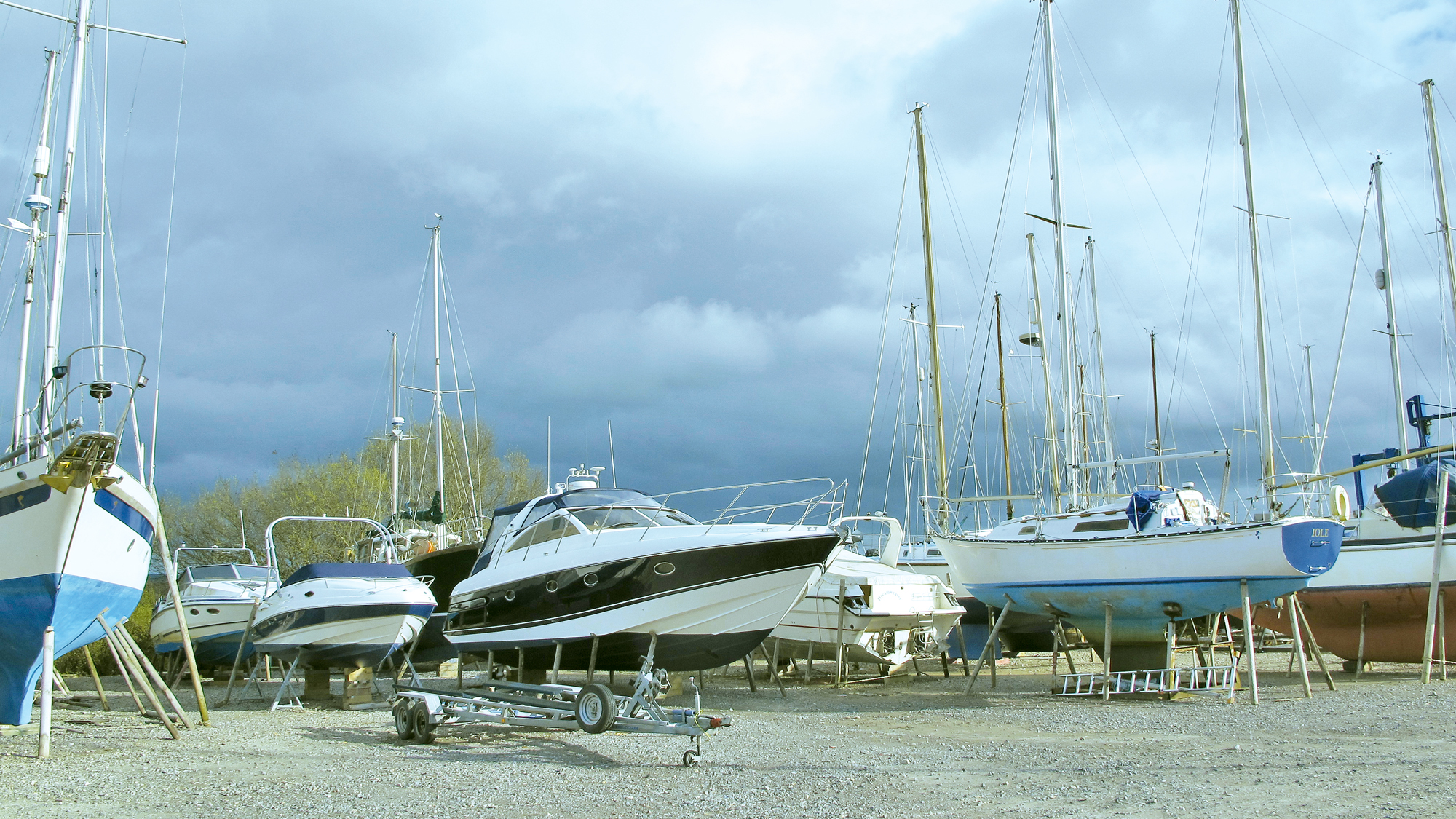
Banish damp from your boat this winter
Ashore or afloat, winter cold and damp can have a detrimental effect. Jake Kavanagh looks at the options for keeping…
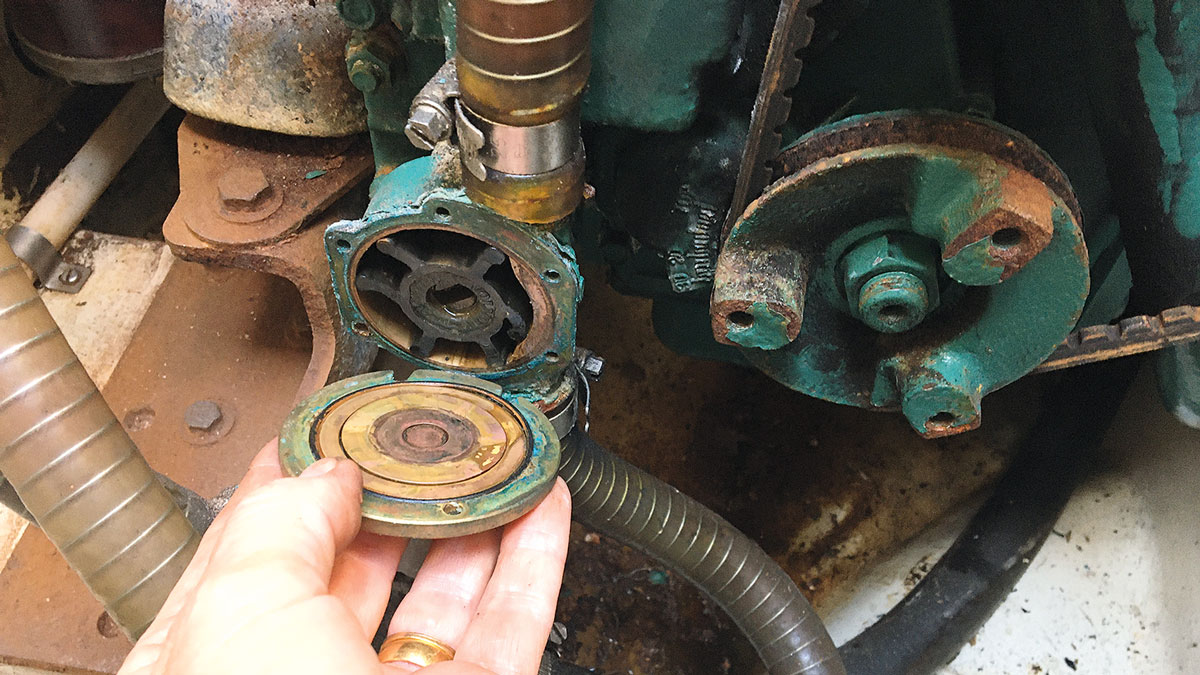
How to winterise a boat engine
Engineer Stu Davies explains the steps you should take to make sure your boat’s engine is protected over the winter…

Winterising a boat: 61 point checklist
PBO experts offer their top tips for winterising a boat, helping to keep your vessel and gear in good condition…
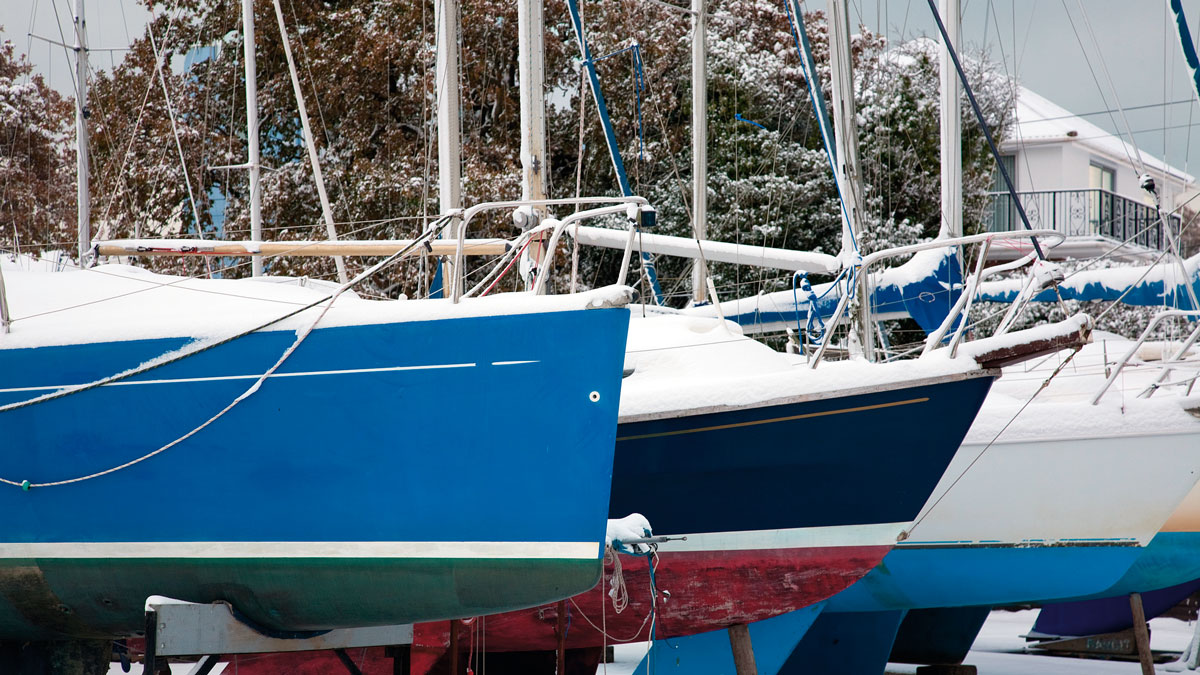
Is your boat fit for a cold snap? How to avoid ice and water damage on board
Preventative fixes to help save your boat from ice or water damage can be done in just minutes, says Ben…
Want to read more seamanship articles like Safe mooring practices for winter gales?
A subscription to Practical Boat Owner magazine costs around 40% less than the cover price.
Print and digital editions are available through Magazines Direct – where you can also find the latest deals.
PBO is packed with information to help you get the most from boat ownership – whether sail or power.
-
-
-
- Take your DIY skills to the next level with trusted advice on boat maintenance and repairs
- Impartial, in-depth gear reviews
- Practical cruising tips for making the most of your time afloat
-
-
Follow us on Facebook, Instagram, TikTok and Twitter
PBO web categories