


From circumnavigating the world the wrong way round to rescuing Alex Thomson in the Southern Ocean, Mike Golding shares his best racing secrets with PBO's Ali Wood
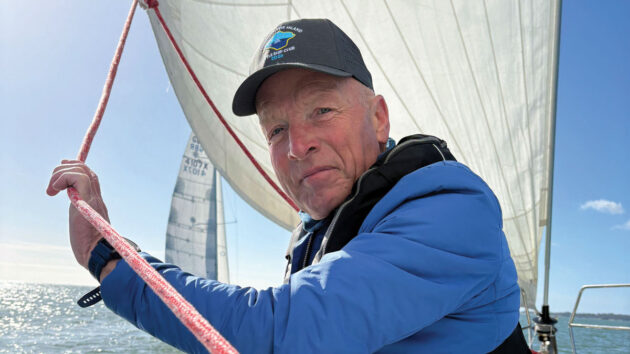
Mike Golding OBE likes a laugh. This is the first surprising thing I discover about the celebrated yachtsman when we set sail from Portsmouth Harbour. Although Mike’s on medication for dental surgery, and his wife Andrea urges him to take it easy, it doesn’t stop him from cracking jokes and sharing a yarn or two about offshore racing.
“I’m very good at the boring stuff,” he warns, easing the genoa of our 41ft Jeanneau Mermaid Spirit. “With sailing you just do the same thing, but you try and do it better each time. You look for constant improvement.”
Of course, his achievements are anything but boring. And despite his wife’s wishes, there’s no chance of him taking it easy, because hot on our heels is Sir Robin Knox-Johnston. This might be a friendly race, crewed by novices on four charter yachts, but Mike Golding wants to win. After all, he’s one of the few people to have raced solo both ways around the world, finished third in the Vendée Globe (without a keel) and rescued Alex Thomson in the Velux 5 Oceans – which was ‘handy’ because he subsequently got dismasted and put Thomson to work on the jury rig!
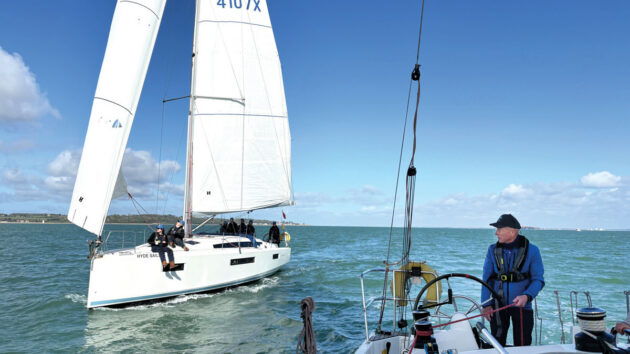
Mike Golding keeps his eyes on the competition. Credit: Ali Wood
Hopefully there’ll be no such drama today, in the inaugural Conquer the Island, a 10-hour clockwise race around the Isle of Wight, organised by Alexandra (Sasha) Henry and her husband Lewis McDonald of the Little Ship Club. Mike is the club’s President and Sir Robin Knox-Johnston the former president of the London club, which this year celebrates its 100th anniversary.
A Mike Golding safety briefing
The three-day event started with a safety briefing on the pontoon. For many of the Little Ship Club members, this will be their first practical experience since obtaining their RYA Day Skipper Theory. Living in London with busy careers, they’ve had limited time on the water so it’s the perfect opportunity to put theory into practice.
“Do as I say, not as I do,” said Mike with a smile. “If you feel yourself falling, grab anything and let your legs go. Keep your centre of effort low, and one hand for you, one for the boat.”
He explained the man overboard drill, and reiterated the importance of calling in a Mayday right away.
“You don’t know that you’re going to get that person out,” he said. “In any kind of sea state, you can lose them real quick. Call on Ch16, issue a Mayday, and you can easily retract it and close it down.”
He talked through the importance of someone physically pointing at an MOB, using the red button on the DSC VHF radio, and how to stop the vessel.
“Before you put the boat in gear, check there are no lines overboard,” he advised. “You’ve suddenly got no engine and no manoeuvrability, and possibly even a jib nicely sheeted in!”
Our Jeanneau has a bathing platform, so that will work nicely for getting an MOB back on board, but fingers crossed we won’t have to use it. Before we left for a hearty pub dinner at Haslar’s Castle Tavern, Mike shared a sobering story about an MOB: “I literally had to go down between the boats and grab him by the hair. He was the chauffeur of the sponsor, so obviously I had to rescue him!”
Sailing with Mike Golding
The chances of a man overboard seem very remote as we cross the glittering waters of the Solent. It’s not yet 9am and the sun is strong on my cheeks, though there’s enough chill in the air to justify oilskins.
Mike discusses the possibility of shortening the race but a gentle breeze fills in, and soon we’re sailing on a pleasant beam reach towards the start-line with the four other yachts chartered by Prometheus Sailing: one skippered by Sir Robin Knox-Johnston and the others by club members Henry Bennett-Gough and Simon Kaye.
The Jeanneau has a fractional rig with a running backstay – the backstay runs from each corner of the stern to the mast where the forestay begins. Given the conditions, Mike wants the rig to be very soft.
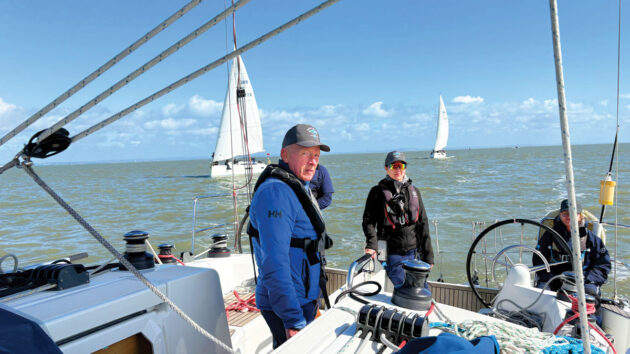
The continuous main set up on Mermaid Spirit adds a lot of stretch. Credit: Ali Wood
“The idea of the backstay is you can tension the forestay,” he explains. “Today we want the mast straighter so the mainsail will be fuller. Were you to bend the mast, the middle of the mainsail gets dragged forward and you lose power.
“Most of the time, when a boat’s fully loaded up and heeling, you’re trying to aerodynamically release the excess power. But today it’s calm, so we’re trying to capture it.”
Mike explains that we need to keep our weight forward and to leeward. These boats are very light at the front so our goal is to lift the transom out of the water, reducing the boat’s wetted area. It’s what Mike calls a slow-burn. “All these little things: they add up!” he assures us.
The upwind start is between the committee boat and No Man’s Land Fort, which was built in the late 19th century to ward off the French. It appeared in a 1972 episode of Doctor Who, I’m surprised to learn, with Jon Pertwee’s character fighting off the Sea Devils.
As we trim the sails in, but with shape, Mike tells us a bit about the fort: how 10 years ago it was converted into a luxury hotel, and used as a venue for the Cordon Rouge Club – a fine-dining experience for adventurers run by the champagne brand GH Mumm. He enjoyed wearing a tux and dining with fellow thrill-seekers Ben Fogle and Tom Avery. I get the impression the personable former fireman would be at ease anywhere, whether alone on the ocean, or the star guest at a big event.
Mike Galding tactics
We’re first over the line, but there’s a long way to go – approximately 50 miles – and discussions change to tactics.
Breaking tradition from the iconic Round the Island, this race has us going round clockwise towards St Catherine’s Point, and finishing through the Needles Channel to return to the protected waters of the Western Solent. There’ll be tidal gates, commercial traffic and changing sea conditions to contend with: plenty of work for the newly qualified Day Skippers.
“It is a race and it isn’t a race. We’re here to have fun and get experience, but inevitably there’ll be competition,” says Golding.
High water is 1240 then after that we’ll be punching the tide. Mike warns that the shore is quite shallow towards the Bembridge side. “You really don’t want to go there because you don’t have a lot of tide. It shallows progressively then suddenly you’ve got no water.”
But there is an even bigger issue to consider today. “Wind first, because without wind, you just go where the current goes.”
How it all began for Mike Golding
No matter how many oceans Mike has crossed, safety remains his priority. He was, after all, a firefighter before he was a professional sailor. However, his passion for sailing goes right back to childhood. After watching his dad learn to sail on an Enterprise, teenage Mike decided to try it for himself. In exchange for lessons during the summer holidays, he emptied the sailing school’s Portaloos and rigged boats for clients.
“My boss was a great instructor in the morning but by around 3 o’clock he’d been drinking so much Pimms and lemonade he was toast. I remember one day, he said to take out a windsurfer. Being the early 1970s, windsurfing had only just arrived in the UK and up till then no-one at the school had mastered it. Of course, I quickly got blown to the far side of the lake and found myself knee-deep in mud and reeds and struggling to get going.
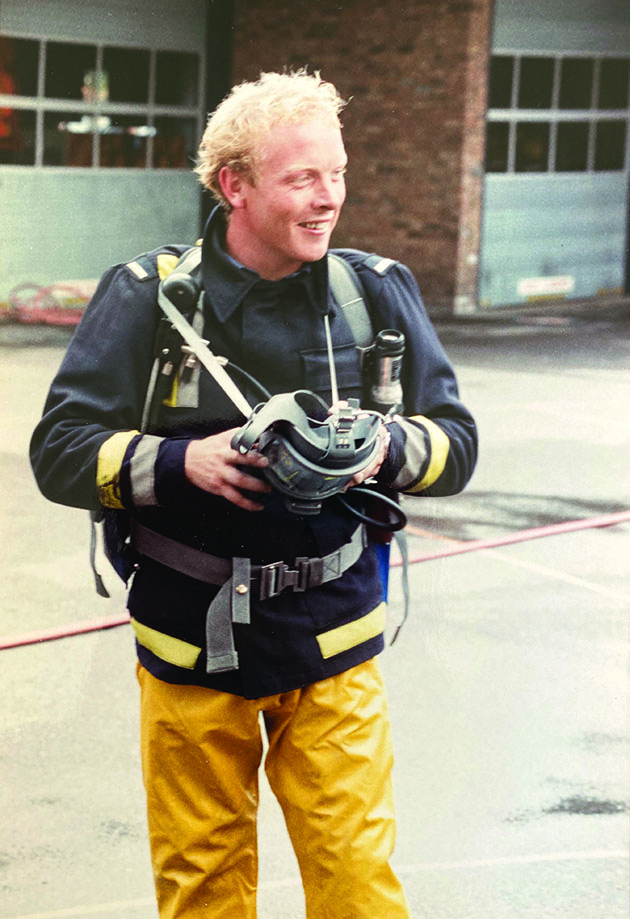
Mike Golding quit firefighting for professional sailing. Photo courtesy Mike Golding
“That afternoon, by sheer necessity, I learned how to go upwind on a windsurfer ‘cause no-one was coming out to get me!”
After leaving school, Golding went to nautical college in Lowestoft and spent his summer holidays working on North Sea trawlers during the Cod Wars – a time when Britain and Iceland were in conflict over fishing rights. He enjoyed the money but it was a hard life. At the time his dad had a Heavenly Twins catamaran, and at the 1977 Southampton Boat Show they met the designer, Pat Patterson.
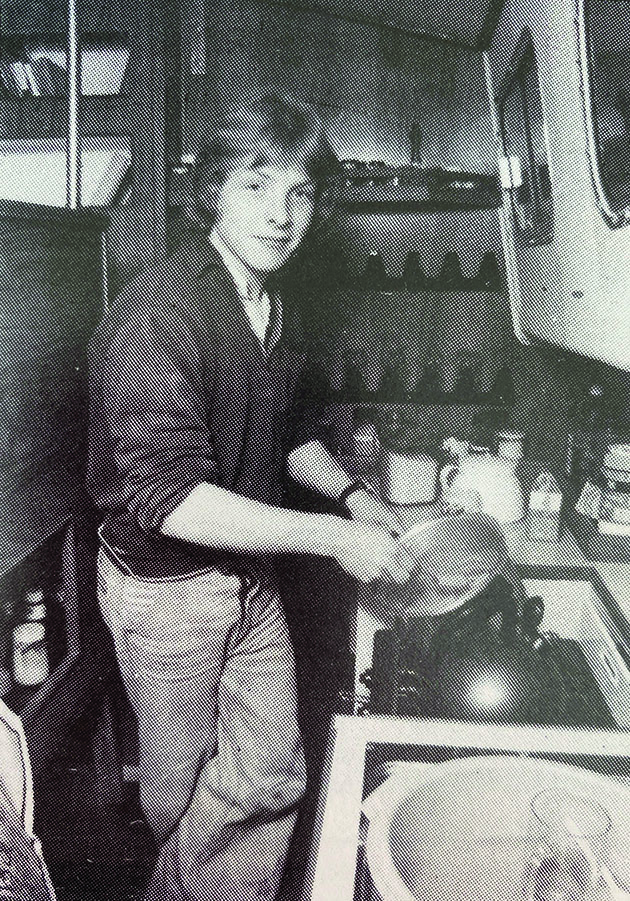
Mike Golding volunteered his services as a cook and cleaner on Pat Patterson’s round-the-world voyage. Photo courtesy Mike Golding
Patterson had quit his job as a maths teacher to become a full-time designer. He was planning a 40,000-mile circumnavigation to prove the boat’s seaworthiness. Mike and his dad were impressed. As they walked away from the stand his dad said, facetiously, “You know, I wish we could get rid of you on something like that.”
“Bloody good idea, Dad,” said 17-year-old Mike, and marched back to the stand, offering his services as a cook and cleaner. Two weeks later he set off around the world with Patterson and two others.
The boat got ‘a little political’. There were many arguments, which Mike wanted no part of, so in the end he got off in Valparaiso, Chile, and hitch-hiked over 5,000 miles to Montreal. When he finally returned home he took a job in the Fire Service which, due to the shift system, enabled him to continue his offshore sailing, competing in the 1983 AZAB (Azores and back), 1988 CStar (solo transatlantic) and the 1989 RBR (Round Britain and Ireland Race).
Onwards and upwards for Mike Golding
Following the RBR, Mike spotted the hulls of a racing trimaran known then as Replicot – a 40ft version of the famous 60ft Tony Bullimore trimaran Apricot – lying in a Bristol field.
“I’d been told there may be something of interest on my way home from the RBR, and when I saw these three hulls just lying there I thought it was really sad.”
He bought the bits and set about finishing her strip-plank red cedar hulls and assembling the yacht in Plymouth with newly designed beams by Merfyn Owen. Very soon after completion Mike became involved with Chay Blyth’s British Steel Challenge, so didn’t get the chance to do much racing. At some point Spirit of England, as she was named, ended up in the hands of Sir Robin Knox-Johnston who, together with Bill Foster, sailed her in the 2002 Round England and Ireland Race. Sadly, the trimaran suffered float damage and had to retire.
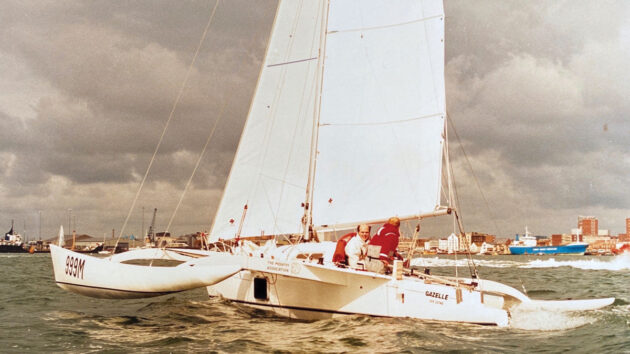
Mike Golding sailing his 26ft Kelsall trimaran Gazelle in the 1989 Round Britain and Ireland. Photo courtesy Mike Golding
“I quickly lost track of her. She changed hands several times then about five years ago a feed came up on my Facebook. An American couple had bought her and they were cruising the Pacific. A wood and composite trimaran and people are still having a ball with her nearly 30 years on!”
Mike’s big break came in 1993 when he came second in the British Steel Challenge round-the-world race. Retained by his sponsor, the 33-year-old had till then been on sabbatical from the fire service.
A career change was inevitable and Mike and Group 4 set about creating a sailing programme which led to him becoming the second person to sail non-stop solo westabout around the world with the same 67ft Challenge Yacht. In the process, he set a ratified world record of 161 days. In the 1996/97 BT Global Challenge race, again crewed by amateur sailors, Mike and his mixed team won five of the six legs – coming in second into Sydney.
Sail training boats
And now we’re reaping the benefit of Mike’s leadership aboard Mermaid Spirit. Gentle and encouraging, he ensures everybody gets a chance to helm, and mixes up roles on the boat so we get to experience all aspects of sailing.
The wind has picked up on the east side of the island and, as we round the southernmost point, and sail west towards the Needles, we have a good 10-15 knots on the beam. Sir Robin Knox-Johnston and his crew are much closer inshore. It’s hard to tell who’s got the advantage right now, but time will tell.
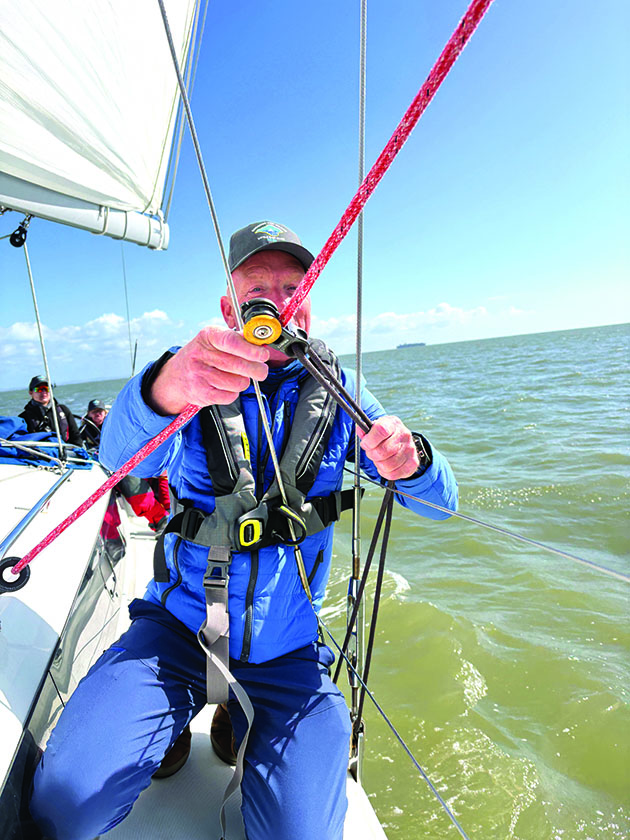
With no tracks it’s difficult to control the genoa sheeting angle so Mike Golding uses additional line to bring the sheet outboard. Credit: Ali Wood
Mermaid Spirit is one of four identical sail training boats. As such they don’t have the equipment you might expect on a racing boat. To keep things simple, there are no tracks which means we can’t adjust the sheeting angle of the genoa. When we go on a broad reach, Mike fashions his own barberhauler with some Dyneema to get the headsail further outboard. We then take turns to hold out the clew.
We also have a German mainsheet, as opposed to a single purchase attached to a traveller. The benefit of this system is that we can trim the mainsail from either side of the cockpit. It keeps things safe, but there is a disadvantage, explains Mike.
“When you’ve got one continuous line going along the boom and back and down the other side, it means you’ve got the stretch of two times the length of that sheet. As it loads up it will be more stretchy. As you bounce across the waves, the top of the mast will move. It doesn’t affect safety but it does reduce performance, spilling power from the top of the sail.”
Just steer
Mike is a master tactician, but as a professional sailor he’s worked in a range of roles, and tells us about the time he was the helm onboard 54m superyacht Lady B in the St Barths Regatta.
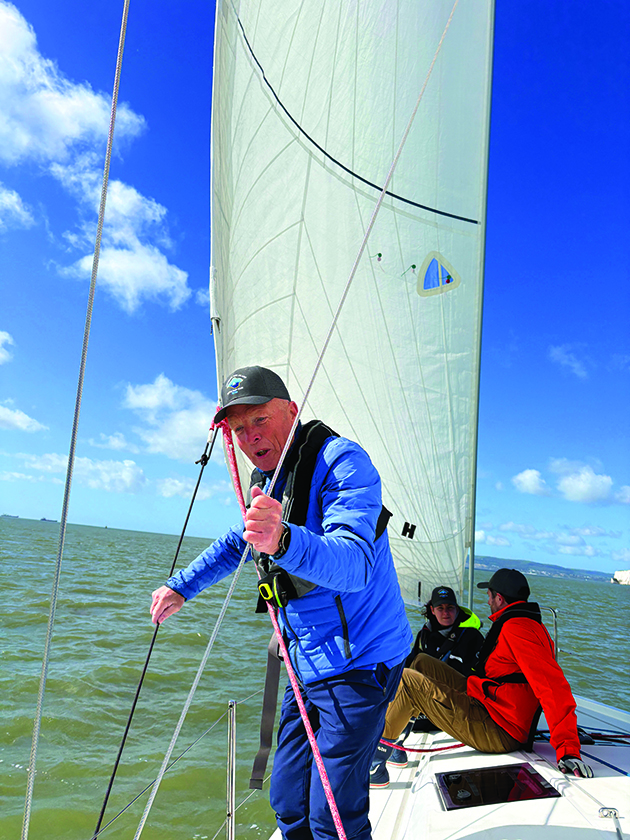
Mermaid Spirit gains ground with a better sheeting angle. Credit: Ali Wood
“In a way it was a fantastic job. I had no responsibility other than to helm. I was the lowest of the low but I got paid well to just steer,” he says. “I got told off, though, because I’d be tacking half a boat’s length in front of another boat, thinking I’d cut it fine, and they’d be saying ‘You lost a lot of ground there!’. It was the first time I’d sailed a boat that size and I guess initially, the scale of it fooled me.”
But it’s perhaps Mike’s solo racing career that he looks back on most fondly.
“I really enjoyed the Transat (OSTAR) in 2004. That particular race was sponsored by Omega, and they had gates where you could win a nice Omega watch. I decided I wanted those watches!”
Yet things didn’t quite go to plan. During the frantic start – ‘lots of noise, boats right up close” – he hit the button to cant the keel to windward, and didn’t realise the keel motor auto cutout had failed.
“I get to Eddystone Lighthouse – winning the Omega Seamaster watch – I start bearing away, and realise that, as it goes quiet, I can still hear the keel motor running. Down below is full of smoke as it had been running continuously for the past hour, so burning itself out!”
Mike had to manually release the hydraulics to drop the keel of his Open 60 Ecover, which is no mean feat, allowing three or four boats to overtake him on the race to Boston.
Canting the keel
If, like me, you’re used to sailing small boats, it helps to understand the loads involved in ocean racing. Mike explains that canting the keel to weather is like having more crew sitting on the rail. The keel is mounted on a pivot point inside the hull and when this heavy ballast is pushed to windward it creates counter-leverage, increasing your righting moment. A racing boat’s keel is canted up to 40°, so say you’re heeling at 25° already, and then the keel is fully canted, that’s 65° with three tons of lead on the end. It’s a lot of load to shift, and you need massive hydraulic rams to do it.
However, Mike realised he could tack, or gybe even, without the keel motor, by dumping the hydraulic keel to leeward by gravity and locking it in place before tacking or gybing – which was still possible with the IMOCA twin rudder arrangement.
“I got Ecover going again, and looked at the weather. I thought, you know what, this is a new boat, let’s keep going for a while and I’ll turn back after a few days.”
During this time, Mike caught up with the other boats and realised he could keep tacking with this new technique of dumping the boat on its side. He took the lead and finished first in the 2,800-mile race, smashing the solo transatlantic record by over two days, achieving a time of 12 days, 15 hours, 18 minutes and 8 seconds.
Keel snaps
Later that year Mike entered Ecover in the Vendée Globe – a solo, non-stop round the world race. Incredibly, he crossed the finish line without a keel!
“It was the final hours of the race and I was literally sailing along, drinking a cup of coffee, and the boat heeled as if a gust of wind had struck. I automatically eased the genoa and mainsheet, but the heel persisted. From inside the covered cockpit I looked up at the sails and they were pretty much flapping.”
Knowing something wasn’t right, he slowed the boat. Because Open 60s are sailed single-handed, they have water ballast. The high side was already full, but Mike flooded every tank to increase weight, and improve form stability. He checked the keel box. The hydraulics were intact, and so was the head of the keel. However, when he looked over the back of the boat, he realised something was wrong.
“It’s a bit of a mind melt because you’re upside down and looking forward. The keel’s still there but it’s at 90° to the head. It’s snapped, and held on by a little piece of steel. Then, there’s the smallest of dings, like a can opening. The keel had gone!”
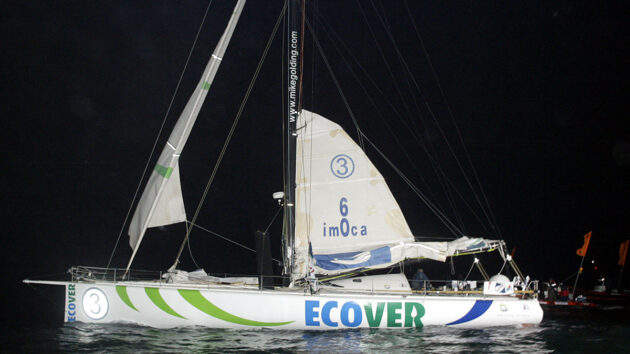
Mike Golding arrives back in Les Sables d’Olonne, minus the yacht’s keel. Credit: Getty
Mike called race control and told them he’d be in the following morning. They sent a French frigate to assist, but Ecover was doing perfectly well without her keel and after 90 miles of upwind sailing arrived in Les Sables-d’Olonne at low water at 2am. With no 4.5m keel attached to Ecover it was possible to enter without delay.
With a fixed-keel boat you might fear a capsize, or at the very least, expect it to slide sideways, but on Ecover this wasn’t the case. Yachts with canting keels rely on daggerboards to provide lateral grip, and this was enough to keep Mike sailing upwind at 9 knots. So fast, in fact, he finished third and got protested!
“I thought they were joking until I opened the door of the meeting room and was confronted by a full international jury,” he laughs. “They didn’t enforce it, but actually there was a good reason why I was protested by the race direction. It’s for safety. They didn’t want to set a precedent – just in case people are encouraged to get rid of their keels in the middle of the ocean!”
Clearly no-one was overly concerned about the boat’s missing keel. The mayor of Les Sables-d’Olonne asked Mike to cross the finish line again in daylight to please the crowds, and the insurance company allowed the shore crew to sail Ecover back to Southampton, albeit within a restricted wind strength.
Interestingly, canting keels are ‘a bit irrelevant’ these days, Mike explains. “With foiling yachts the foil gives so much righting moment that the keel is no longer crucial to the operation.”
Thomson rescue
Keel issues were to impact Mike’s next big race – the 2006 Velux 5 Oceans – only this time it was down to the failure of competitor boat Hugo Boss’s keel head. With the keel swinging free of control of the hydraulic rams, skipper Alex Thomson was in trouble.
Despite being in second place, Mike turned back and sailed 90 miles upwind in the Southern Ocean. The pair agreed to meet in the eye of the storm, because there was no other way to get Thomson on board. By the time Mike arrived Thomson was in serious danger.
“The top of the keel had snapped completely. The keel was swinging free and had smashed the composite hull on either side,” recalls Mike. “The boat was filling with water and sinking. In the centre of the storm depression, the seas were still extremely confused and rough and while the wind was down to 25-30 knots, all around us, the storm was raging”.
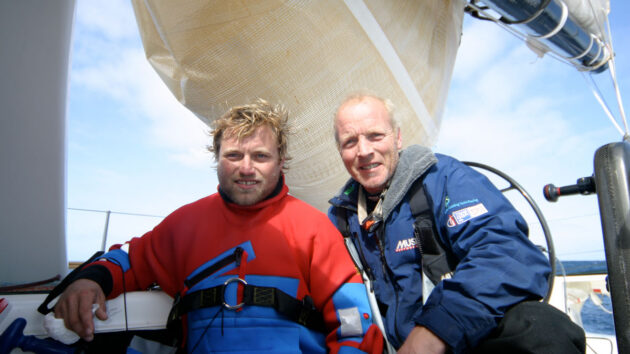
Alex Thomson safely on board. Photo courtesy Mike Golding
Thomson managed to get into the liferaft but Mike was terrified Ecover would run him down. In the end it took four goes before Mike could safely retrieve him: “He literally stepped right aboard with his supplies. Lots of cigarettes!”
The drama didn’t end there. Ecover slammed into a wave, and Mike knew instantly something wasn’t right.
“Two hours after I got Alex, we went back into the storm and the mast cracked above the first spreader and came crashing down. Luckily I had Alex. Between the two of us we were able to cut away the rigging and re-rig the main onto the remaining mast.”
It took the pair just five days to sail 1,200 miles under jury rig to Cape Town, where Mike was forced to retire from the race.
Sadly, this wasn’t to be the first time Mike was dismasted. Two years later, while leading the Vendée Globe, he lost his mast to a violent squall 1,000 miles off Australia.
The Needles
Time flies when you’re having fun. It’s now mid-afternoon and we’re sailing close-hauled towards the brilliant chalk stacks of The Needles. Lit by the afternoon sun and flanked by a splendid red and white lighthouse, it’s a treat to see them from the English Channel side.
Bradley, a dedicated club member for years, asks how close we can get.
“The Needles worries me. I’d prefer to see the mark being the mark, because otherwise it is a risk – particularly if you’ve got a lot of current there. There’s no point in taking that, surely?” states Golding.
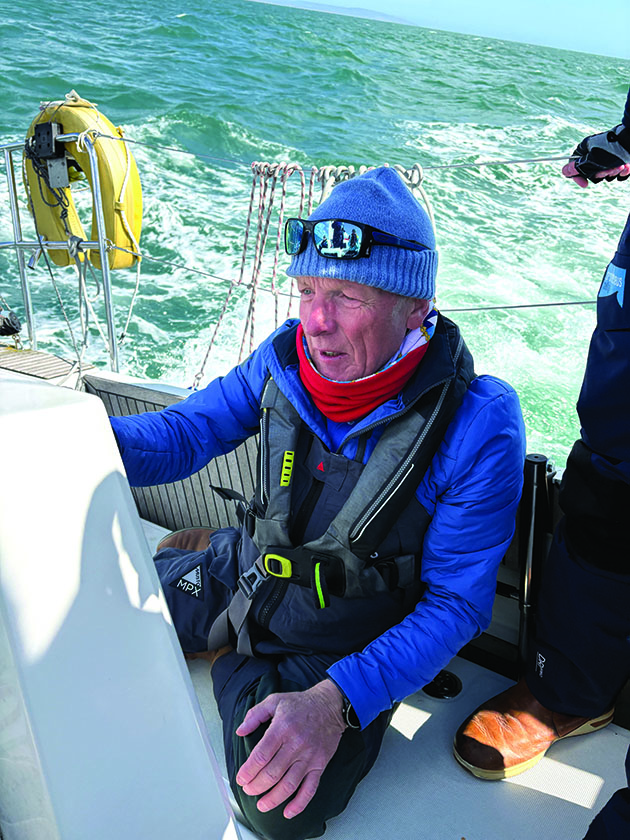
The chartplotter is housed so low down, Mike Golding has to kneel to check our position. Credit: Ali Wood
As well as the ledge, which extends 250m of the light, there is the wreck of the Varvassi, a 3,874-ton Greek ship that crashed into the rocks in 1947, treating the islanders to a cargo of tangerines and wine. Though the wreck was blown up, bits of it are still scattered around, including the iron boilers.
“You can go inside the wreck of the Varvassi,” he adds. “But that’s a bold call in these conditions – you don’t want to end up hitting the wreck.”
We steer well clear of The Needles, and head some distance before turning east towards the finish at Cowes. By the time we gybe we’re much further out than Sir Robin and the other boats. We will have to cover more distance, but this angle – being dead-downwind – means we can pole-out the genoa for extra speed.
“It’s not over by any stretch. We’ve got the Solent to contend with now and we’re punching the tide for the next hour,” he warns. “We’ve got to do what we can to minimise this: try to stay out of the main channel and head into shallow water.”
Fortunately, the wind pushes us nicely along on the final leg of the diamond-shaped course. We remove the pole and tack the headsail, heading up to a broad reach to clear the ledges of the north-west coast. The sun is low and glittering on the water. I’m feeling very relaxed when seemingly out of nowhere, Sir Robin’s boat Red Penguin pops up… eight hours of racing and we’re neck and neck! I find this amazing, but Mike isn’t surprised.
“With one-design boats, when things are stable they’ll all go the same speed,” he says. “The only chance you’ve got to make a difference is to do it when things are unstable. That’s what we’ve seen. We chose little options that took advantage of the changes in the race course.”
The final push
I take a moment to pinch myself. Here I am crewing for Mike Golding, and right there is Sir Robin Knox-Johnston: two heavyweights of sailing, and both the nicest skippers you could hope to meet.
But right now there’s work to be done: lines to be pulled, crew weight to be shifted, and a chart to be checked, which Mike does kneeling down, given the plotter is on the binnacle.
We pull ahead just enough that Sir Robin’s team can’t catch us, and we finish first in just under nine hours. What a thrilling end to a great day!
Now it’s time for a delicious supper at the club, where old friends Mike and Sir Robin share tales of the day and engage in friendly banter.
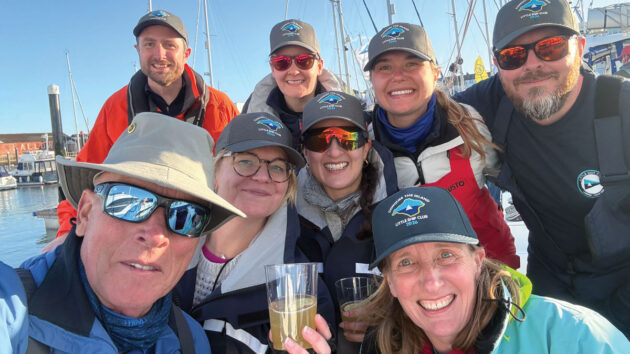
Cheers! A celebration Dark ‘N Stormy for Mike Goldingh, Ali Wood and Little Ship Club members (clockwise) Bradley Baskett, Victoria Morton, Alexandra (Sasha) Henry, Lewis McDonald, Else-Marieke van der Spek and Jessica Haines. Credit: Ali Wood
Sir Robin explains why he came second.
“It was quite interesting tactics, and I was fortunate to have a very good crew. The highlight for us was finding ourselves up level with the president at the Needles, and saying, ‘guys we’ve got to slow down!”
To which, his old friend Mike Golding counters: “Like any good F1 driver, he’s rolling out with the excuses.”
The pair are clearly great entertainers as well as being world class yachtsmen. What a privilege to have sailed with them.
- The London-based Little Ship Club welcomes sailors, motorboaters and non-sailors. Members can enjoy social events, courses and lecture programmes and sign up for UK and overseas sailing events. Mike Golding will be returning for Conquer the Island on 17 April 2027.
SeaKeepers
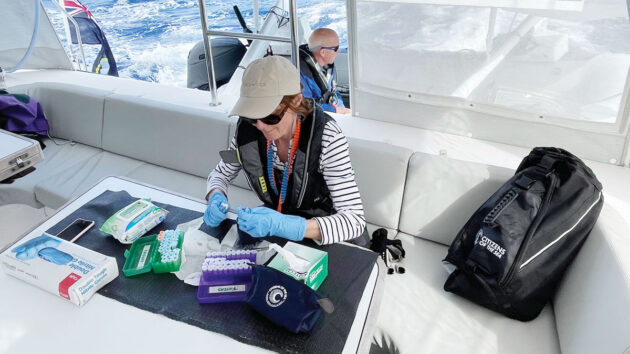
You can become a citizen scientist with SeaKeepers. Credit: Mike Golding
Mike Golding is an ambassador for SeaKeepers, a not-for-profit organisation supporting ocean research and specifically citizen science. The Discovery Yacht Program connects boat owners with scientists and educators in need of time or research at sea.
“For yacht owners in the US and Australia there’s a tax break if you donate your boat to be used for science projects with SeaKeepers,” he explains. “If you’re a high earner and you can’t sell your yacht, you gift it
to SeaKeepers, who will be able to benefit from it. There are lots of wealthy individuals who would be happy to sponsor them if presented with the right opportunity.”
And even if you’re not looking to gift your boat, you can still become a SeaKeeper by joining the Discovery Yacht Program on the website
www.seakeepers.org and be matched with science projects along your cruising route.
SeaKeepers also provides links to apps, allowing you to participate in a multitude of science projects such as reporting wildlife and ocean life.
There are also opportunities to join beach and dive cleans around the UK. During the Conquer the Island challenge, for example, we all downloaded the Eyesea app and reported litter.
Whoever spotted the most (which happily was not very much at all!) won a prize.
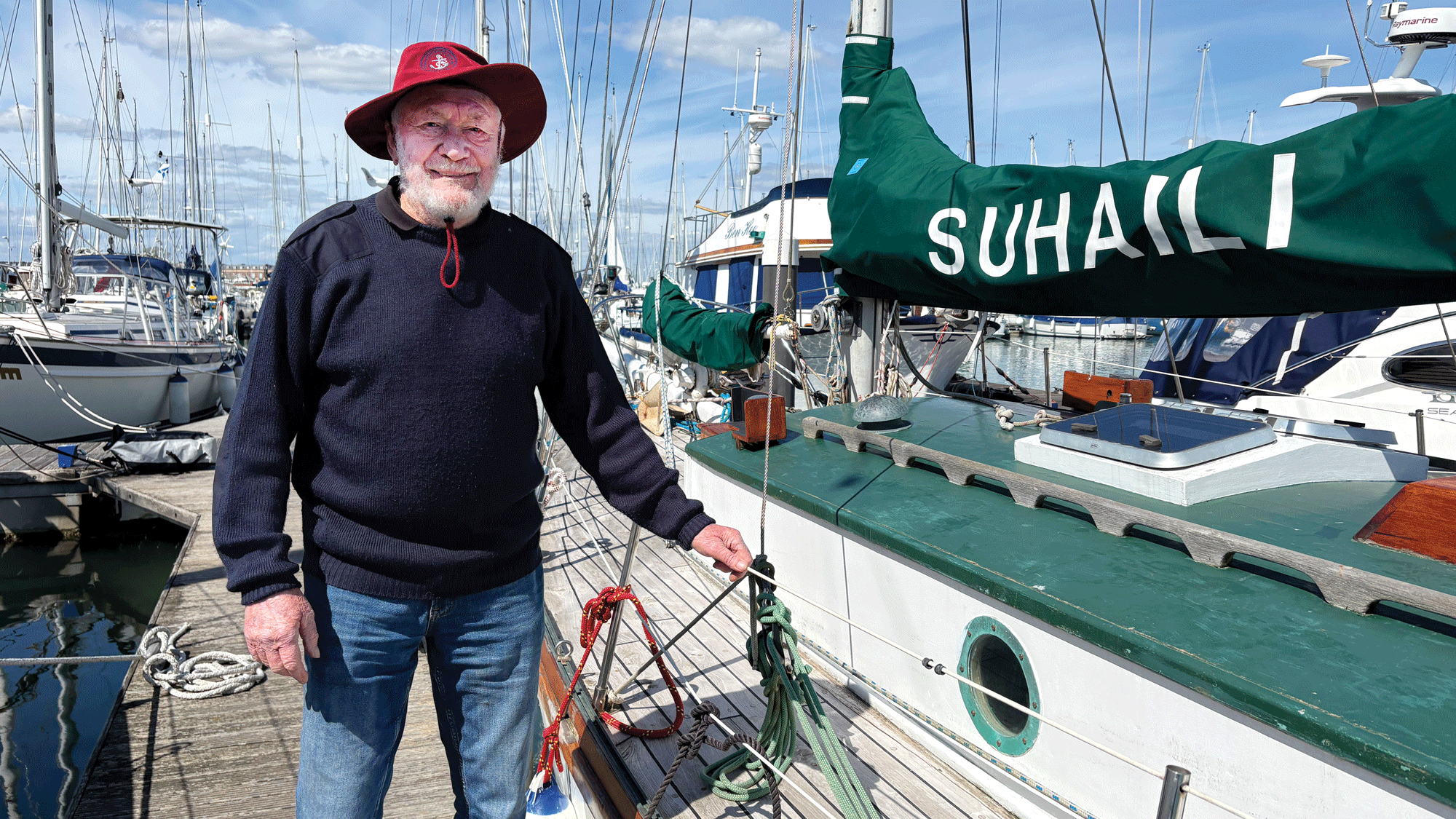
Sir Robin Knox-Johnston on his life-long love for Suhaili, and how he keeps her in sailing shape
There’s a very special boat in Gosport Marina, and her owner – Sir Robin Knox-Johnston – has offered to introduce…
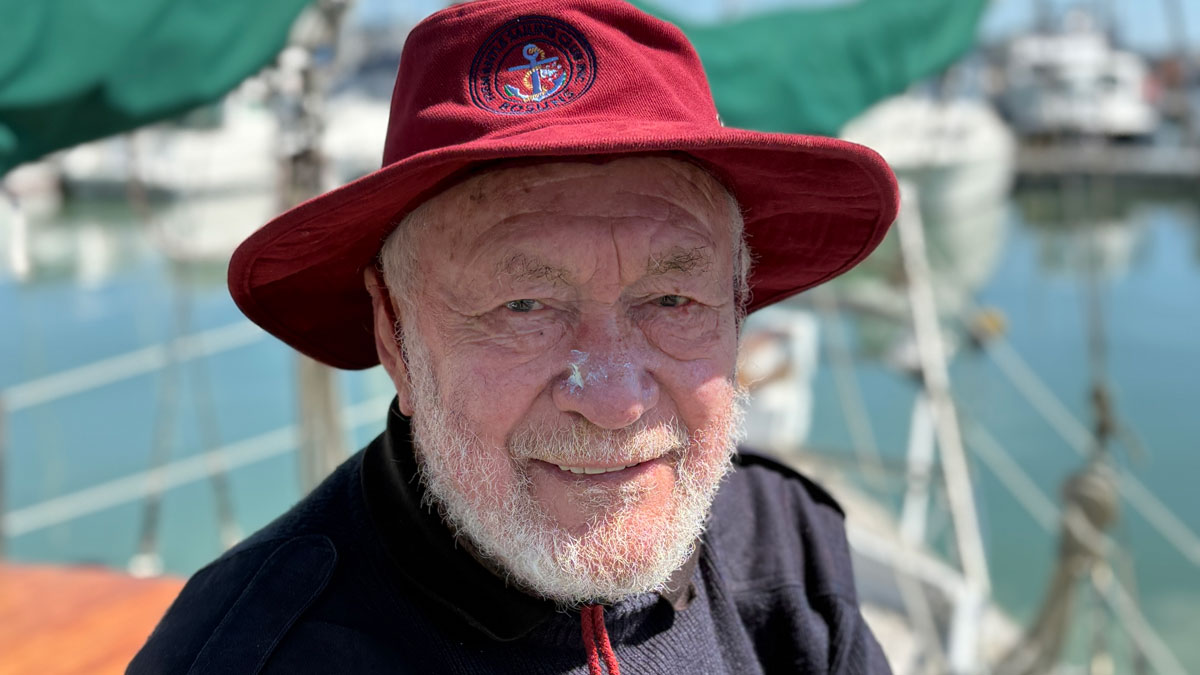
Sir Robin Knox-Johnston: sailing with a legend
Sir Robin Knox-Johnston talks to Ali Wood about self-steering, plum duff and why he was told to ‘slow down’ for…
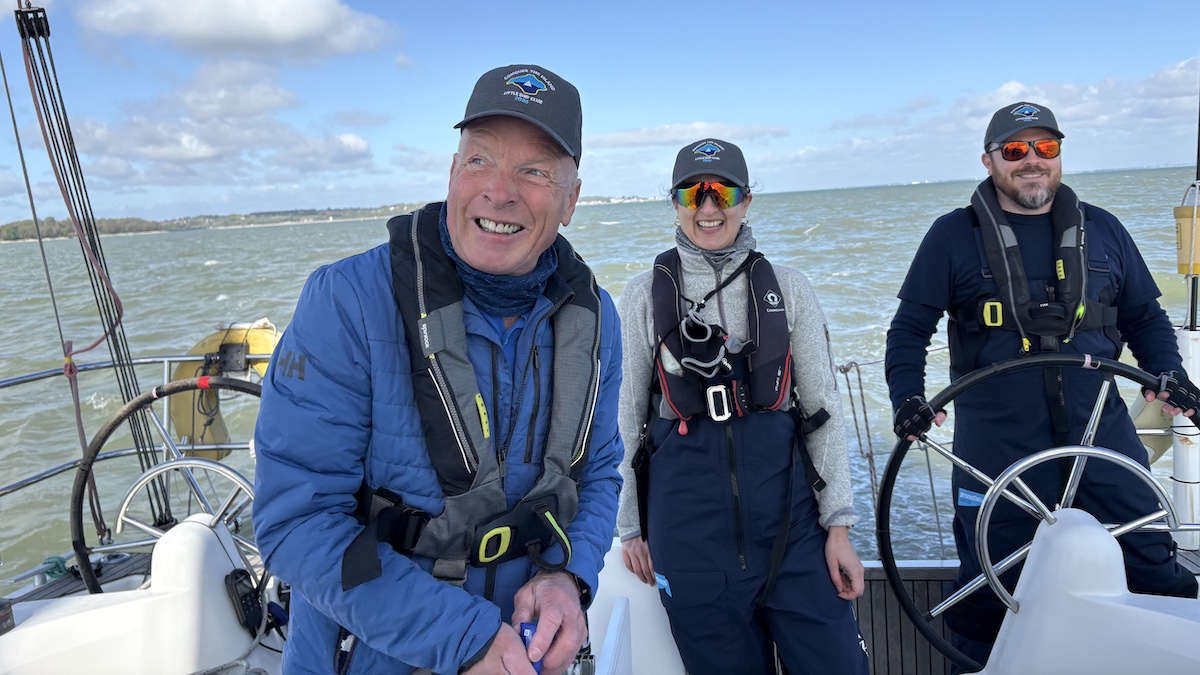
PBO Conquers the Island with Mike Golding and Sir Robin Knox-Johnston
The inaugural Conquer the Island challenge, a 10-hour clockwise circumnavigation of the Isle of Wight, was organised by the historic…
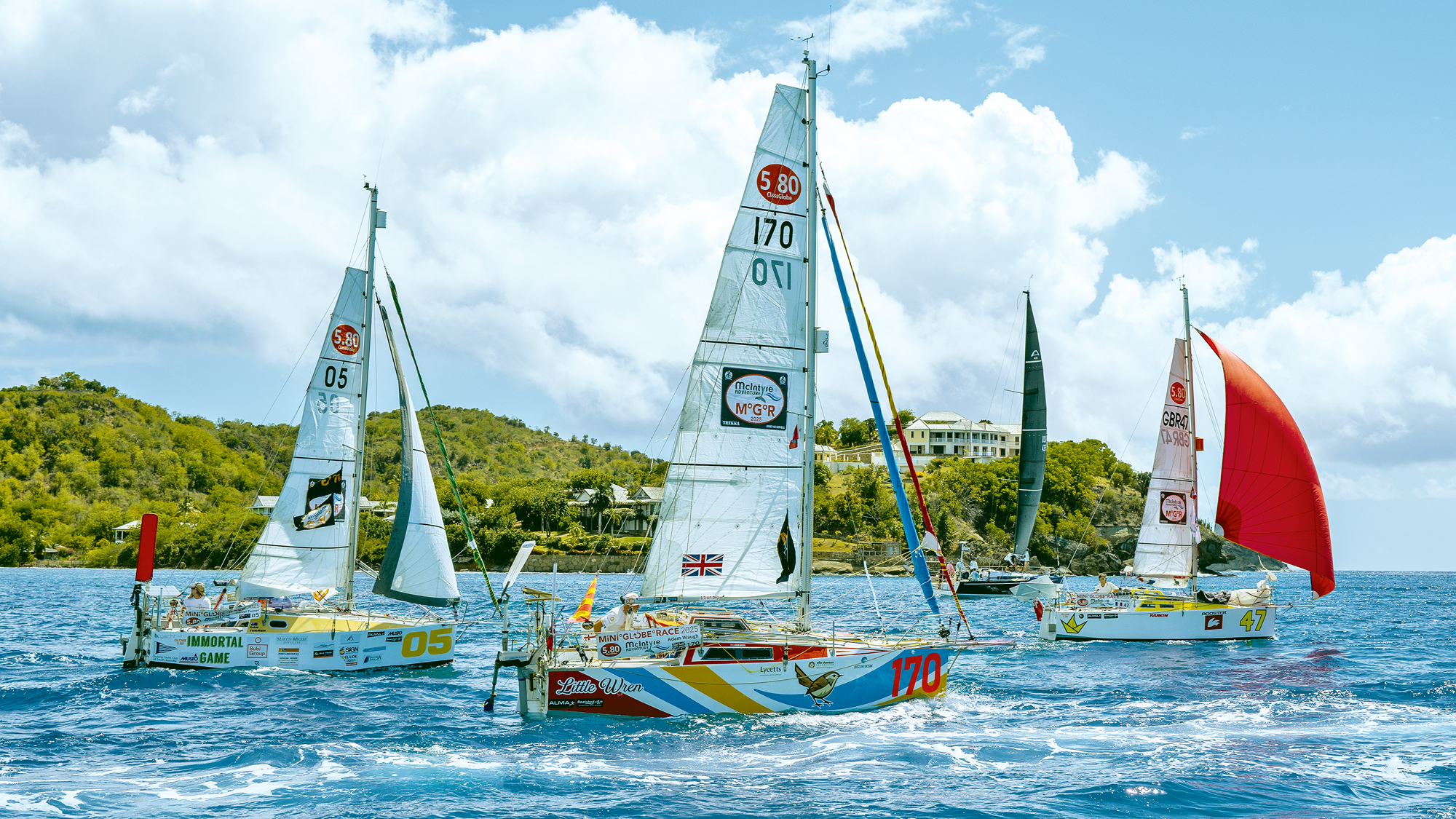
Globe 5.80 Performance Review: how the micro-yachts & gear fared after 10,000 miles of solo racing
After sailing thousands of miles offshore, the Mini Globe Race 2025 skippers share exactly how the Globe 5.80 and the…
Want to read more seamanship articles like Mike Golding on racing without a keel, rescuing Alex Thomson & sailing the wrong way round the world?
A subscription to Practical Boat Owner magazine costs around 40% less than the cover price.
Print and digital editions are available through Magazines Direct – where you can also find the latest deals.
PBO is packed with information to help you get the most from boat ownership – whether sail or power.
-
-
-
- Take your DIY skills to the next level with trusted advice on boat maintenance and repairs
- Impartial, in-depth gear reviews
- Practical cruising tips for making the most of your time afloat
-
-
Follow us on Facebook, Instagram, TikTok and Twitter
PBO web categories